

Finch Conjunctivitis
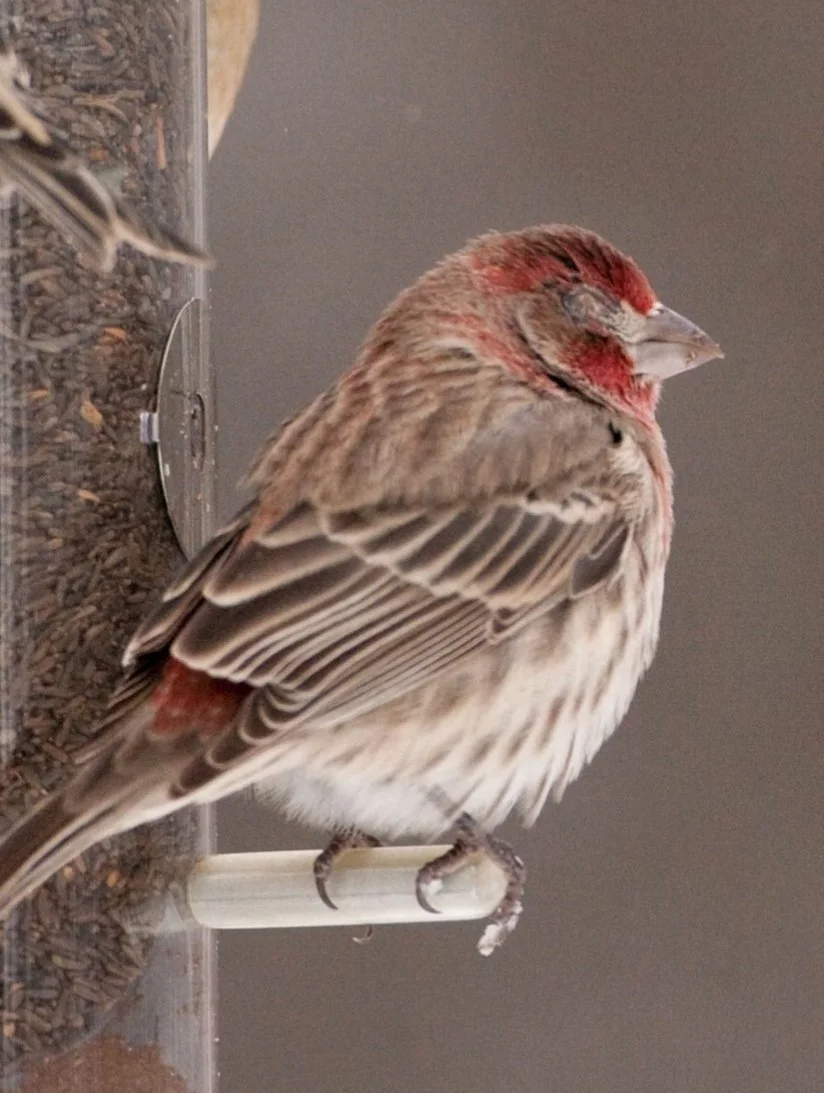
Photo of a House Finch with conjunctivitis courtesy of the Cornell Lab of Ornithology
Author: Susan Harrison
Finch conjunctivitis is a potentially fatal eye and respiratory disease that can affect several species of birds in your yard, primarily finches. Conjunctivitis is caused by the bacteria Mycoplasma gallisepticum, which, although not spread to humans, is contagious between birds in a crowded setting such as your backyard feeders. Although most prevalent in House finches, several other bird species can be affected including American Goldfinches, Purple Finches, and Evening Grosbeaks.
Conjunctivitis can be most easily been controlled by keeping your bird feeders clean. You can wipe your feeders down frequently with disinfectant wipes, but a more effective cleaning method is to scrub the feeders with a solution of one part bleach to nine parts water, ,taking extra care to clean around the feeding ports. Thoroughly dry before adding seed. If you find a bird with conjunctivitis, Audubon recommends taking your feeders down for several weeks to lessen the spread.
Birds with conjunctivitis can be treated in a wildlife rehab facility with a combination of oral and ophthalmic antibiotics.
More information on Avian conjunctivitis can be found at this link by the Cornell Lab of Veterinary Medicine.
https://cwhl.vet.cornell.edu/resource/mycoplasmal-conjunctivitis
Signs to look for at your feeders are finches with a crusty eye covering, ocular discharge, or swelling around the eye. As the disease progresses the birds eyes will become swollen shut. At that point the bird will no longer be able to find food and might easily become prey for other animals.
There are several wildlife centers in the area that you can reach out to for questions and help if you should find a bird in need.
Mercer County Wildlife Rehabilitation Center, 1748 River Rd., Lambertville, NJ. 609 303 0552
Aark Wildlife Rehabilitation Center ,1531 Upper Stump Rd., Chalfont PA. 215 249 1938
