

Koonthankulam - A Birding Travelogue from South India
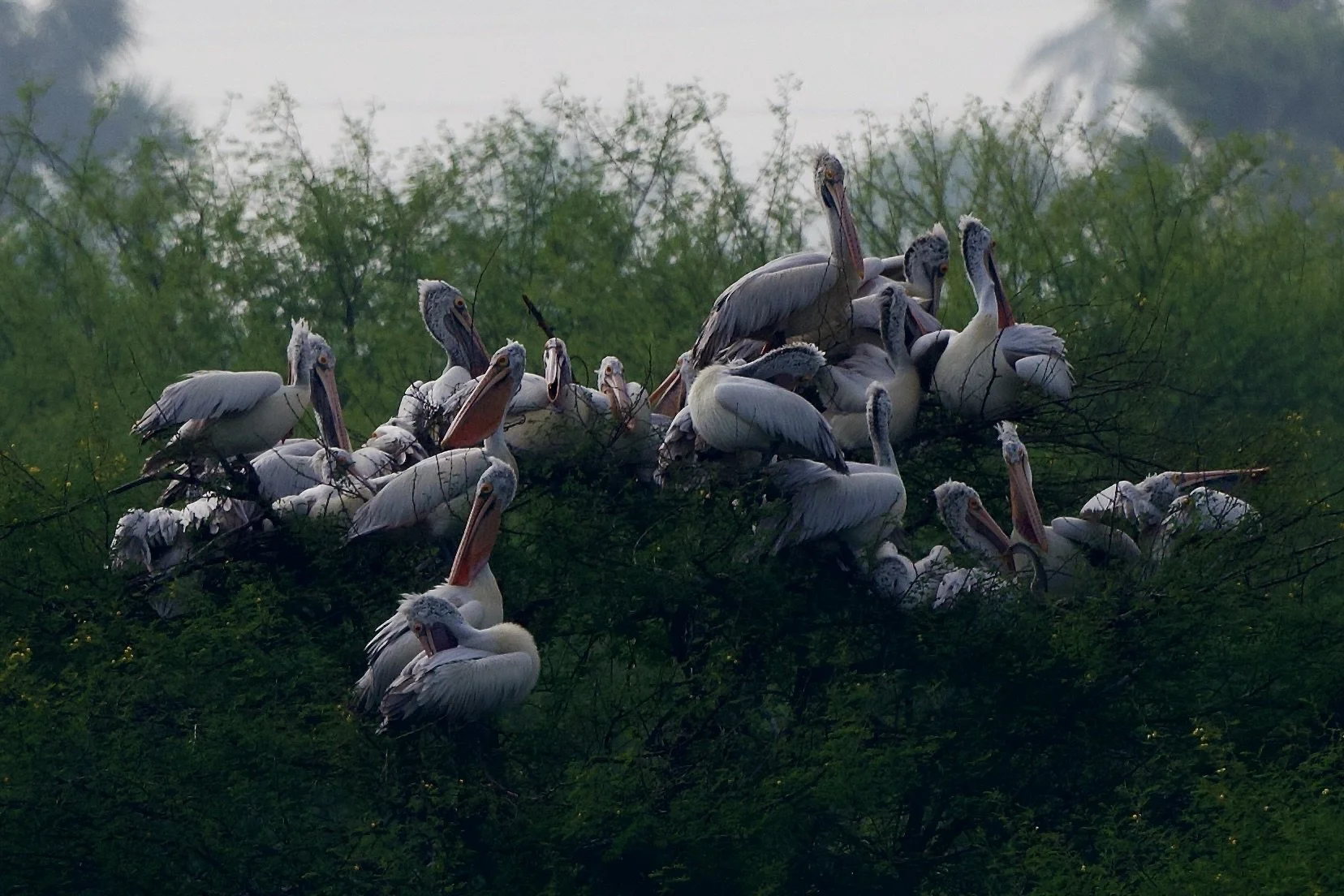
Spot-billed Pelican on a roost at Koonthankulam
Author: Vin Pannerselvam
Photos by Author
It must have been around 3:30 in the morning when the car approached Tirunelveli. After waking up the sleeping hotel staff, settling into a barely adequate non-AC room, catching a few minutes of sleep, and downing a mediocre cup of coffee, it was quarter to five when I called the driver. Since I had told him earlier that we needed to be at the spot by 6:30, the driver didn't show any sign of reluctance. Our destination: Koonthankulam.
Koonthankulam Bird Sanctuary, part of Nanguneri taluk, is located about 30 km from Thirunelveli, India or as fondly locals call “Nellai” (Nel in Tamil means rice kernel). True to Nellai's reputation, the landscape is dense with rice paddy fields and ponds. It would be no exaggeration to say that Koonthankulam and the surrounding water bodies, farmlands, and grazing fields have long served as a vital refuge for migratory birds from distant lands. This 72-hectare wetland preserve was recognized as a Ramsar site of international importance in 2021. It is an interesting fact that under the Ramsar Convention — designed in 1971 in Iran to protect wetlands around the world — there are more than 85 Ramsar sites in India alone, and 20 in the state of Tamil Nadu. A sudden desire to visit other Ramsar sites also stirred in my mind.
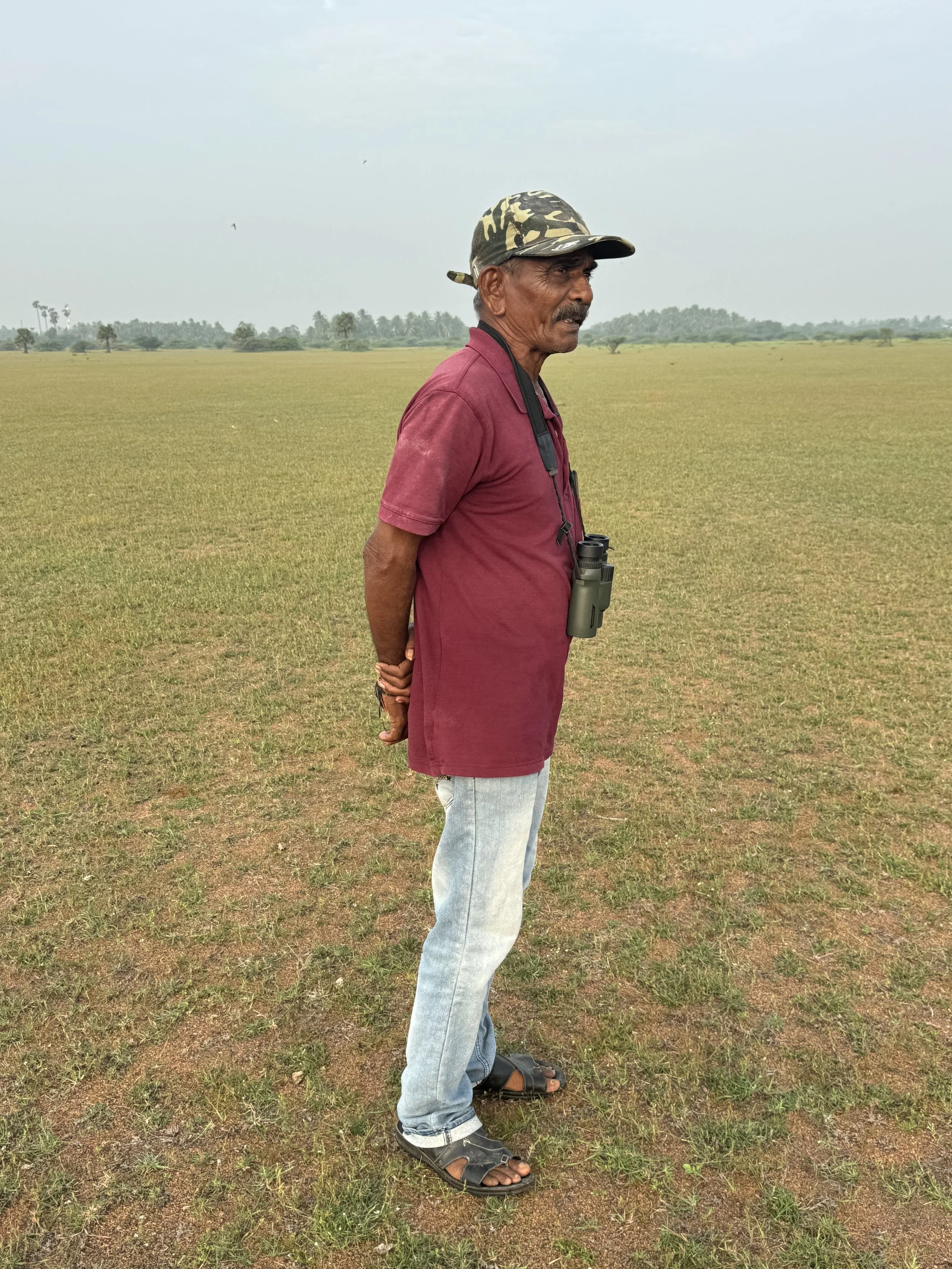
Paul Pandian - a self-made bird guide of south Tamil Nadu, India
On a friend's recommendation, the person one must first meet to see birds at Koonthankulam is birder Paul Pandian. The soft-spoken and unassuming Paul Pandian has dedicated not just himself but his entire family to birds. A love for birds that was kindled at the age of fourteen while accompanying his father on fishing trips has continued all the way to his seventy-fourth year. Though he studied only up to the tenth grade, a foreign ornithologist introduced him to Salim Ali's books, through which he came to know migratory birds thoroughly. He has identified 174 species of birds here, protected chicks during their breeding seasons, and served both the sanctuary and the birds with great devotion. Having worked as a sanctuary warden for several years, he now serves as a guide showing birds to enthusiasts.
It must have been around 6:30 when we met Paul Pandian. We picked up another bird photographer who had come from Chennai and set off toward the nearby Vijayanaraayanam Lake. On the way, Our guide suddenly stopped the car and stepped out. Just a few feet from the car, he pointed out an Indian Courser family foraging in a paddy field. From that moment on, I became a fan of Paul’s ability to spot birds. Vijayanaraayanam was a long, beautiful waterbody nestled gracefully amid paddy fields. Since it was winter, most of the lake had dried up into a vast grassland stretching 5–6 km east to west — a treeless expanse maintained purely by nature — and the sight was awe-inspiring. The southern edge of the lake had a water-filled bund about a quarter kilometer wide, while the entire northern boundary spread out as lush green grazing land.

Family of Indian Coursers
A South-Indian paddy field favorite
Paul stepped out of the vehicle and raised his binoculars. His target bird for the day was the Pallid Harrier — a raptor that hunts small mammals like field mice and reptiles like snakes. In Tirunelveli and the neighboring districts in Tamil Nadu, two types of harriers are found: Pallid and Montagu's. Both inhabit Vijayanaraayanam and nearby coastal plain ecosystems. Grasslands are the preferred hunting ground for harriers as we know. Flying low over these grasslands in search of prey is their signature trait. Dozens of them come to hunt in this particular lakebed during the early morning or late afternoon hours. But today, nature was not cooperating. Time was passing; the sun was slowly climbing higher. The chances of the harriers appearing had already diminished considerably.

Montagu’s Harrier
A unique white-gray harrier with black-tipped wings on the hunt for snakes.
Although I like the harriers (who doesn’t like harriers), my target bird for the day, however, was — Bar-headed geese. Though abundant, I truly love their tenacity of migratory lifecycle. Native to the Himalayan region, Mongolian and Tibetan plateaus, these birds live up to their name: a white head adorned with two large black bars, a yellow beak, orange legs, and a body decorated with pale grey wings against a white background — beautiful birds. When Paul spotted and showed me the geese in the farmlands bordering the lake, my heart fluttered with joy at the prospect of adding a "lifer". Also, I’m genuinely interested in witnessing these flock of super migrants. I got out of the car and, with camera and binoculars in hand, walked and half-ran toward to get a closer look. There must have been several hundred birds. Most were digging through the fields foraging for food. One or two raised their heads and watched the invisible boundary between them and me. The unspoken agreement: they wouldn't fly away until that boundary was breached.
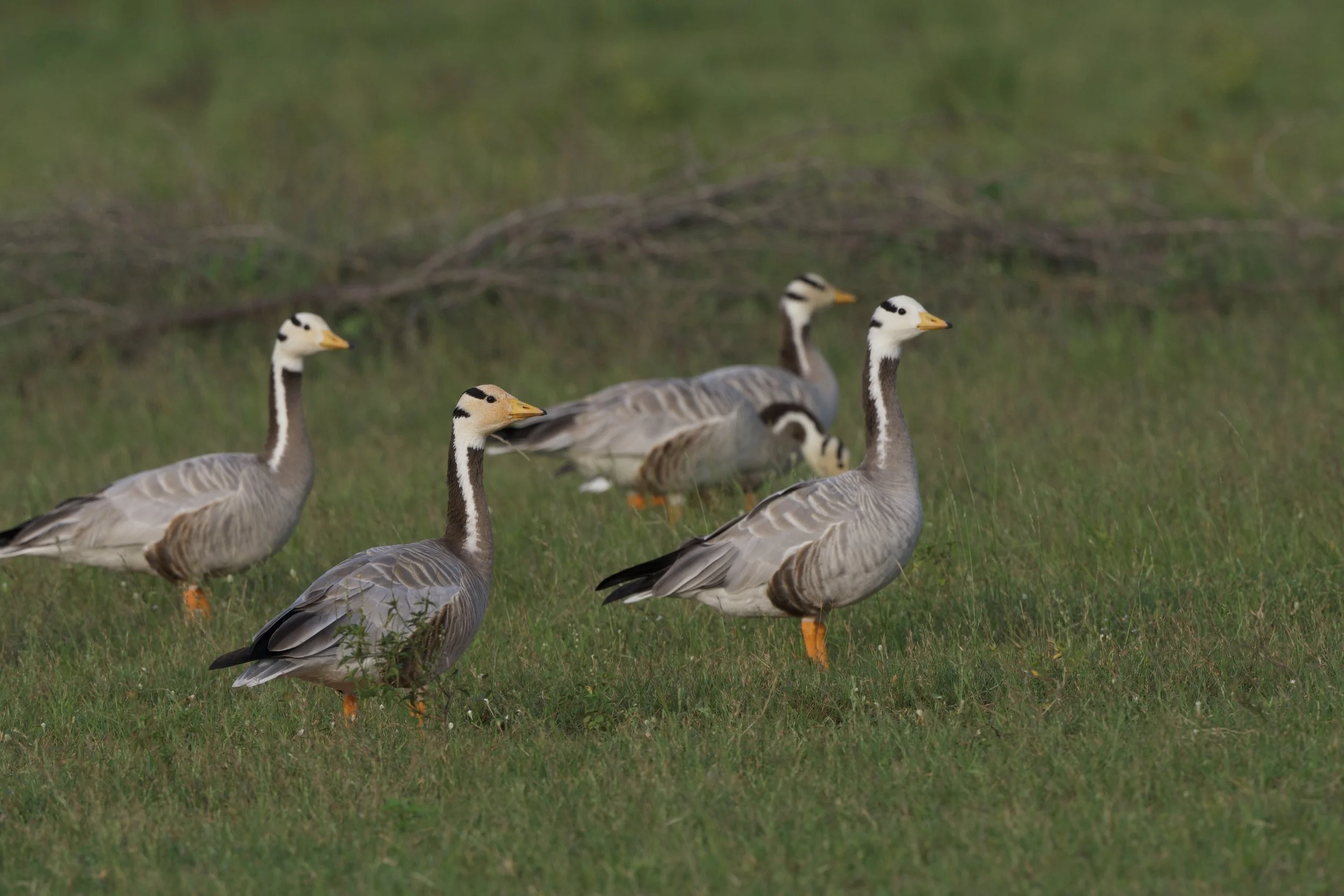
Bar-headed Geese on lakeside grassland in near Thirunelveli, India.
Bar-headed geese are true legends of migration in the bird world. These remarkable creatures combine the tough resilience of a wrestler, the tireless endurance of an athlete, and the refined lung capacity of a mountaineer — all in one bird. Their physical prowess becomes most evident when they cross the Himalayas during their twice-yearly journey of approximately 1,500 km each way. Satellite transmitters fitted on some individuals have confirmed that they fly at altitudes of nearly 6,000–7,000 meters to cross the Himalayas. Six thousand meters is the cruising altitude of a mid-range passenger aircraft! And what's more — they reach these heights not by riding thermal updrafts or monsoon winds like other birds, but purely through their own wingbeats, scaling Himalayan heights in just 5–7 hours. That is a breathtaking feat of physical endurance. These migratory champions graze the paddy fields of Tamil Nadu only from the beginning of September through early May, after which they migrate again to Tibet, Mongolia, China, and the Ladakh plains to breed. It was to see them up close and revel in watching them move in large flocks that I had made the journey all the way from Palani(my home town) to Nellai. Suddenly, a mild rustling sound grew into a loud commotion, and our unspoken agreement came to an end. The sentinel geese must have sounded an alarm. In an instant, every single goose erupted into the sky. A Black Kite passed overhead. The reason the pact was broken now became clear.
After, we drove along the lake's edge, searching for other birds. In forty minutes of searching, we found more than thirty species — Blue-tailed Bee-eaters, a flock of Siberian larks, a Chestnut-sided sandgrouse, a Eurasian Kestrel, Woolly-necked Storks, hundreds of Barn Swallows, some resident Painted Storks, and various herons and all three egrets (Little, Intermediate and Great).
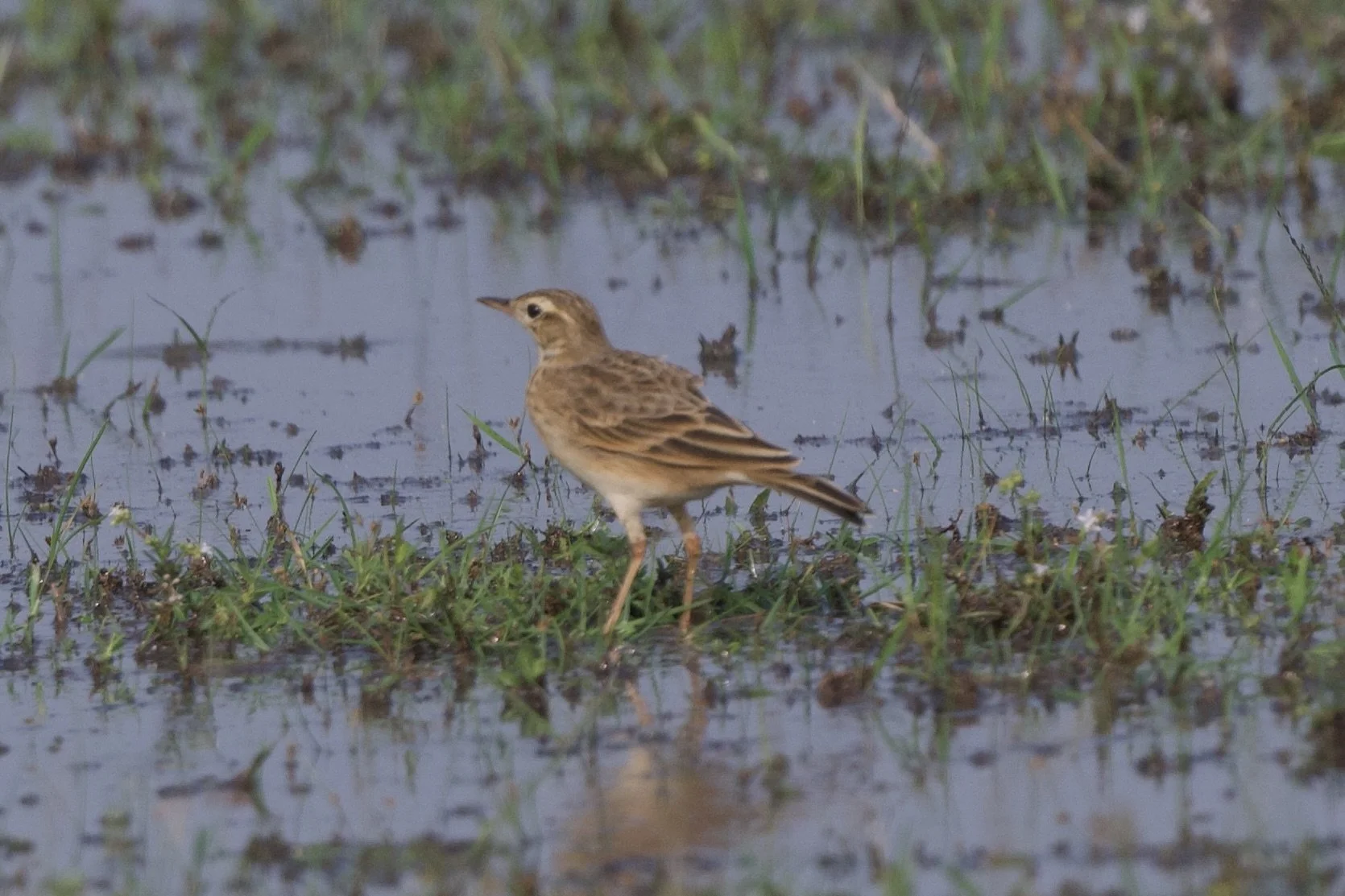
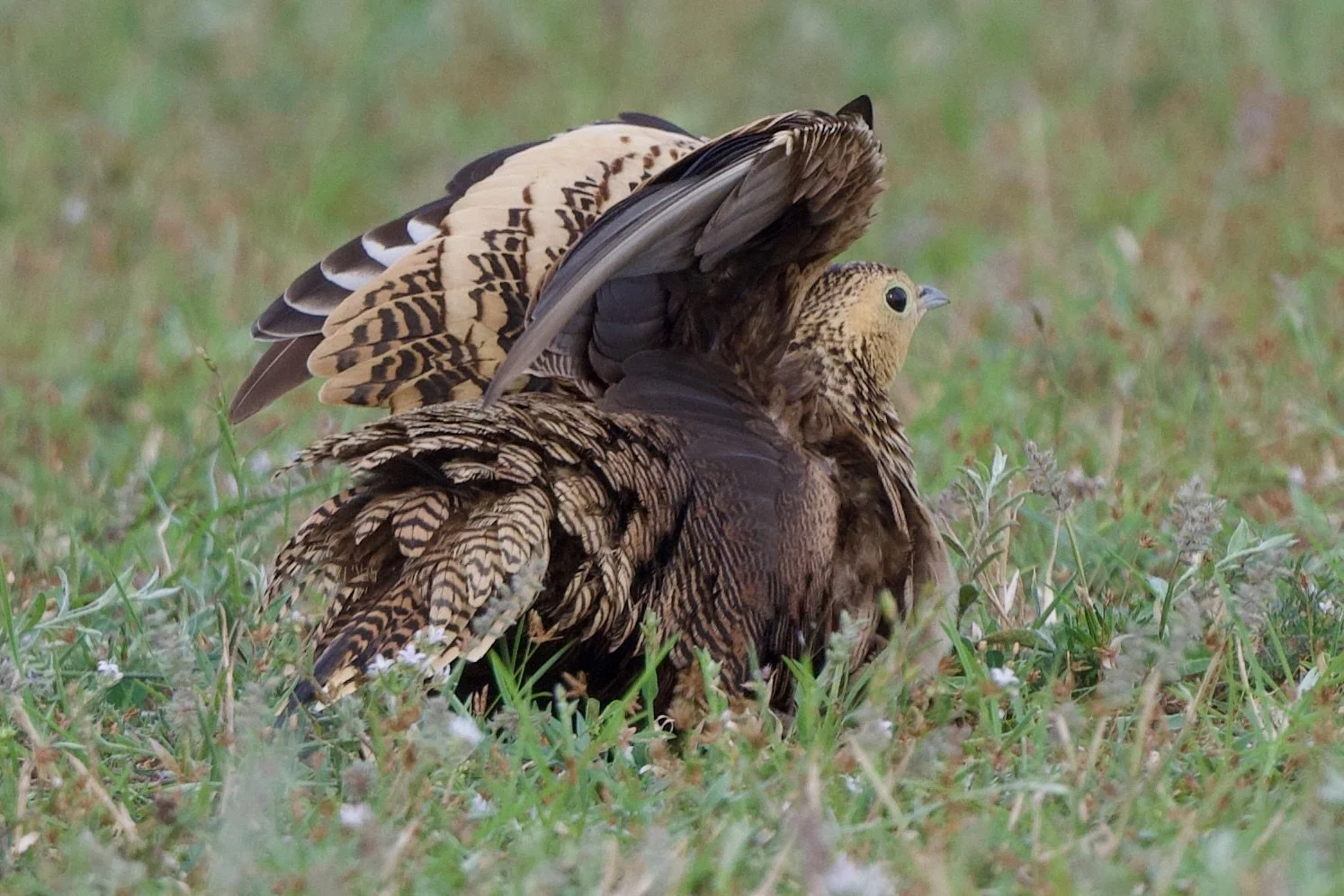

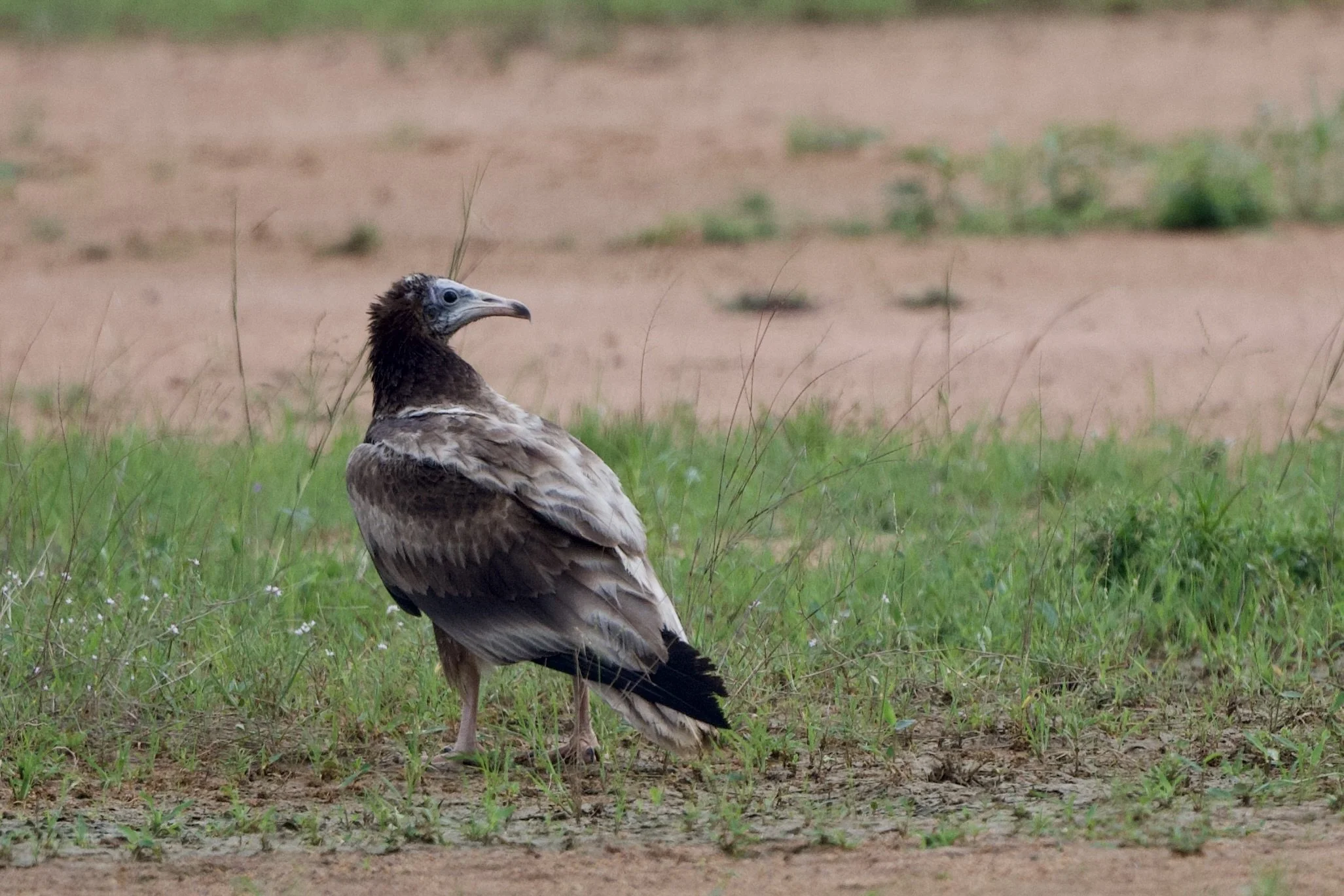
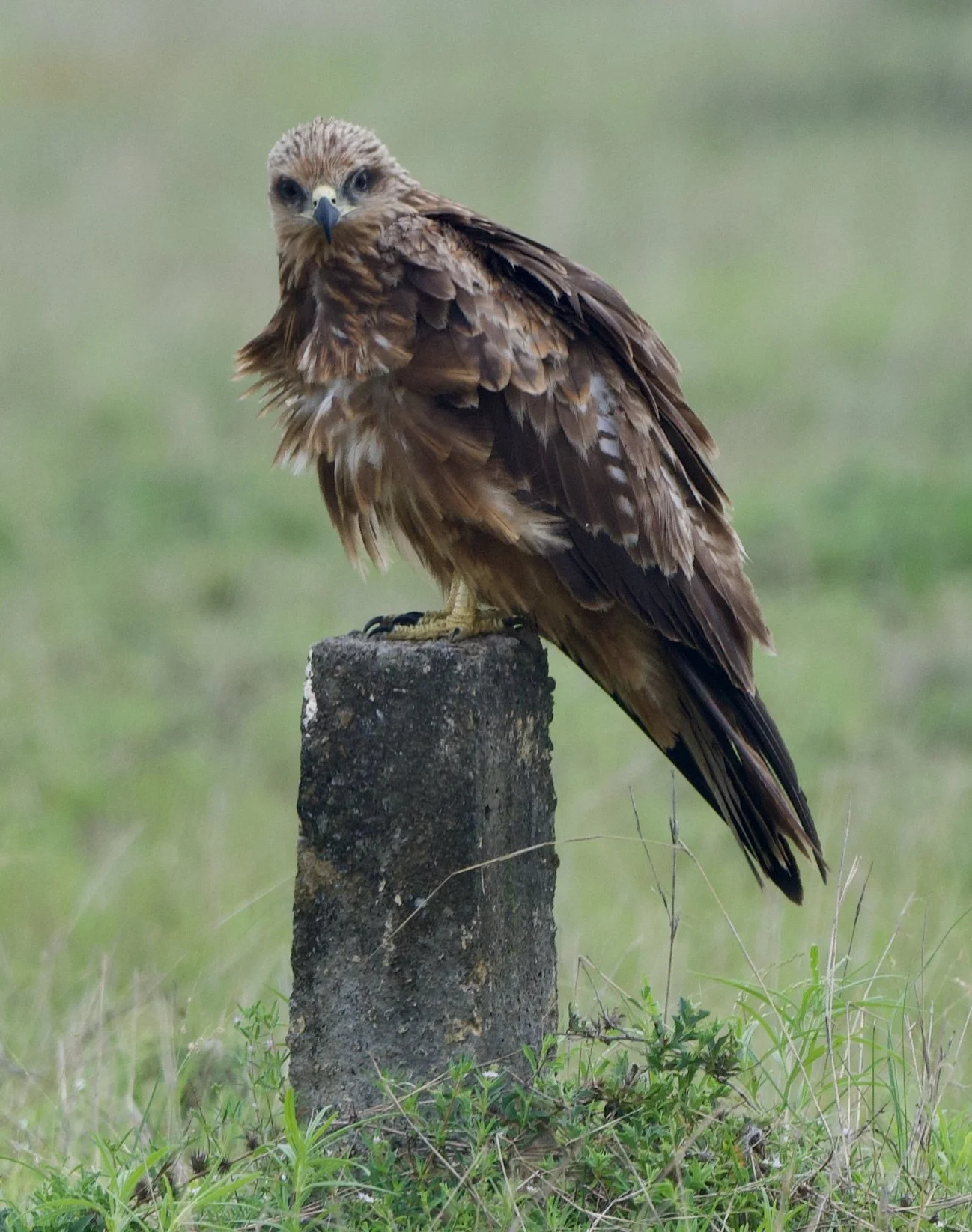
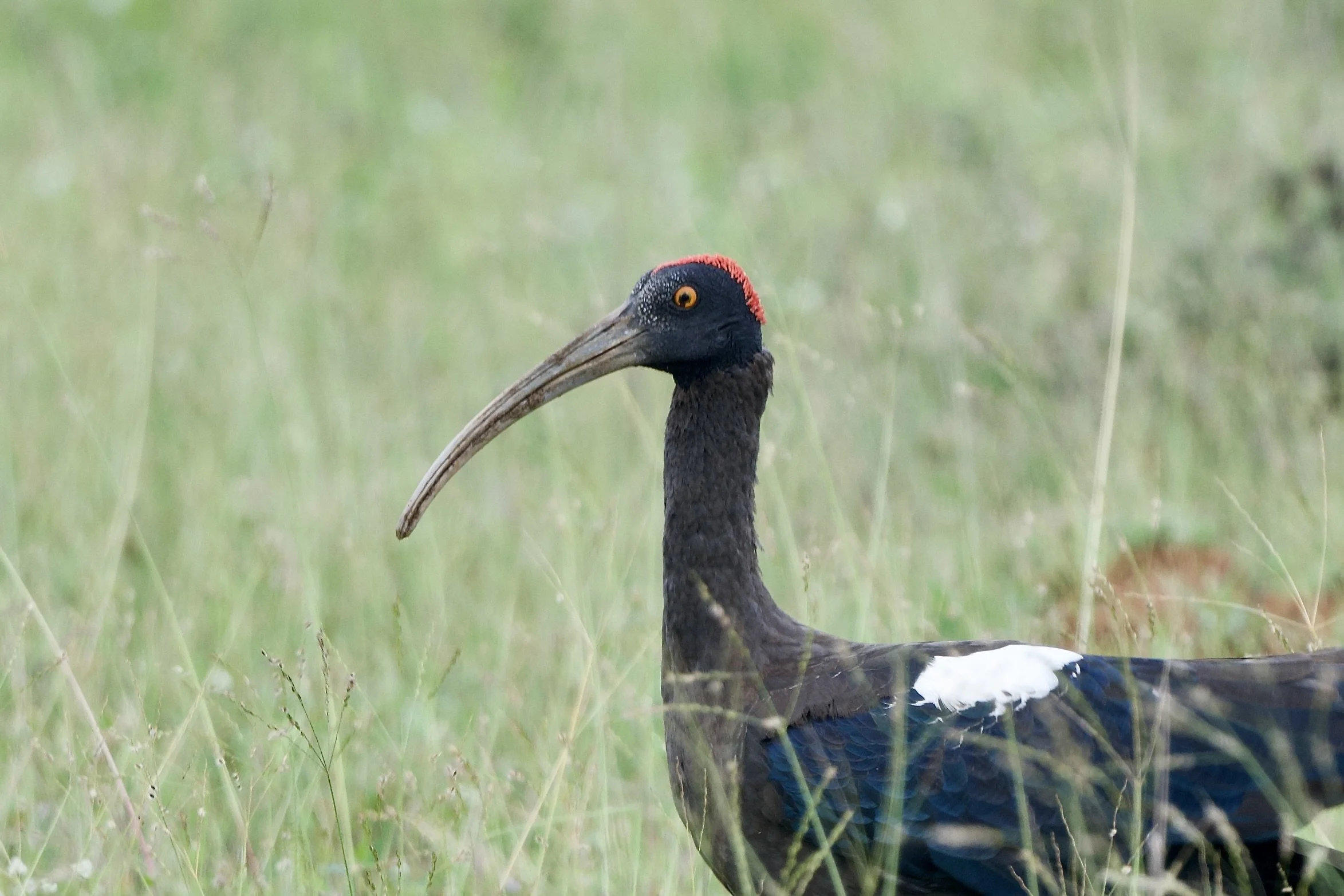

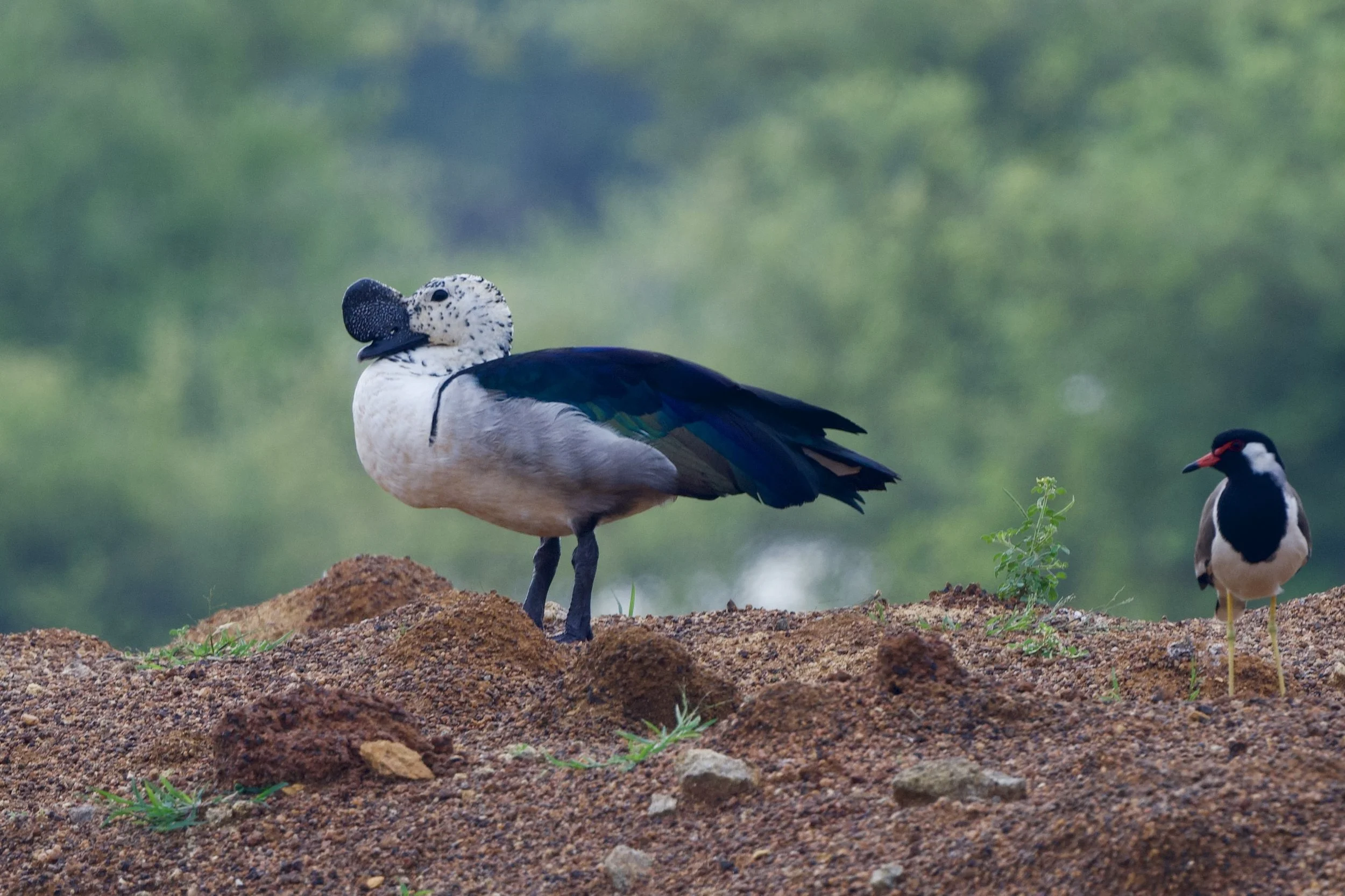
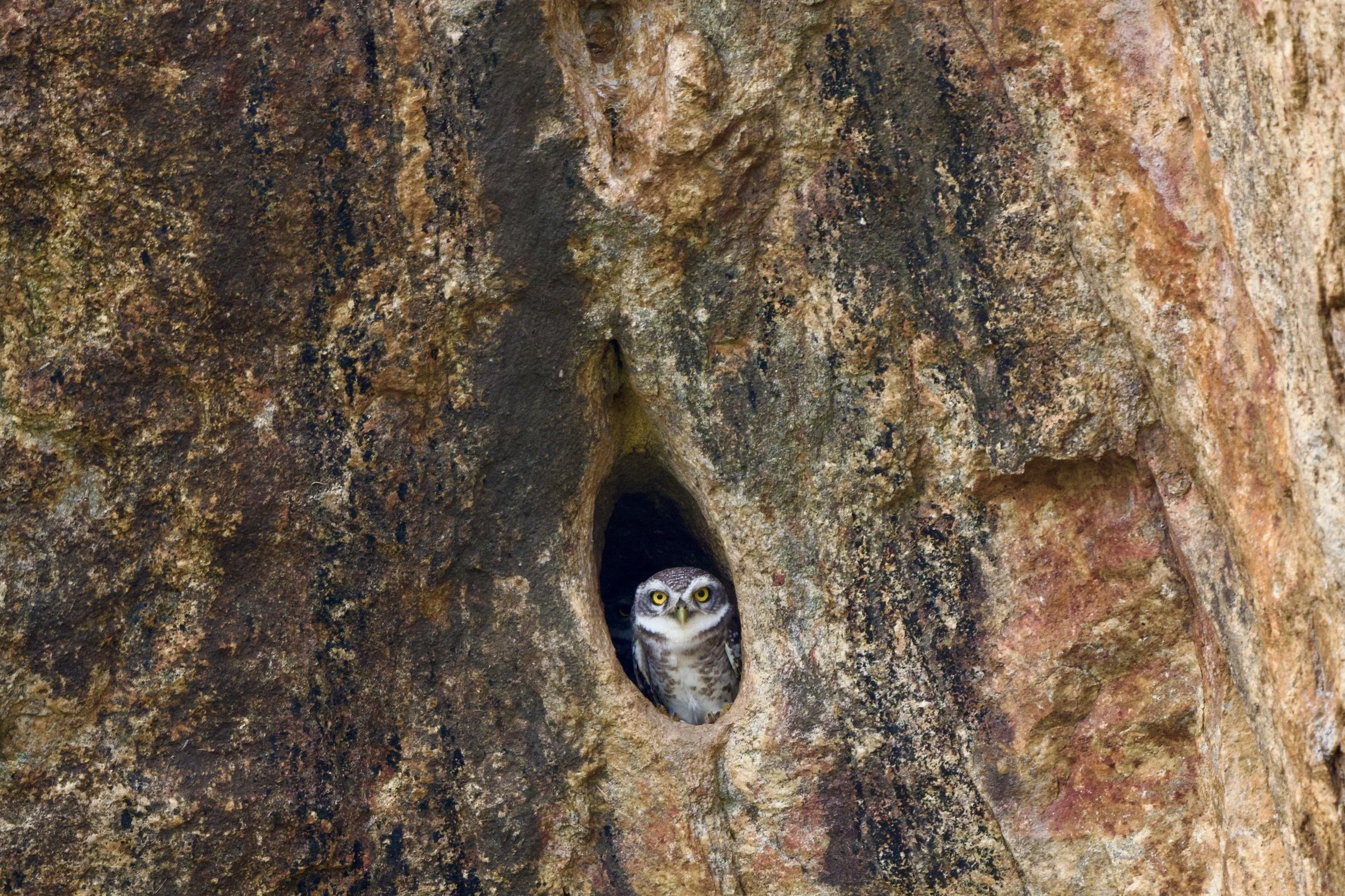
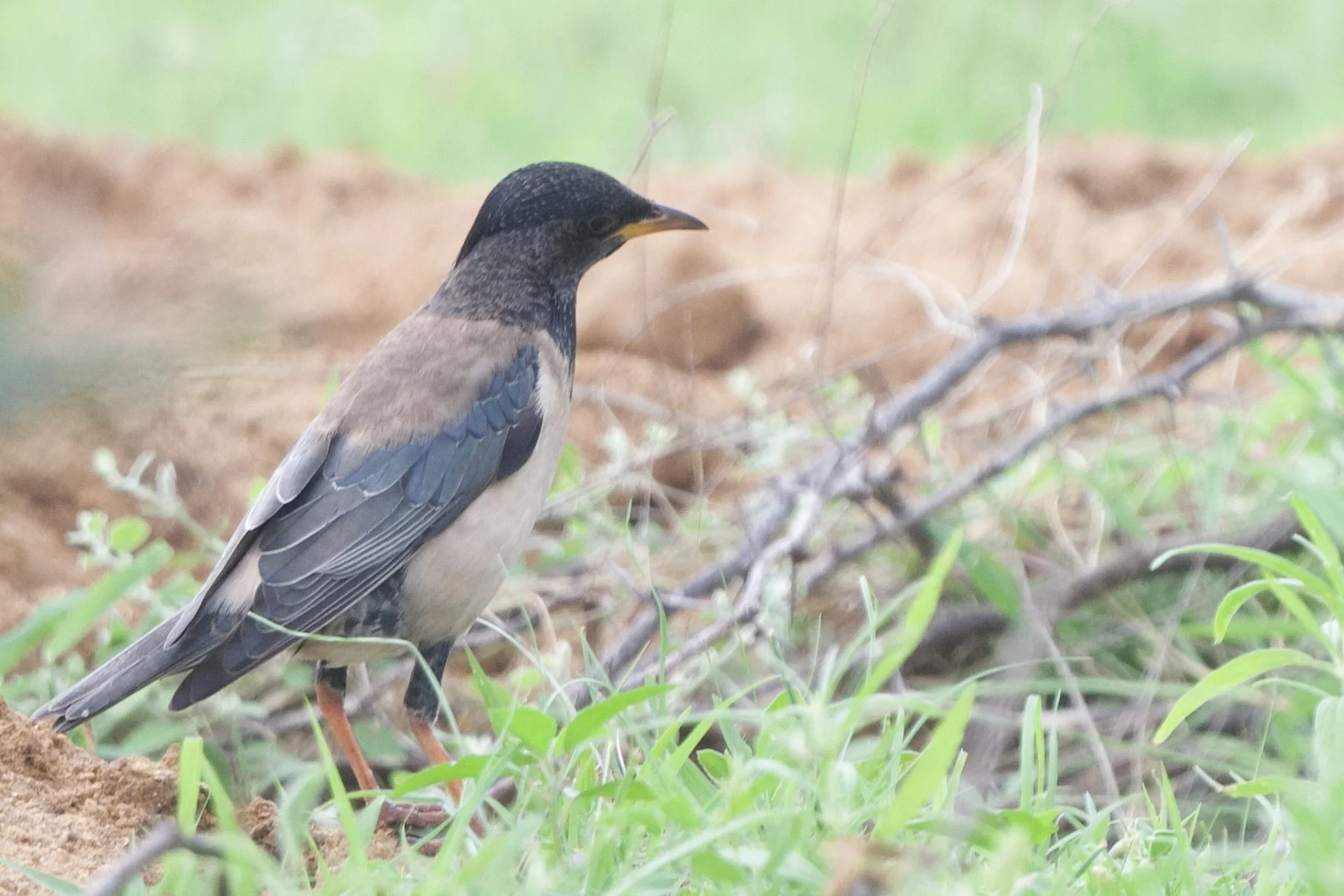


The morning sun had warmed up considerably. The clock showed 9:30. When Paul suggested we could see a few more target birds before breakfast, the cars sped off toward the next destination. We stopped amid an open land parceled between Acacia trees. In the distance, thirteen Egyptian vultures were perched in a row on boundary stones fixed in the ground, along with a Brahminy Kite and a Black Kite seated together. The question of why Egyptian vultures were in this remote forest was answered by the skeletal remains of a cow that had died a few months prior. As time moved on and the car swallowed up more kilometers, my life list kept growing. Rock Eagle-Owl, another Montagu's Harrier, a charming Knob-billed Duck, a few Red-naped Ibis and a flock of Rosy starlings were among the new additions. With a satisfied heart, we stopped at our breakfast spot. Koonthankulam is a very small village, and we had whatever was offered at the only eatery there.
Once the morning passed noon, bird activity had slowed down considerably. During this lull, our friend Paul usually takes a rest. We said our goodbyes, agreeing to meet again at Vijayanaraayanam Lake at 3:30 in the afternoon to look for the harriers - the house specialty. The midday hours were spent at the Koonthankulam Sanctuary itself. The sanctuary has a watchtower, a lakeside walking path, and a children's park — all beautifully landscaped with native trees. Not just Paul, but the entire village participates in protecting the migratory birds that comes to the santucary and maintaining their habitats during breeding season, living in harmony with nature. The waterbody within the sanctuary serves as both a migratory refuge and a breeding habitat for species like the Spot-billed Pelicans, Grey and Purple herons, and Northern Pintails.
As the sun descended toward the western horizon, we set off again toward Vijayanaraayanam. Water levels in the lake had risen from the rains previous day. This was not ideal for the harriers as the grassland recedes. Several minutes passed. Paul scanned the lake with his binoculars. He was desperate to get us the harrier. The first harrier appeared on the horizon. We identified it as a Montagu's Harrier.
Bar-headed geese landed along the lakeshore. Paul mentioned that he had spotted a Greylag Goose among a flock of Bar-headed geese. After ten minutes of searching, he gestured for us to approach slowly. There — after hiding among the Bar-headed geese for a long while — the Greylag raised its head. The Greylag goose is a rare migratory visitor to the Koonthankulam area.
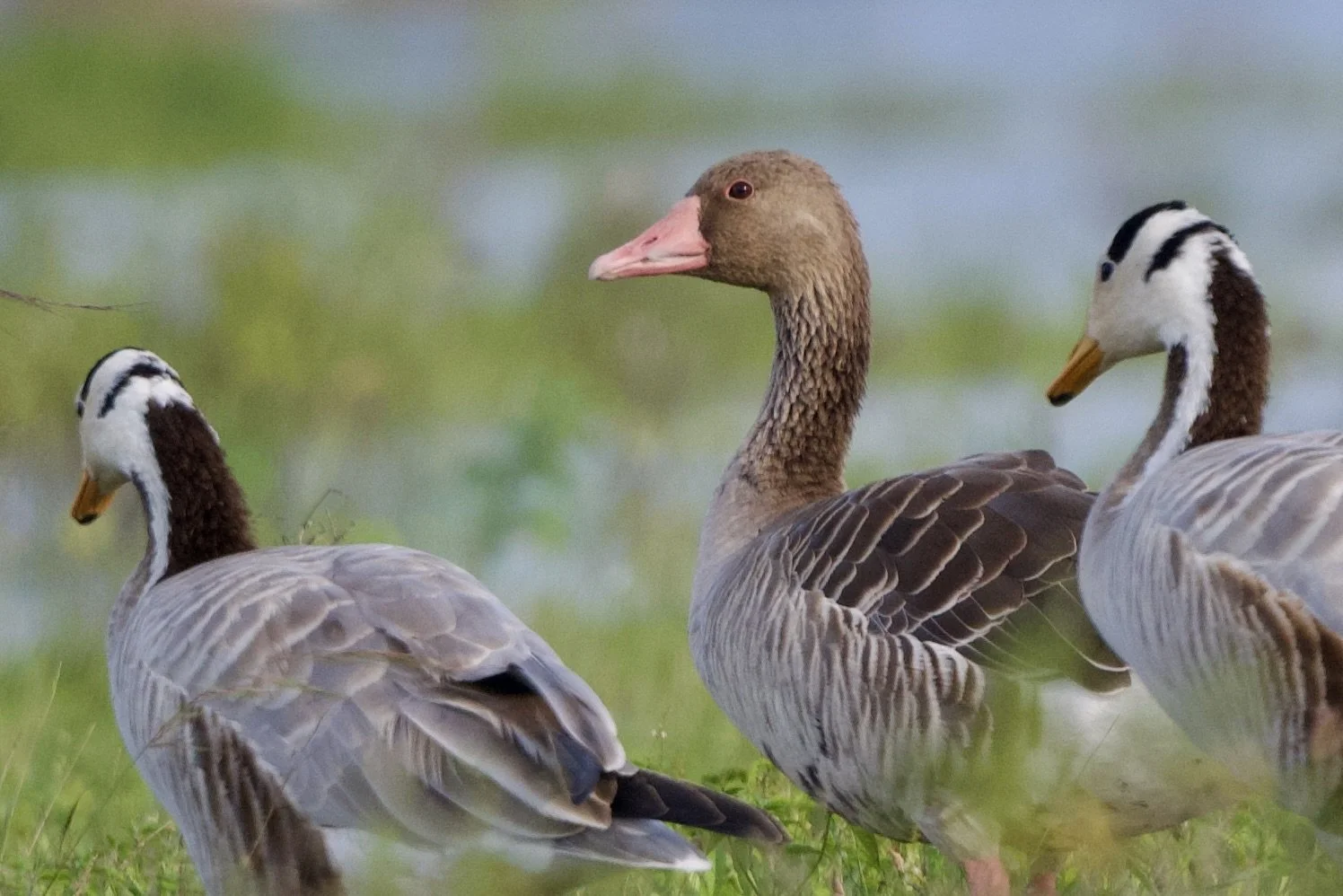
Graylag goose among Bar-headed
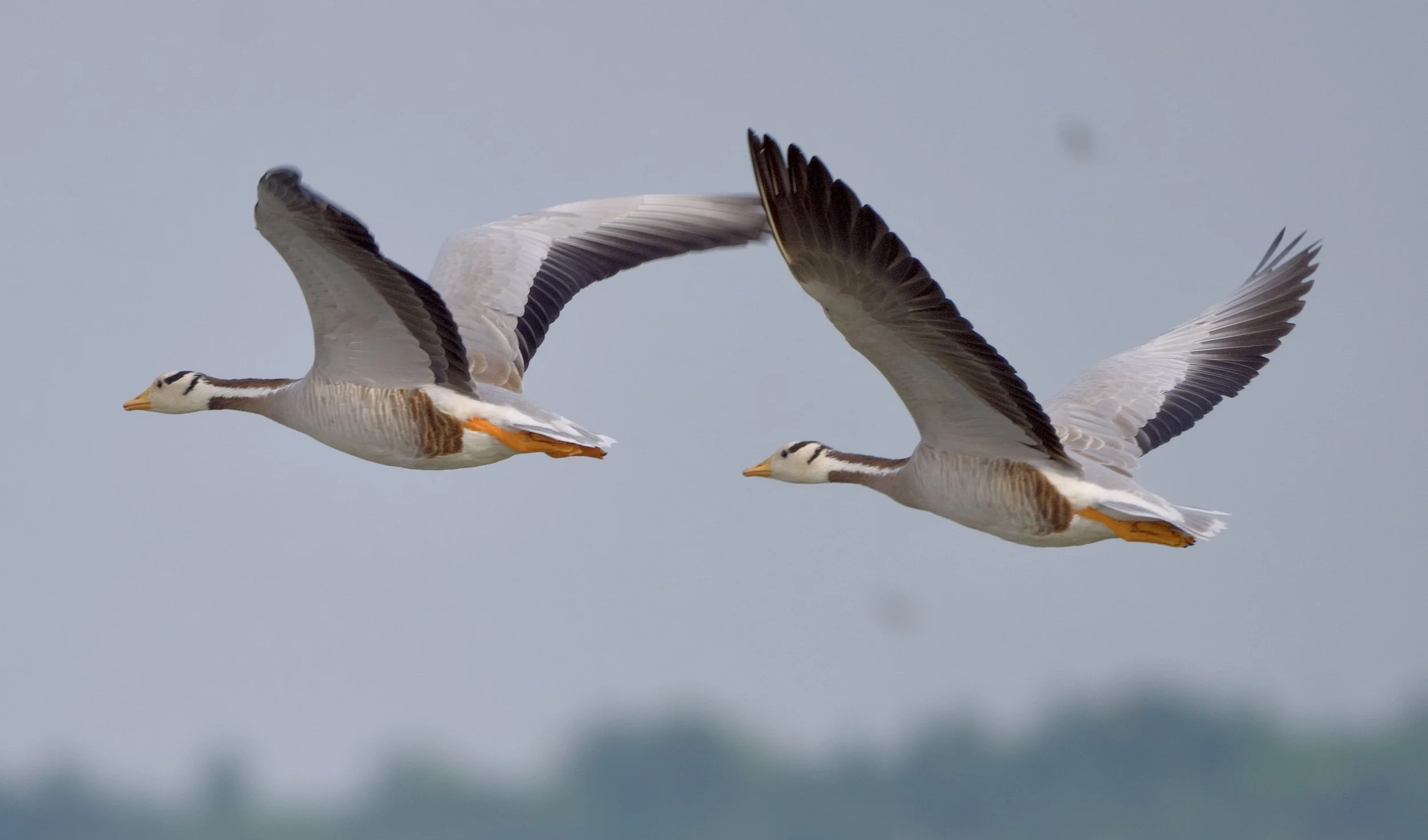
Bar-headed geese on the wings
Eventually, 2–3 Pallid Harriers also showed themselves before dusk. They looked exactly like a Northern Harrier (male Palid also looks like “Gray Ghost”. Unfortunately I couldn’t take a publish worthy picture in low-light. Though the harriers didn't appear numbers we had hoped for, we saw the bird and wrapped up our one-day birding adventure with the quiet satisfaction of having secured a handful of fantastic lifers.
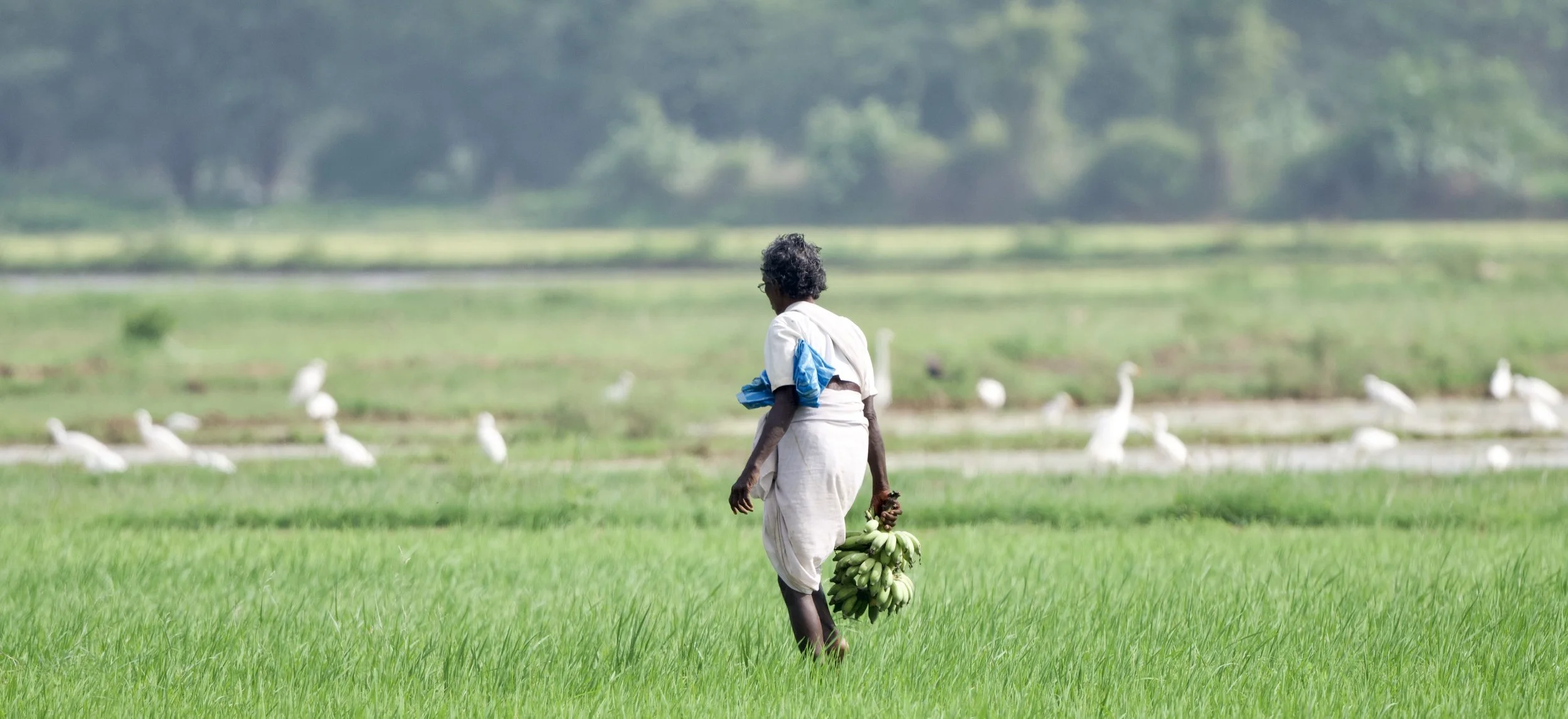
Little, Intermediate and Great egrets in the background. A farm worker carries bananas.
