

The Warblers are Coming…
But they won’t be here long
A warbler, bird that will migrate north over 1,500 miles or more each spring. When they arrive in your garden, they are hungry and looking for insects (not seeds) to keep them alive and rejuvenate them to continue their journey towards breeding grounds.
Most warblers winter in Central and South America, where insects are abundant. In spring they head north to breed (lack of competition here from other species). In PA we will see an estimated 35 to 40 distinct species of warblers through the late spring and summer months!
Understanding their food and habitat needs will be helpful for us so that we can help the birds in our backyards.
FOOD
Warblers are mostly insect eaters; caterpillars are their favorite. They will also be looking for:
- spiders 🕷️
- beetles 🪲
- mosquitoes 🦟
- gnats
- aphids
- ants 🐜🐜🐜
- other small invertebrates
We want warblers to encourage to use our gardens, to keep a healthy balance of nature.
HABITAT
The best habitat we can provide for warblers are trees, shrubs, and other native plants that attract the insects warblers need to survive and feed their young.
Top choices of plants that warblers like:
Native oak trees (Quercus species)
Birches (Betula)
Native cherries (Prunus)
Native dogwood (Cornus)
Native species of viburnum, including Maplewood, Arrowwood, and Lentago
Spicebush (Lindera benzoin)
Virginia creeper (Parthenocissus quinquefolia)
Serviceberry (Amelanchier) — a terrific replacement for the invasive callery (Bradford) pear!
Plus other native trees:
American hackberry (Celtis occidentalis)
Eastern Hemlock (Tsuga canadensis)
Native Willows (Salix)
Native Alder (Alnus)
The population of birds has declined significantly in the past several decades, largely due to habitat loss, window collisions, and attack from domestic and feral cats.
HOW TO HELP WARBLERS IN OUR YARD
Your checklist for helping warblers on their journey north:
✅ LIGHTS OUT
Warblers migrate after dark, so keep outdoor lighting to a minimum to help them from becoming disoriented.
✅ PLANT NATIVES
Attract beneficial insects to your property by planting native species such as those featured above.
❌ NO PESTICIDES
The same insects that frequent your garden are an essential food source for birds like the Warbler. When we poison them, we poison the food chain.
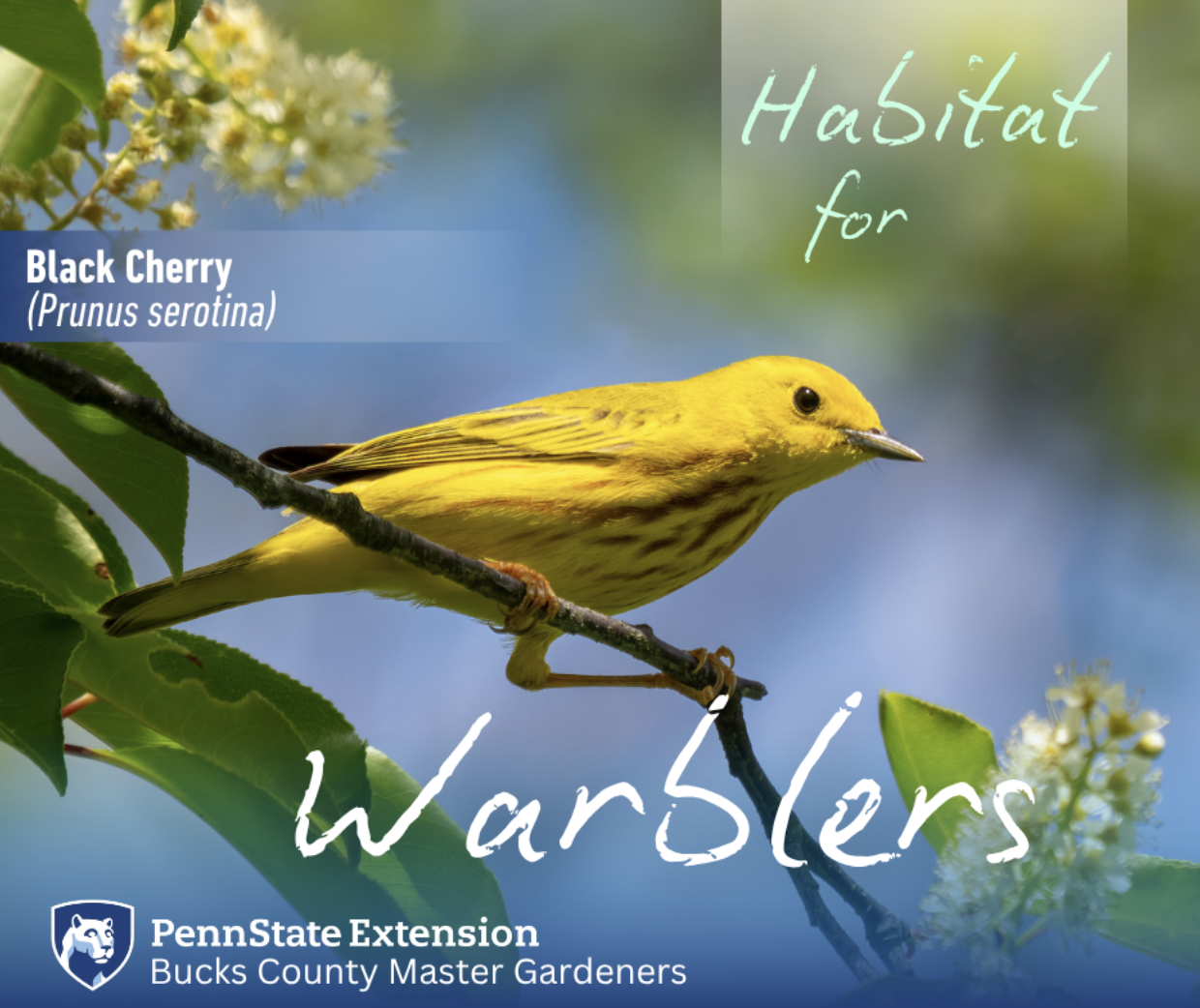
(1) Native trees offer fantastic nesting sites for birds, with protection from predators as well as an abundance of nutritious food — especially in the form of insects, the preferred meal for Warblers.
Those tent caterpillars that cover cherry trees each spring? Unless defoliated beyond recovery, let nature do its job and sustain the birds. 🐛🐛🐛
Photo: Yellow Warbler (Setophaga aestiva) by Rhododendrites, CC 4.0, on native Black Cherry tree (Prunus serotina).
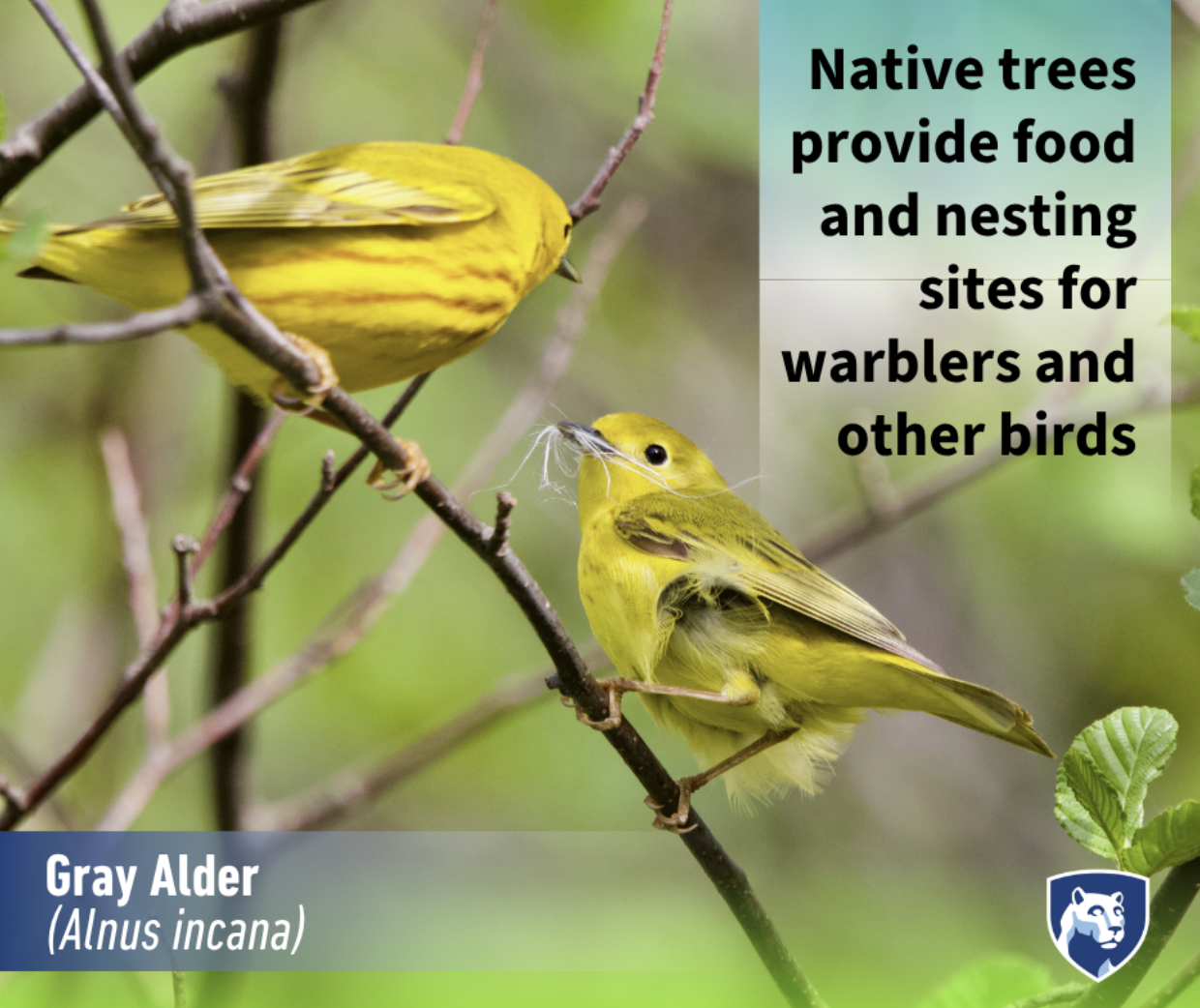
(2) There are several species of wetland-loving Alder native to the northeastern US — including Speckled Alder (Alnus rugosa), Smooth Alder (A. serrulata), and the Gray Alder (A. incana) shown here hosting a pair of warblers.
Be careful with Black Alder (Alnus glutinosa), however, a European native that has escaped to naturalize in the US.
Photo: Breeding pair of Yellow Warblers (Setophaga aestiva) by Jshamgochian, CC 4.0.
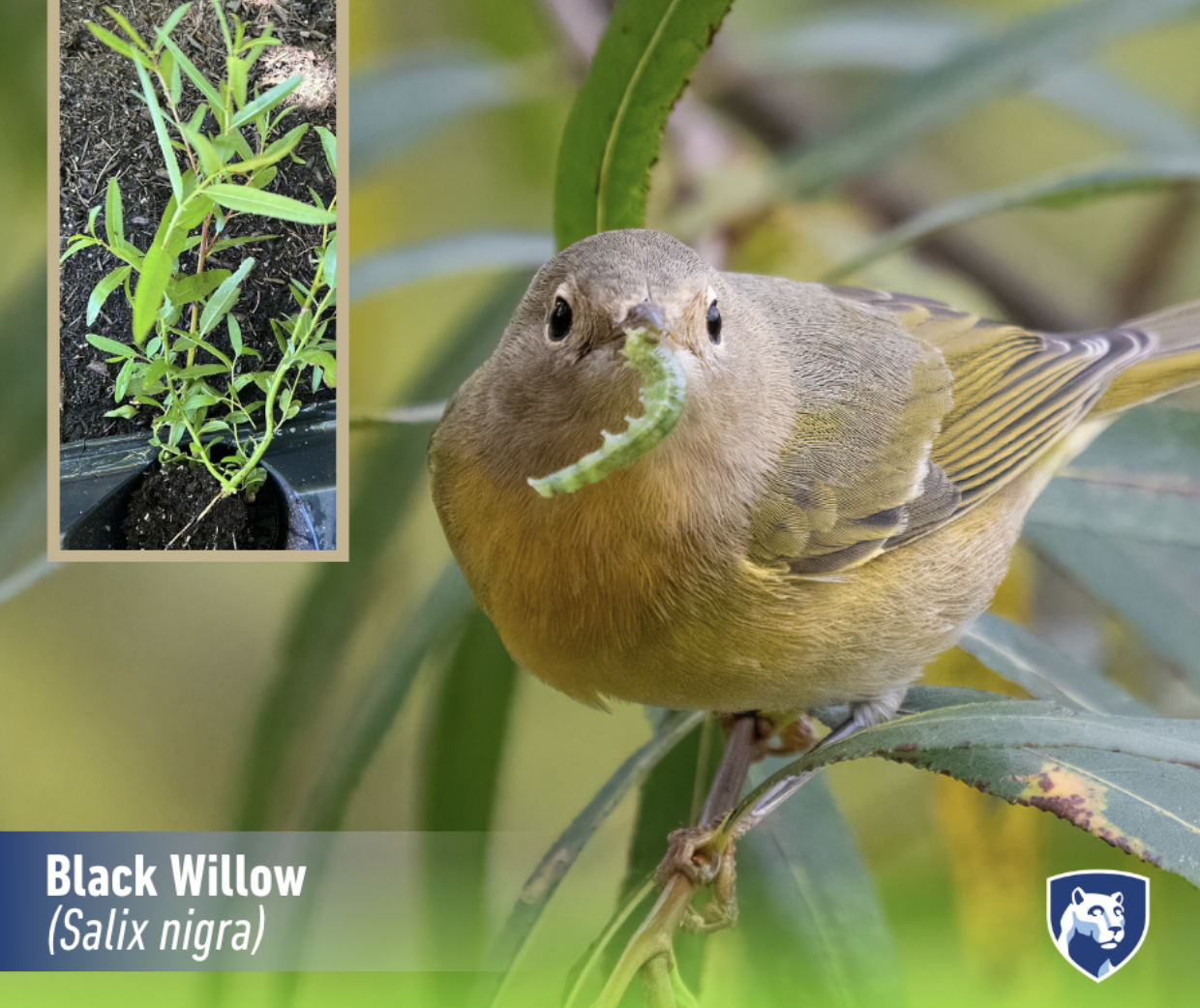
Make it st(3) Like Alders, Willows native to the northeastern US make great additions to riparian sites, thriving on excess moisture to support numerous caterpillars, pollinators, and birds who both feed and nest in nutrient-dense willow shrubs and trees.
Shown here: A Nashville warbler (Leiothlypis ruficapilla) has caught a caterpillar, by Rhododendrites, CC 4.0.and out
Inset, upper left: Black Willow (Salix nigra) saplings can easily be transplanted to damp sites ideal for a tree height of 80 feet. Photo by Elisa Rapaport.
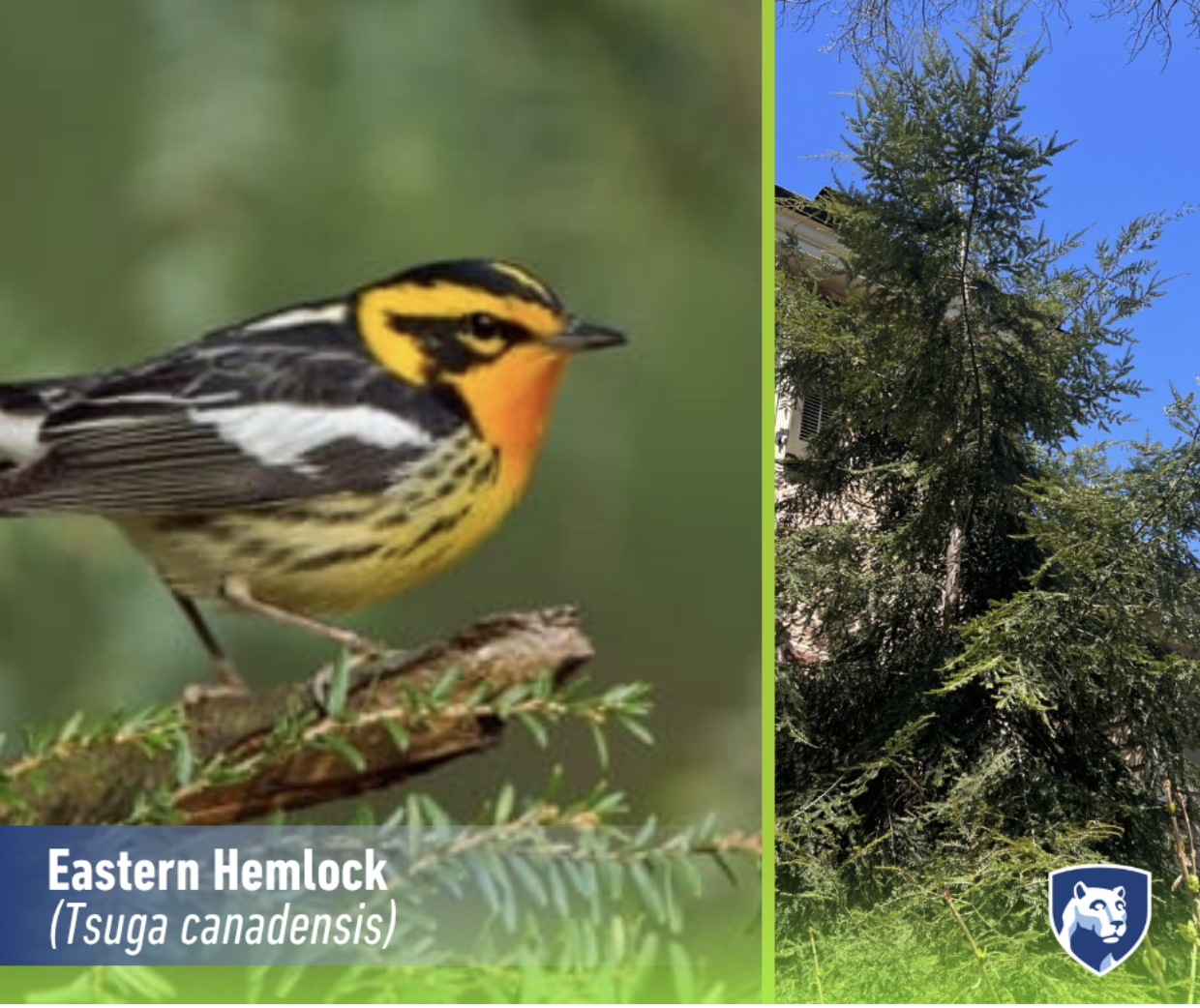
(4) The dense cover provided by shade-loving, evergreen Eastern Hemlock (Tsuga canadensis) trees is especially appealing to warblers, finches, and nuthatches.
Shown here, on left: Blackburnian Warbler (Setophaga fusca), by Corey Hayes, All About Birds.
Right: Although routinely treated for life-threatening woolly adelgid infestations, this Eastern Hemlock provides a delicate bird sanctuary in a suburban residential landscape. Photo by Elisa Rapaport.
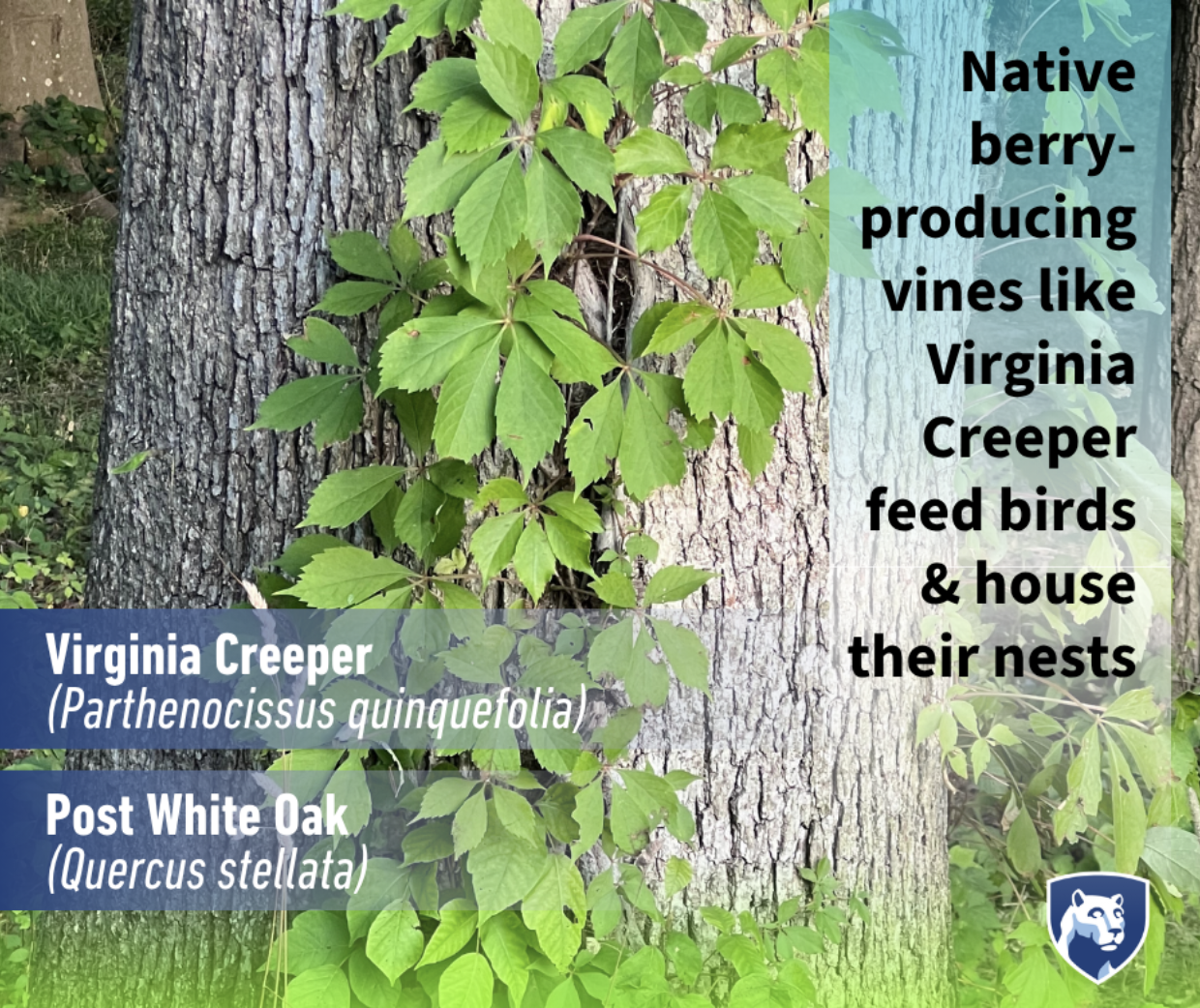
(5) Often found harmlessly climbing hardwoods like this Post White Oak (Querus stellata) tree, Virginia Creeper (Parthenocissus quinquefolia) is a valuable native vine for attracting birds to your garden. Virginia creeper is the host plant for numerous moths including the Sphinx Moth and Wood Nymph.
A bonus of Virginia creeper? The brilliant red fall foliage. Photo by Elisa Rapaport.
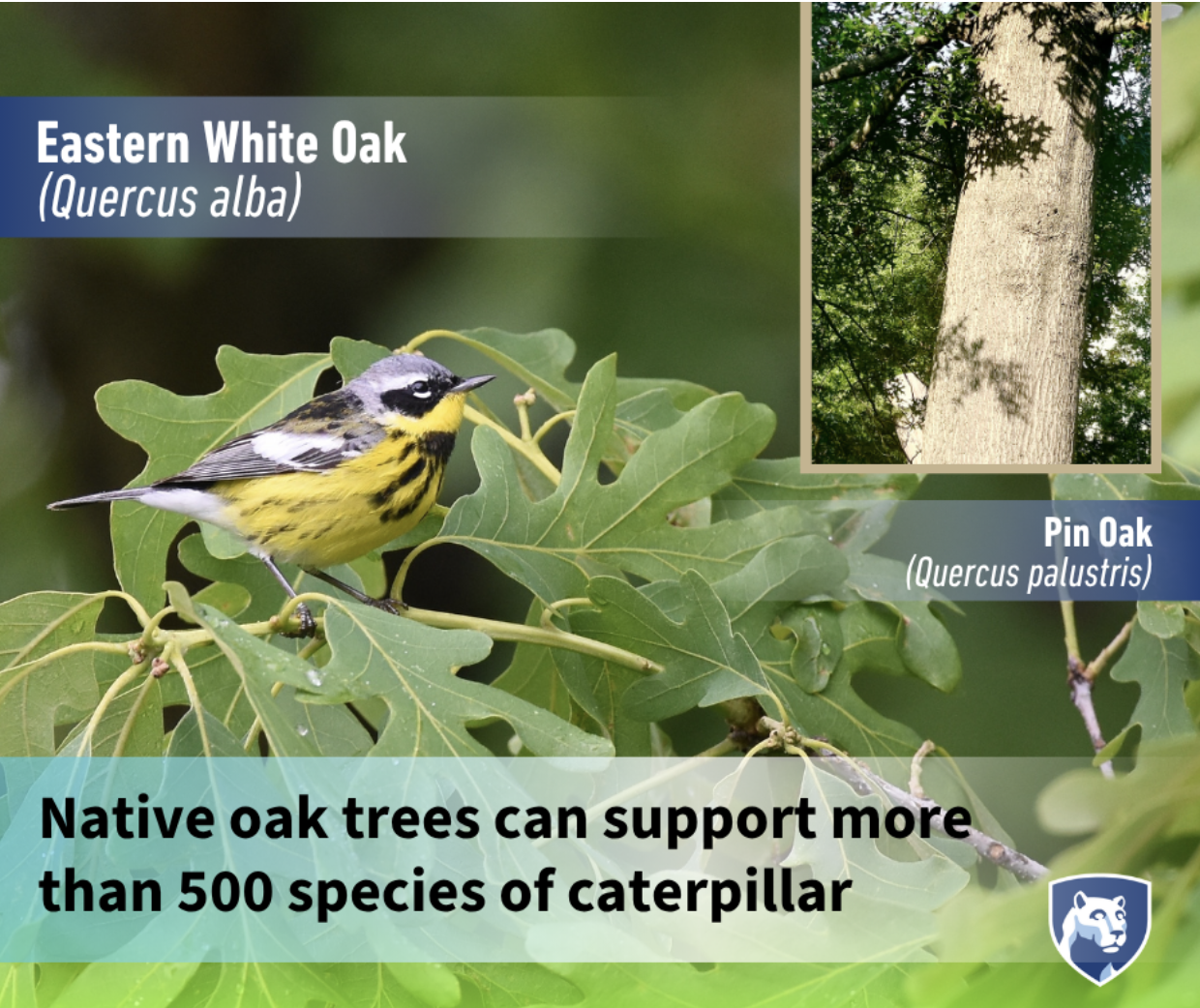
(6) Native oaks (Quercus species) are among the best trees for supporting between 300 and 500+ different species of caterpillar. No wonder they’re a favorite for dozens of year-round birds and mammals — as well as migratory birds like Thrushes and Warblers.
Shown here: Magnolia Warbler in Eastern white oak (Quercus alba), by Andy Reago & Chrissy McClarren, CC 2.0.
Inset, upper right: Pin Oak (Quercus palustris). Photo by Elisa Rapaport.
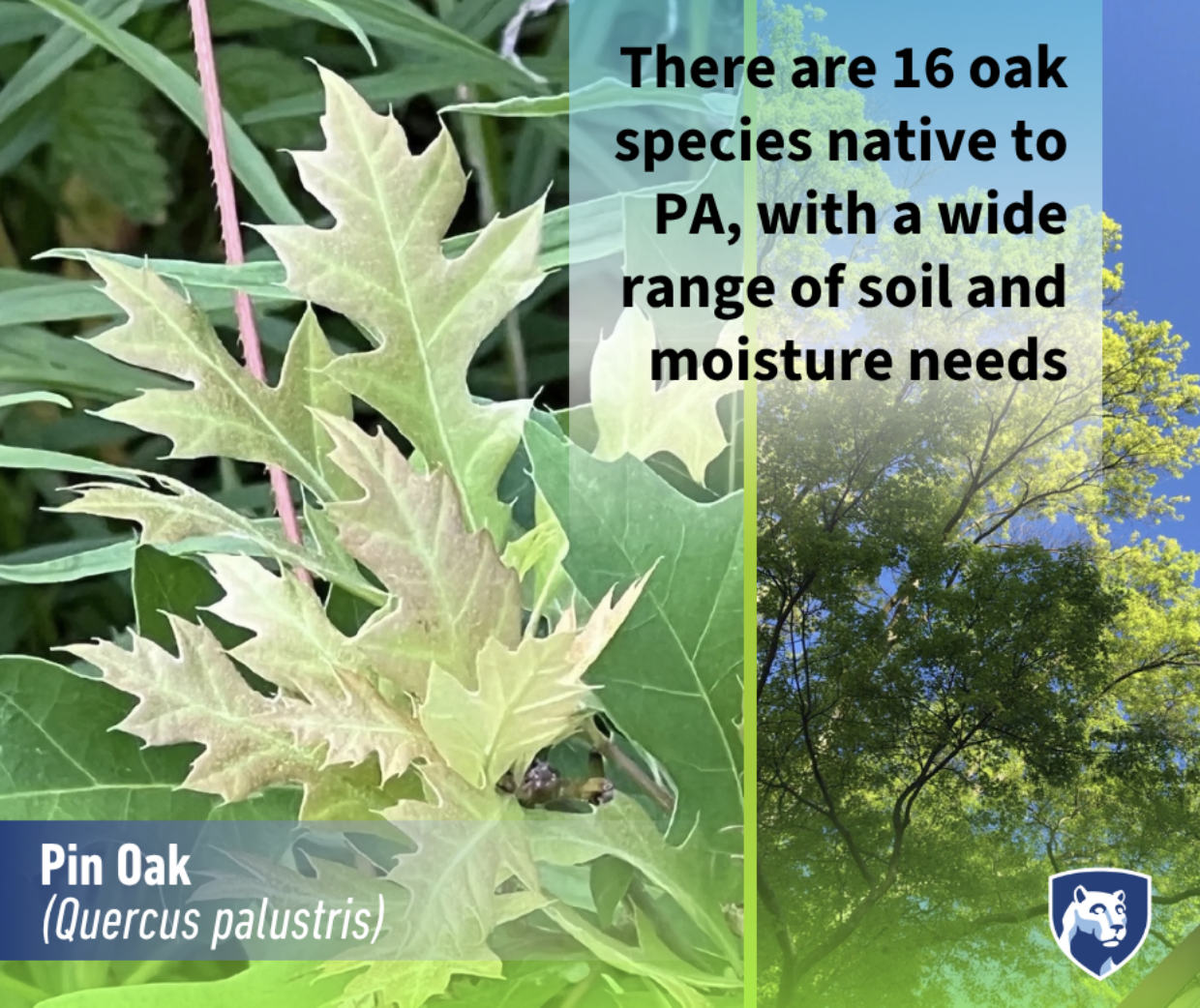
(7) With at least 16 distinct species of oak found native in Pennsylvania, there’s a species bound to thrive in just about any soil conditions. The value brought to the ecosystem by the addition of a single oak tree is incalculable. 🧐 So which locations do you have in mind?
Photos: Pin oak (Quercus palustris), by Elisa Rapaport, Bucks County Master Gardener.
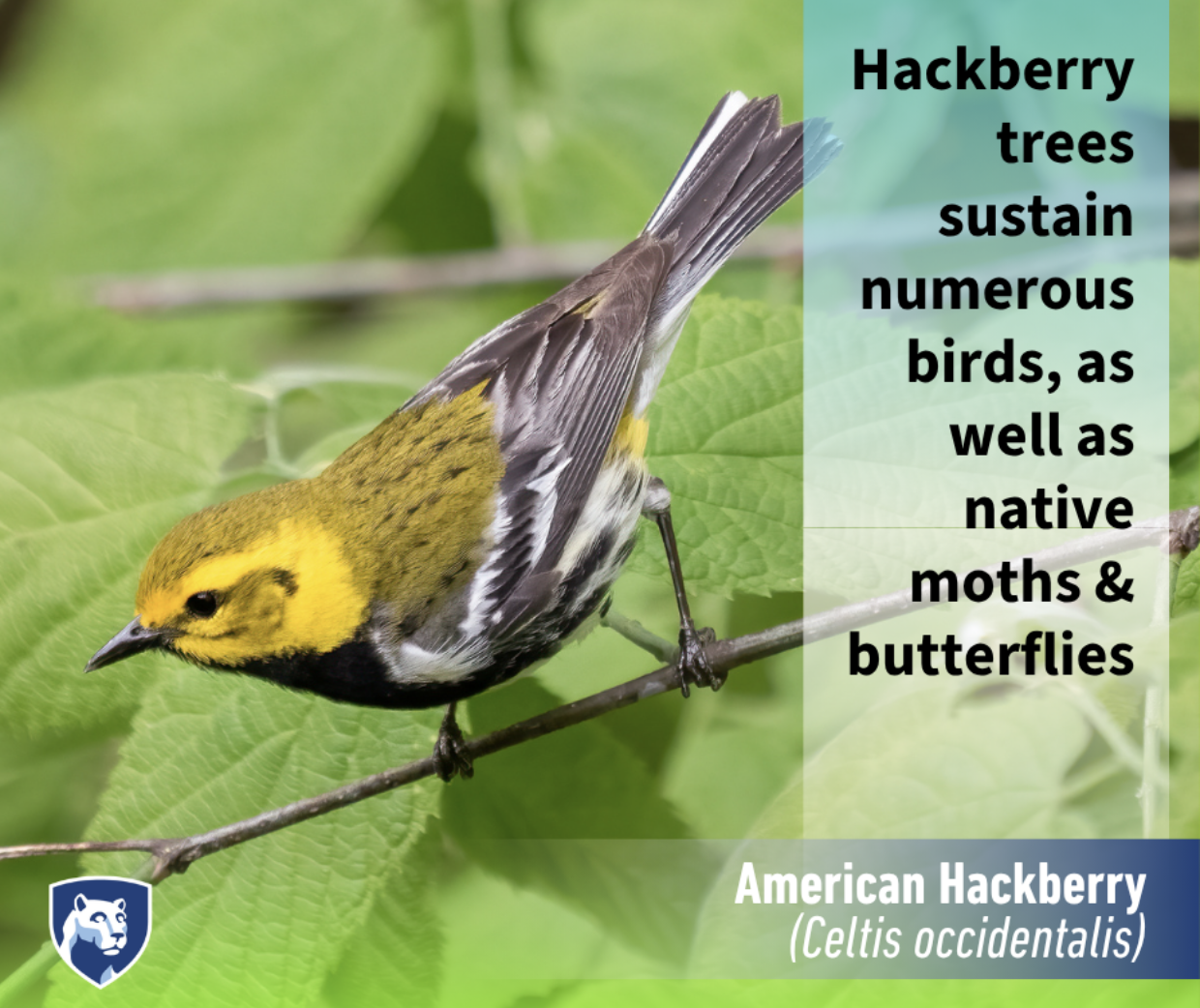
(8) A perhaps underrated native tree is the American Hackberry (Celtis occidentalis), which is known to host — and feed — several species of butterflies and birds like Robins, Waxwings, Bluebirds, Cardinals, and Warblers.
Photo: Black-throated green warbler (Setophaga virens), by Rhododendrites, CC 4.0, on American Hackberry tree (Celtis occidentalis).
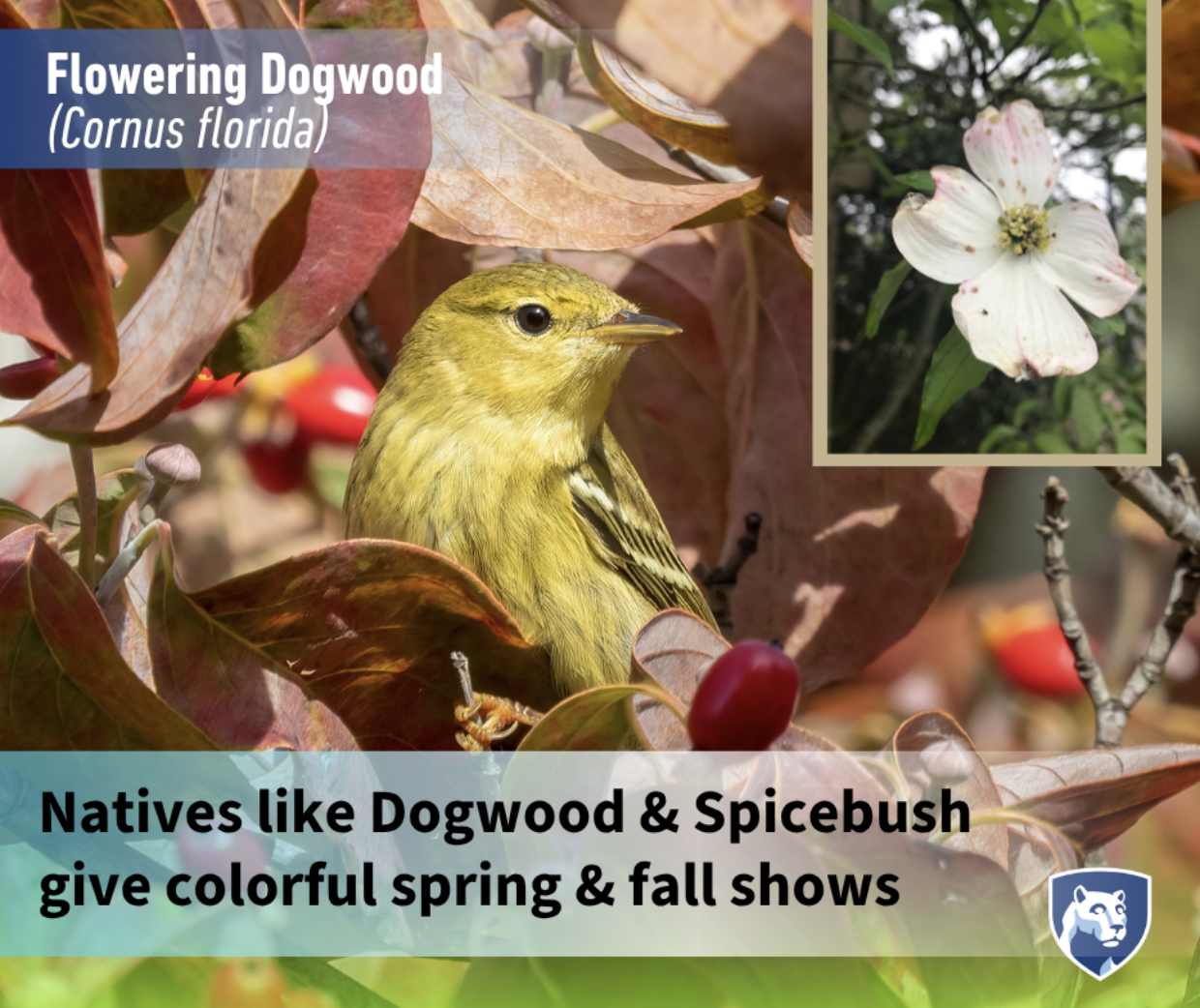
(9) In addition to berries that sustain wildlife in colder weather, flowering trees like native Dogwood (Cornus) offer the added benefit of a spectacular show of spring blossoms.
Shown here: Blackpoll warbler (Setophaga striata) in a native Flowering Dogwood tree (Cornus florida, aka Benthamidia florida), by Rhododendrites, CC 4.0.
Inset, upper right: Photo by Elisa Rapaport.
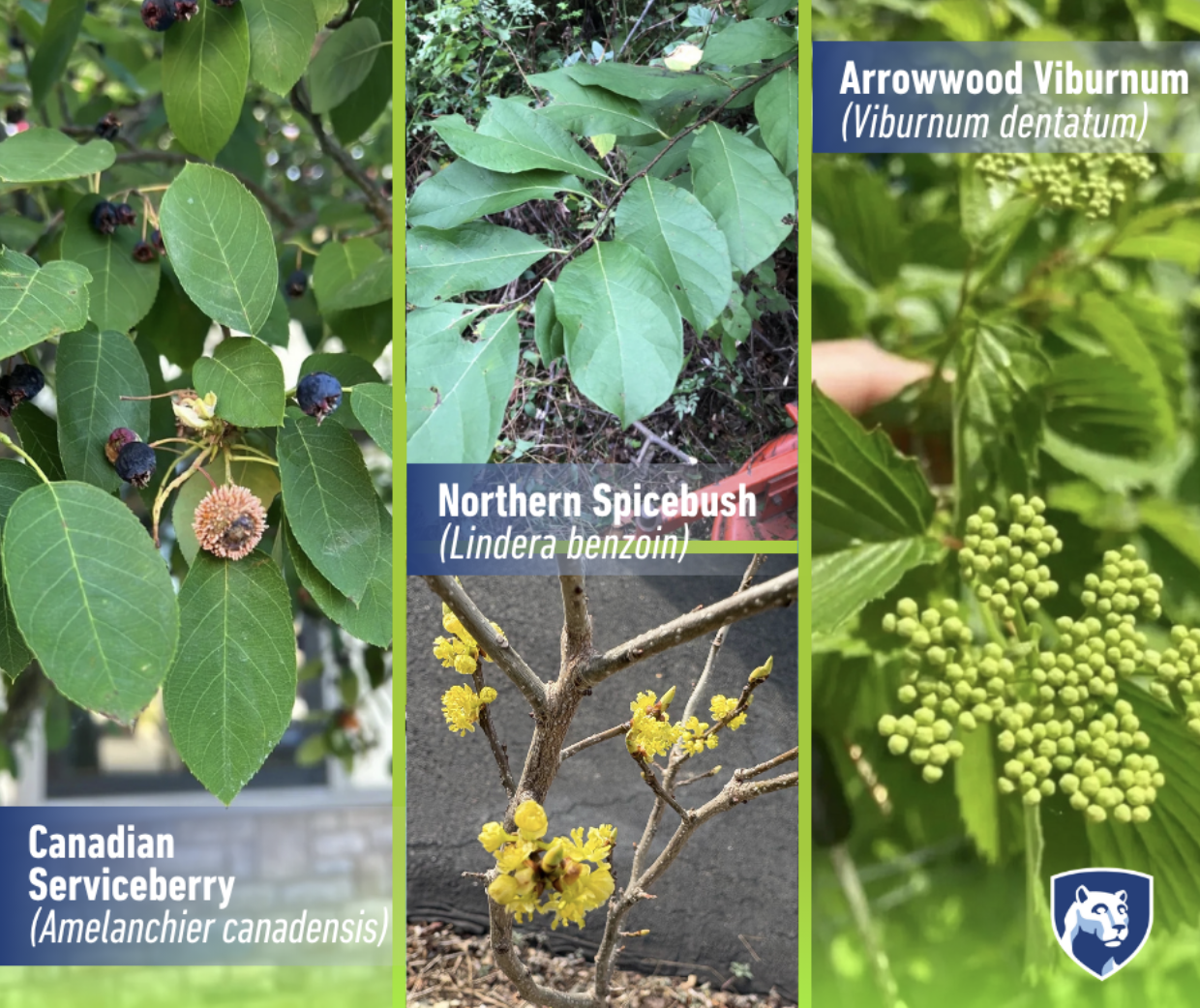
(10) Many dwarf native trees and shrubs support Warblers, including Serviceberry, Spicebush, and several varieties of Viburnum. Don’t be afraid if it looks like insects have been snacking on your Spicebush leaves (top center photo); this is a good indicator that birds may find some tasty caterpillars nearby — though hopefully not too many of the Spicebush Swallowtail butterfly larvae. 🦋 Nature.
Shown here, left: Serviceberry (Amelanchier canadensis) is an excellent replacement for the invasive Bradford pear (Pyrus calleryana). Photo by Elisa Rapaport.
Bottom center: Spicebush (Lindera benzoin) bursting with bright yellow blossoms in early spring — also a terrific alternative to an invasive species: Forsythia spp. Photo by Cathy Raupp.
Right: Arrowwood Viburnum (Viburnum dentatum) will bloom with pale pinkish-white blossoms in early summer, but sustain birds long beforehand. Photo: Elisa Rapaport.
Resources:
- Cornell Botanic Gardens’ Lecture: Keeping Common Birds Common, Sunday, April 26 - free with Doug Tallamy pre-registration required for zoom
- Cornell Lab of Ornithology
- Garden for Birds Project - there's many resources
- Transcript/Podcast from Margaret Roach
https://www.wildflower.org/plants/result.php?id_plant=vide
https://extension.psu.edu/spice-up-your-garden-with-spicebush
https://extension.psu.edu/native-plant-spotlights-for-wildlife-friendly-landscaping/
Author: Susan Harrison, Penn State Master Gardener, Bucks County
Photos: CC (1-3, 6, 8, 9); Corey Hayes (4); Cathy Raupp (10); Elisa Rapaport (3-7, 9, 10).
Blog Credit: Thanks for Penn State Master Gardeners, Bucks County for letting us use this article.
