

Fall planting for the birds
Author: Trish Harrington
Pictures: Trish Harrington
Walking around in fall, besides noticing all the bright colors, you may see many berries on shrubs, vines and trees. Fall is a great time to plant. Trees and shrubs will continue to grow roots throughout November and into December and this is why it is a good time to plant. The cooler weather and the dormancy of the crown of the plant makes it less stressful and you have a better chance of the plant making it through the winter.
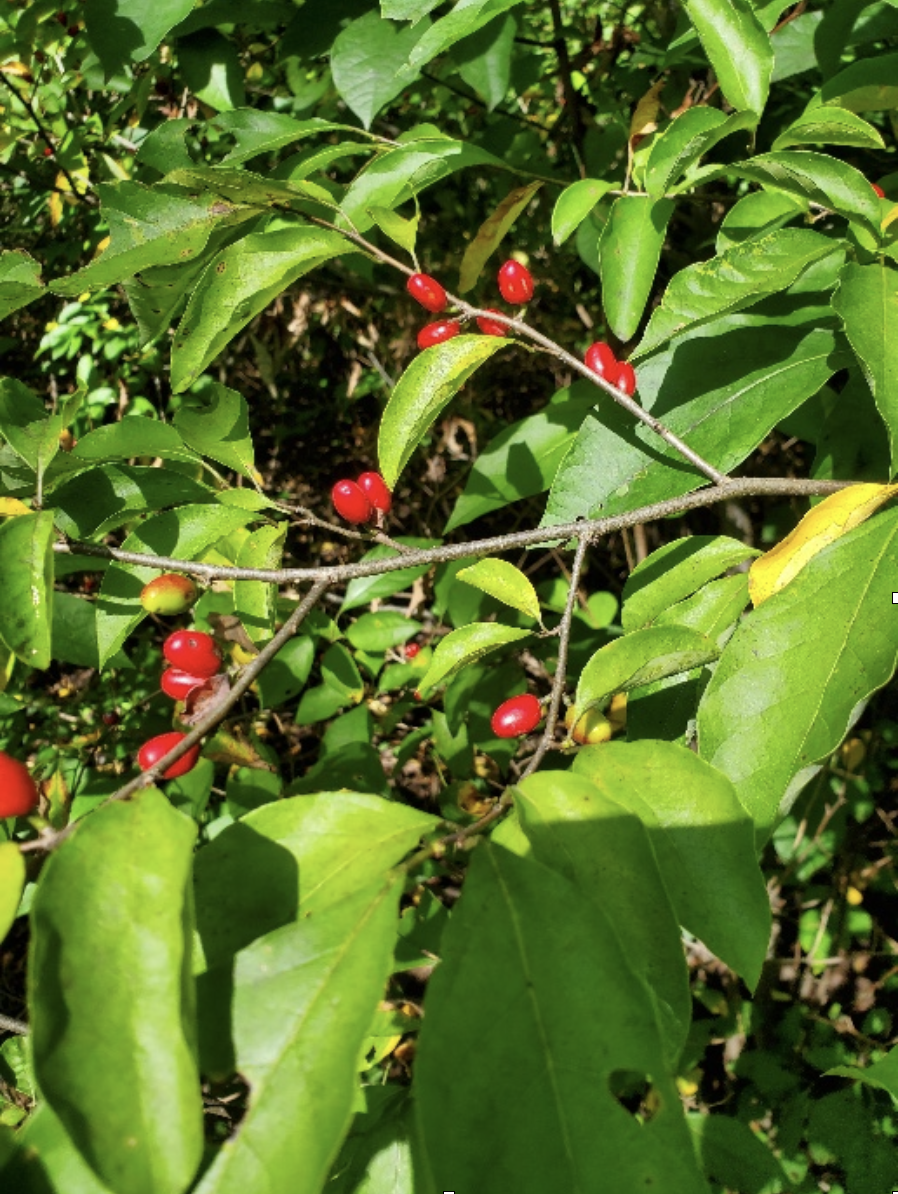
Spicebush
This is a deciduous shrub that grows in shade. It is the host plant for the Spicebush Swallowtail Butterfly. It gets small yellow flowers in spring, followed by green berries that will turn red in September. This are a great source of food for migrating birds, especially Robins, Wood Thrush, Catbirds and others
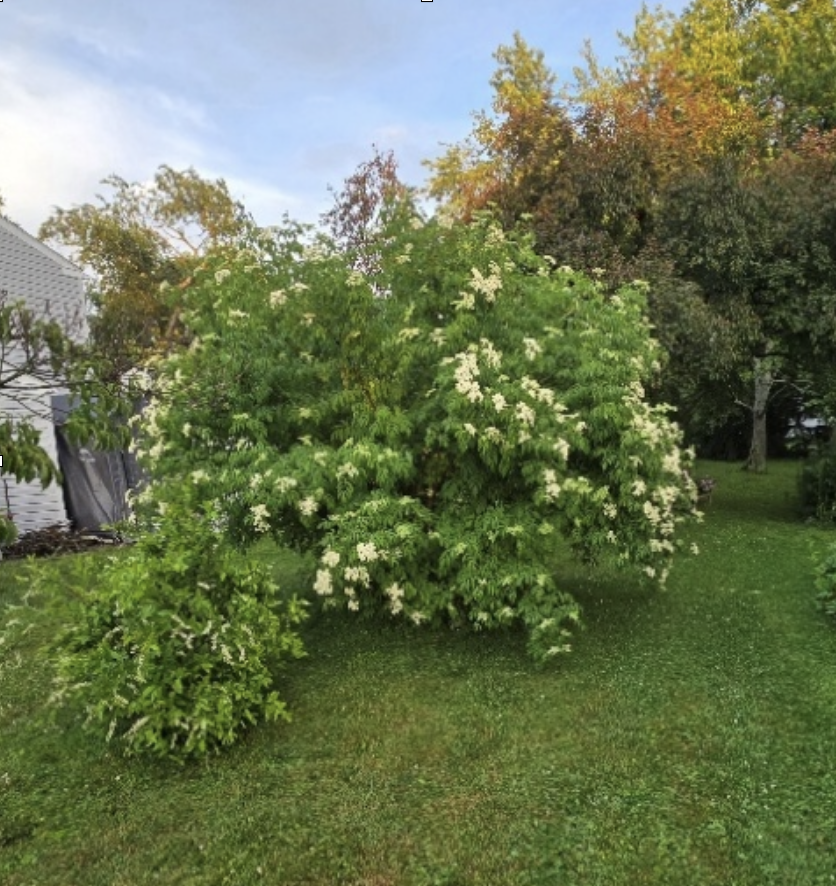
Elderberry
This is a large shrub that likes moist soil. It is a prolific bloomer with beautiful umbels of white flowers followed later in summer by bluish black berries. These are relished by migrating catbirds and robins. Elderberries are great for people too, but need to be cooked prior to eating. You can make Elderberry syrup which is beneficial for the immune system during winter. I get so many berries that I make syrup and still have plenty for the birds. I make it with honey as it acts as a preservative. Although Elderberry shrubs get very large, you can control them by pruning in winter.
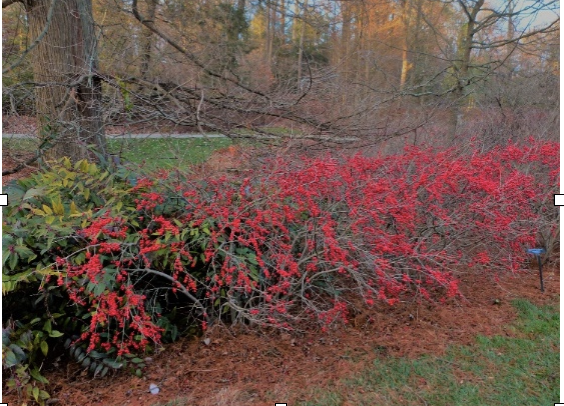
Winterberry
This is a deciduous Holly. It gets green berries that turn bright red by winter but often eaten by birds in fall, but also sometimes the fruit hangs on through December. The bright red berries make nice color for the winter landscape. It is a dioecious shrub, meaning it has male and female flowers on separate plants, so you need to buy at least 3 to make sure you get fruit.
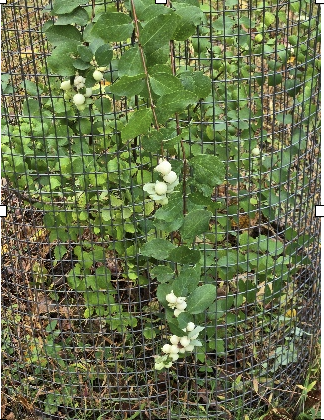
Snowberry
This is an under-utilized native shrub. It gets berries that turn white in winter and are a good source of food for birds.
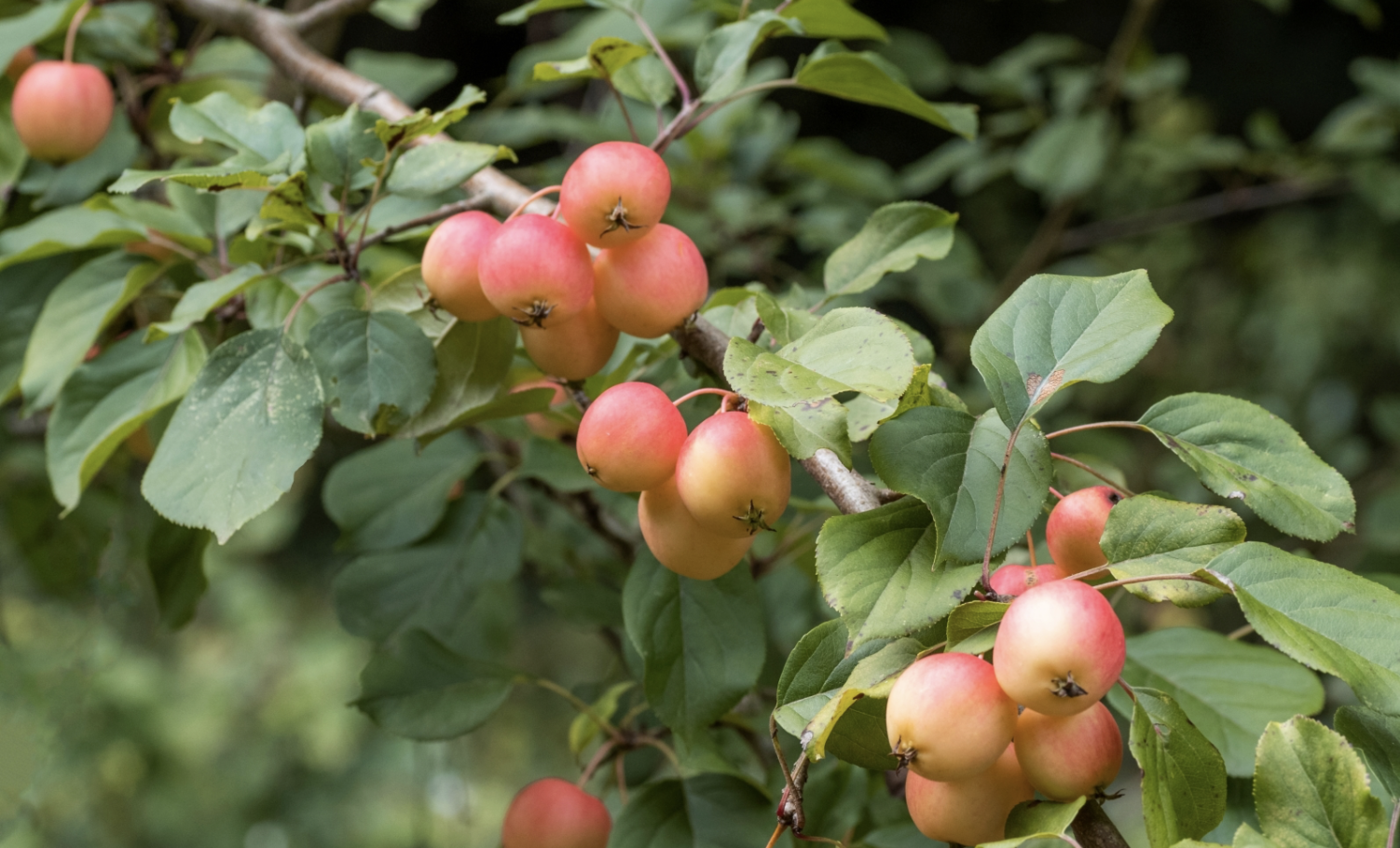
Crabapple
Although not native, there are many varieties that have small fruit that the birds love in fall and winter. I also have noticed there are many insects that like to use the rough bark for hiding in, and the birds love to forage on these trees especially in winter.
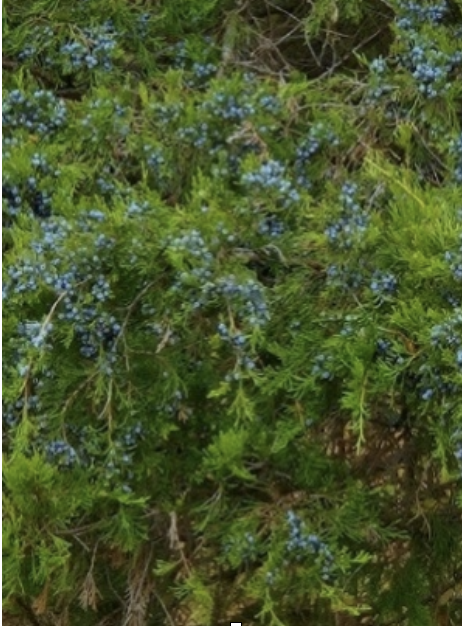
Red Cedar
The blue Juniper berries are an important food source in winter for Cedar waxwings, wintering robins, and Yellow Rumped Warblers. They are also great roosting shelters for wintering owls such as Saw Whet and Long Eared Owls.
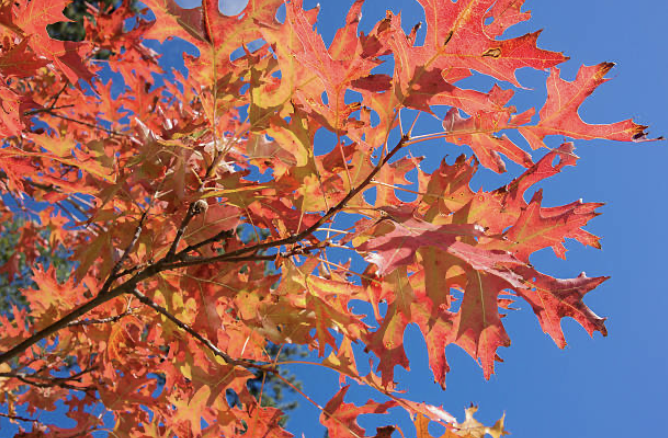
Oak Tree
These are one of the keystone trees. They support over 534 species of lepidoptera, which in turn feed many birds in spring. Fall is a great time to plant an oak.
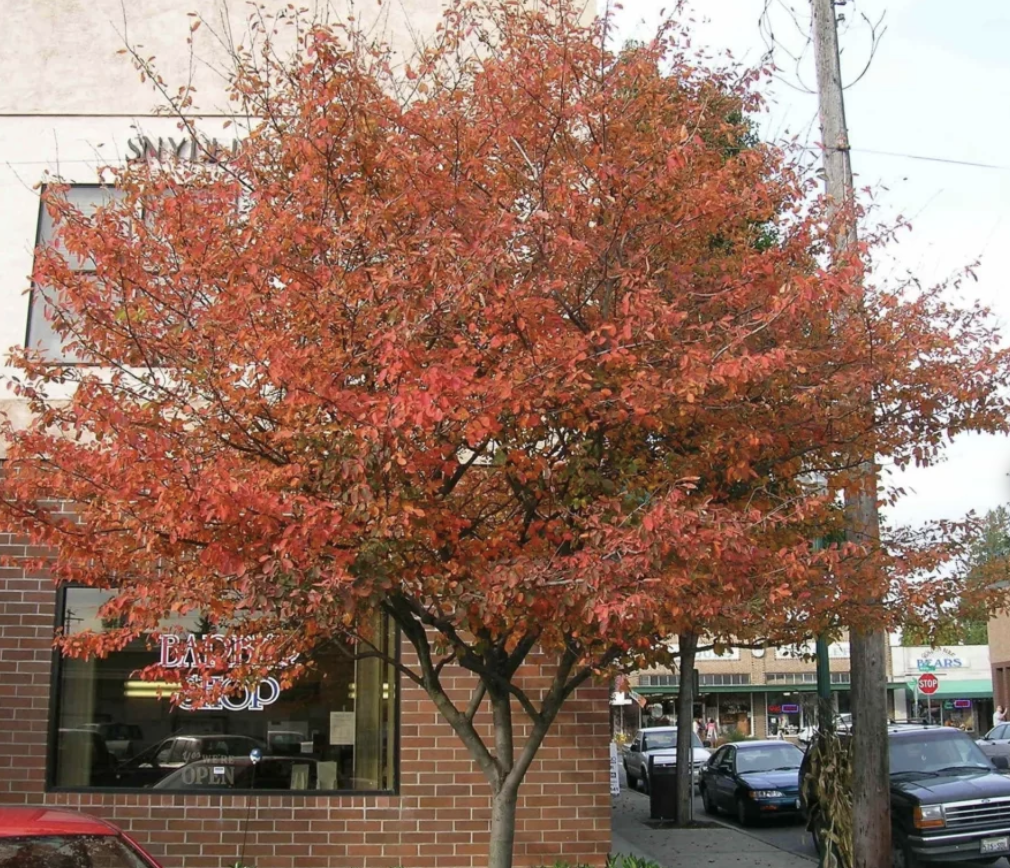
Serviceberry
This is a great smaller tree for the home landscape bearing beautiful bluish berries in June (edible, and sweet like blueberries). They can take many different types of soil.
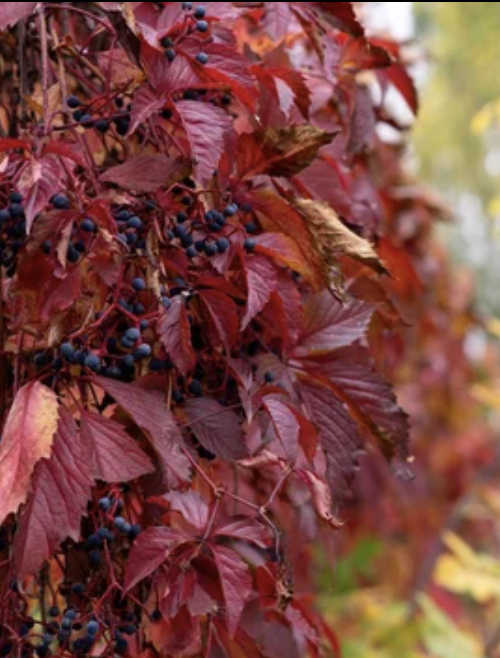
Virginia Creeper
Another addition to your yard could be a vining plant such as Virginia Creeper. Although these native vines are aggressive, a wild space in your yard could accommodate these vines which also provide food for birds in their nutritious berries in winter.
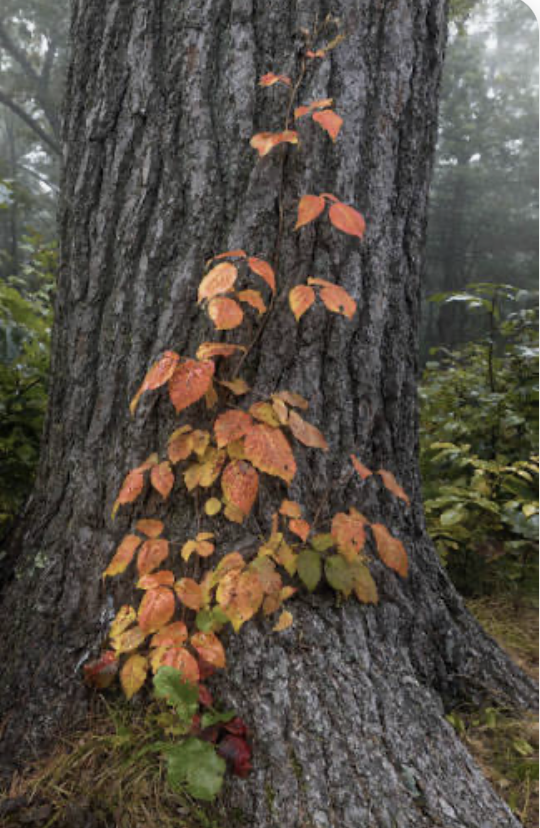
Poison Ivy
And let’s not forget though not for the faint at heart, the lowly native poison ivy vine. It provides food for wintering birds in the form of very carbohydrate rich berries that Yellow Rumped warblers love. I have also seen Red Bellied woodpeckers eat the berries.
Enjoy fall in all its glory. If you can, plant a native tree or shrub for the birds. Remember to add some raked leaves around your shrubs and trees to make ‘soft landings’ for insects that drop down out of the crowns in spring. The leaves will help insulate the roots as well throughout winter.
