

Eastern Bluebirds at Nockamixon State Park
Author: Victoria Mahmoud
Photos by Jan Hardner
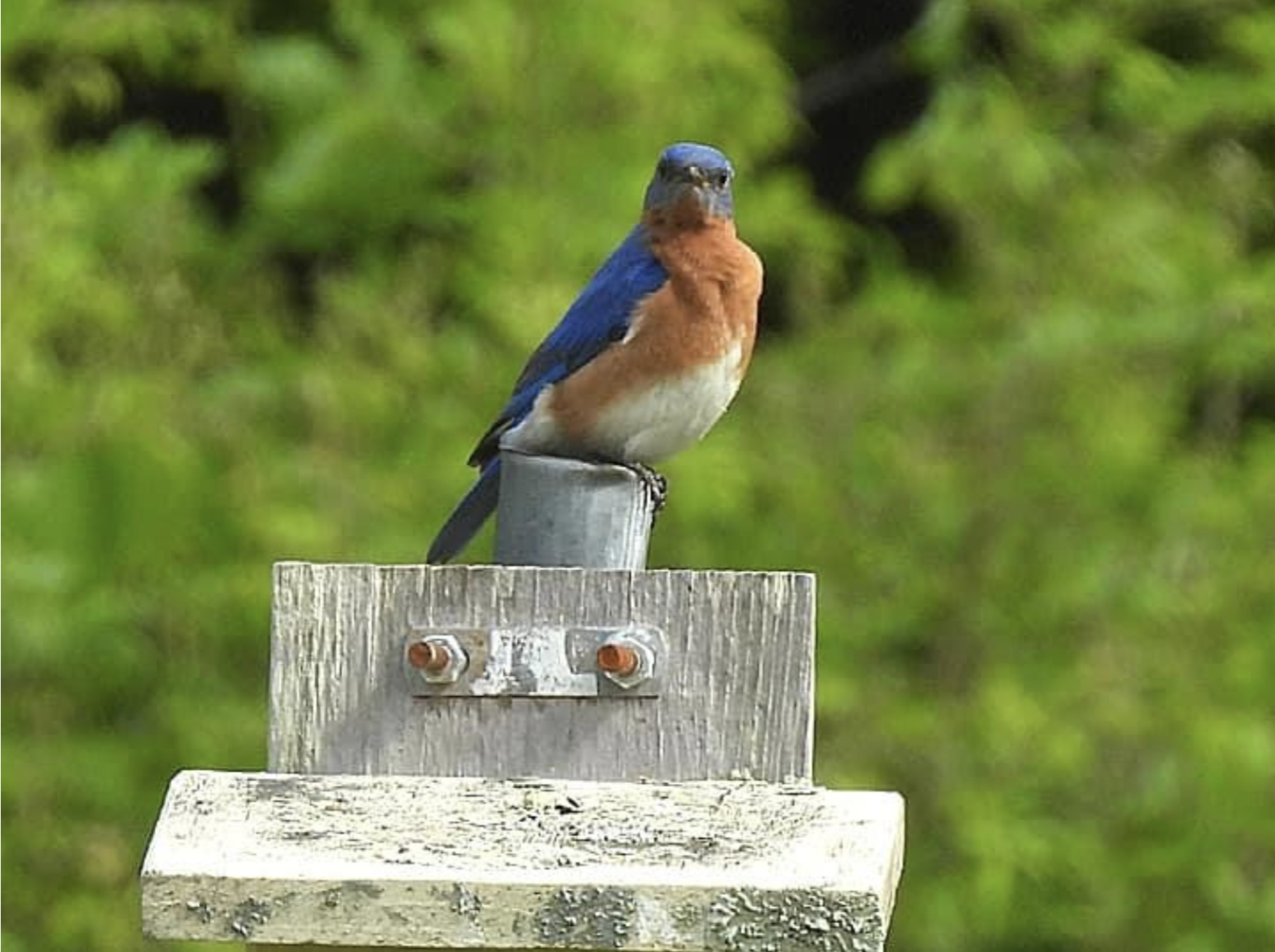
Eastern Bluebird on the nest box
Birders and non birders alike know that flash of blue and that soft warbling voice is an Eastern Bluebird. Young birders think of these popular beauties as common, but more experienced birders remember when they were uncommon residents. Bluebird population was at its highest in Pennsylvania around 1900 when two-thirds of land was farm land. As farm land declined to make room for development and reforestation, so did bluebirds. Also, these birds are cavity nesters, so when European starlings and House sparrows were introduced to the United States, bluebirds lost in this competition for nesting sites. In Bucks county the Bluebird population trend was labeled as abundant in 1876, uncommon even in 1998 and now considered common. What happened so that these birds made such a reversal?
One important factor to their increase is citizen science with individuals either installing a Bluebird house on their own property or installing them in parks. For example, in 2026, nine cavity nesting volunteers participated at Nockamixon State Park. The volunteers are led by Friends of Nockamixon State Park member and cavity nesting trail coordinator Jan Hardner.
Jan and her husband Bob have been building, installing, and monitoring Bluebird houses as volunteers at Lake Nockamixon State Park since the late 1980s. Cavity nesting volunteers at Nockamixon State Park monitor the 62 Bluebird boxes that are situated at both the north and south sides of the lake. Additional boxes are planned for 2027. Bob makes the boxes from donated pine wood following American BlueBird Society standards.
2026 nesting results have not yet been tabulated, but here are the 2025 and 2023 results for all birds nesting in the Bluebird houses at NSP.
2025 results for all bird species:
98 nests were built
430 eggs laid
356 hatched
336 fledged
Fledgling totals by species:
156 Bluebirds
46 House Wrens
134 Tree Swallows
Lost eggs and lost hatchlings were mainly due to wren dominance in a few areas and extended rain.
2023 results for all bird species:
72 nests were built
308 eggs laid
274 hatched
259 fledged
Fledgling totals by species:
124 Bluebirds
35 House Wrens
100 Tree Swallows
The data Jan collects is sent to Rachel Nazaruk, Environmental Education Specialist at Nockamixon State Park. Rachel takes that data on the Bluebirds and adds information on nesting Purple Martins at NSP and sends it to Pennsylvania Department of Conservation and Natural Resources, PA DCNR.
Jan trains and supports all of the bluebird box monitor volunteers, monitors boxes, compiles results, and solicits companies for donations of wood for box building. The majority of the boxes on the trail were built by Bob, who builds, installs and maintains the boxes throughout the park. Bob is also a trail maintenance volunteer.
Bluebirds not only have to compete with other birds for nesting sites, but are subject to predation by raccoons and snakes. Predator guards are built and added to the poles as needed.
Right now all volunteer Bluebird nesting opportunities are filled at NSP, however, visit https://friendsofnockamixonstatepark.org/bluebird-monitoring/ for updates and other opportunities or contact your local park.
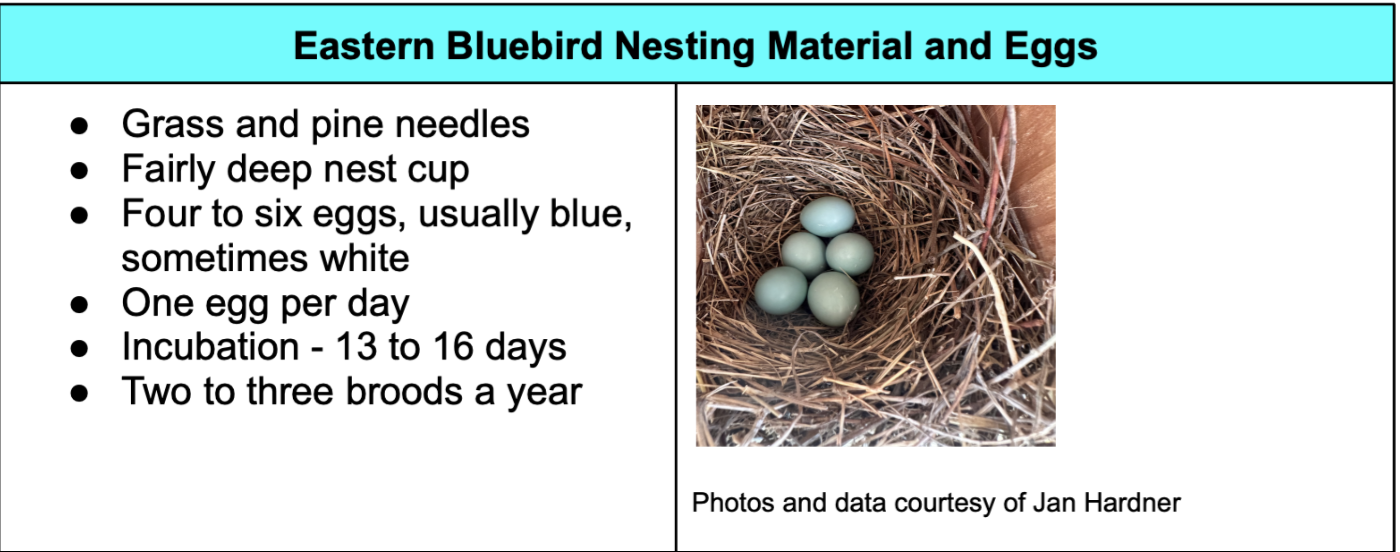
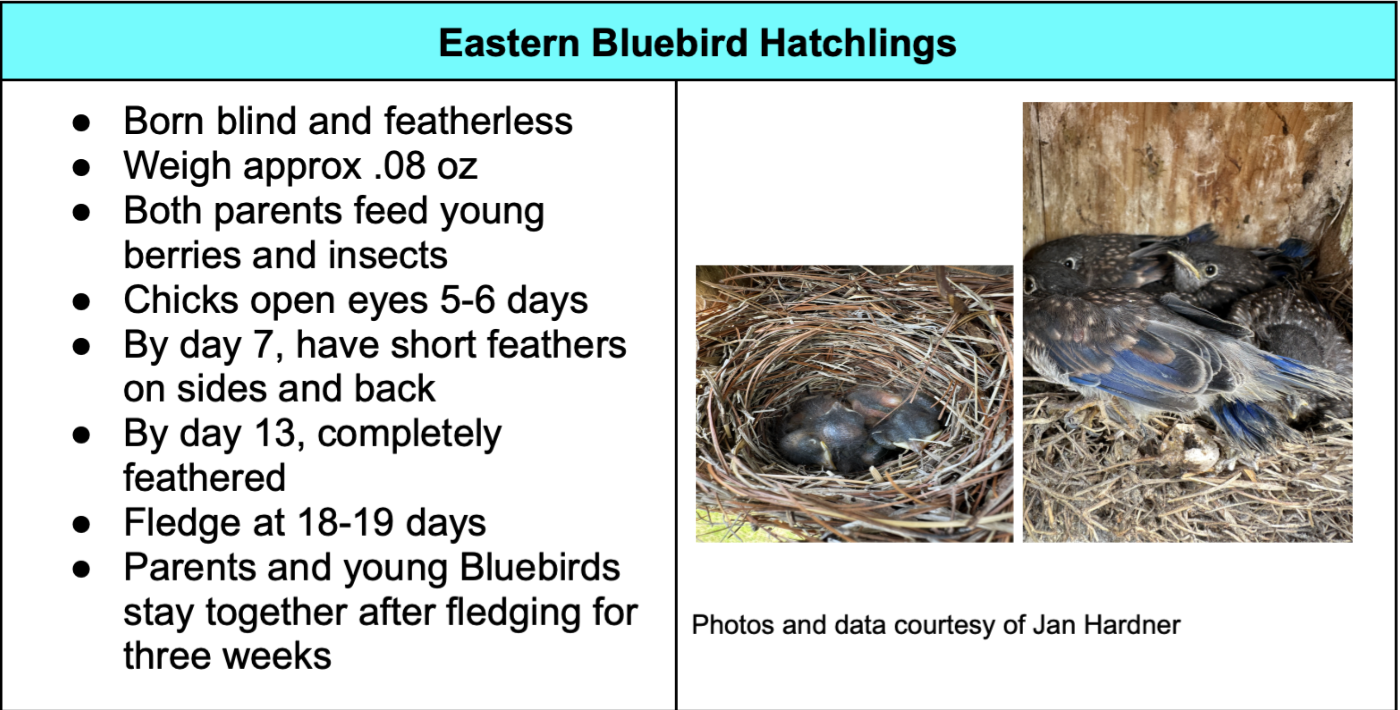
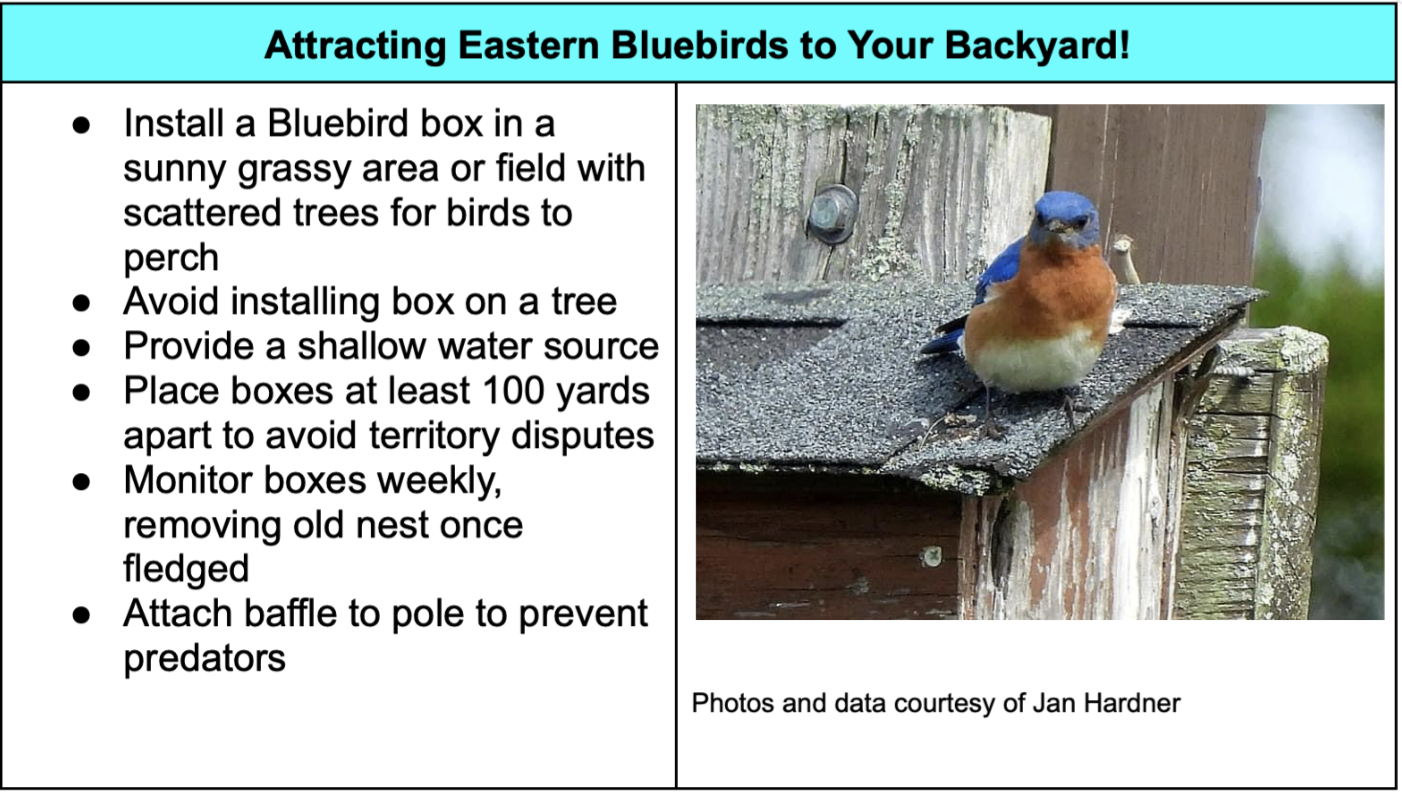
Bluebirds not only accept the help of humans, they absolutely need it.
– Steve Grooms and Dick Peterson, Bluebirds, 1991
Birds of Bucks County. (2024). Bucks County Audubon Society at Honey Hollow.
Bluebird monitoring. Friends of Nockamixon State Park. (2026, July 11). https://friendsofnockamixonstatepark.org/bluebird-monitoring/
Eastern Bluebirds. Eastern Bluebirds | Game Commission | Commonwealth of Pennsylvania. (n.d.). https://www.pa.gov/agencies/pgc/wildlife/discover-pa-wildlife/eastern-bluebirds#accordion-5b186d1575-item-0e65af642a
Home. North American Bluebird Society. (n.d.). https://www.nabluebirdsociety.org/
News: Footnotes newsletter. Appalachian Mountain Club Delaware Valley Chapter. (2026, June 24). https://amcdv.org/news/footnotes/
