

Sky Islands of Southern Arizona
Southeast Arizona Birding - Part 2
Author: Vin Pannerselvam
Pictures: Carol Fitzpatrick, Christopher Plummer, Sethu Manickavel & Vin Pannerselvam
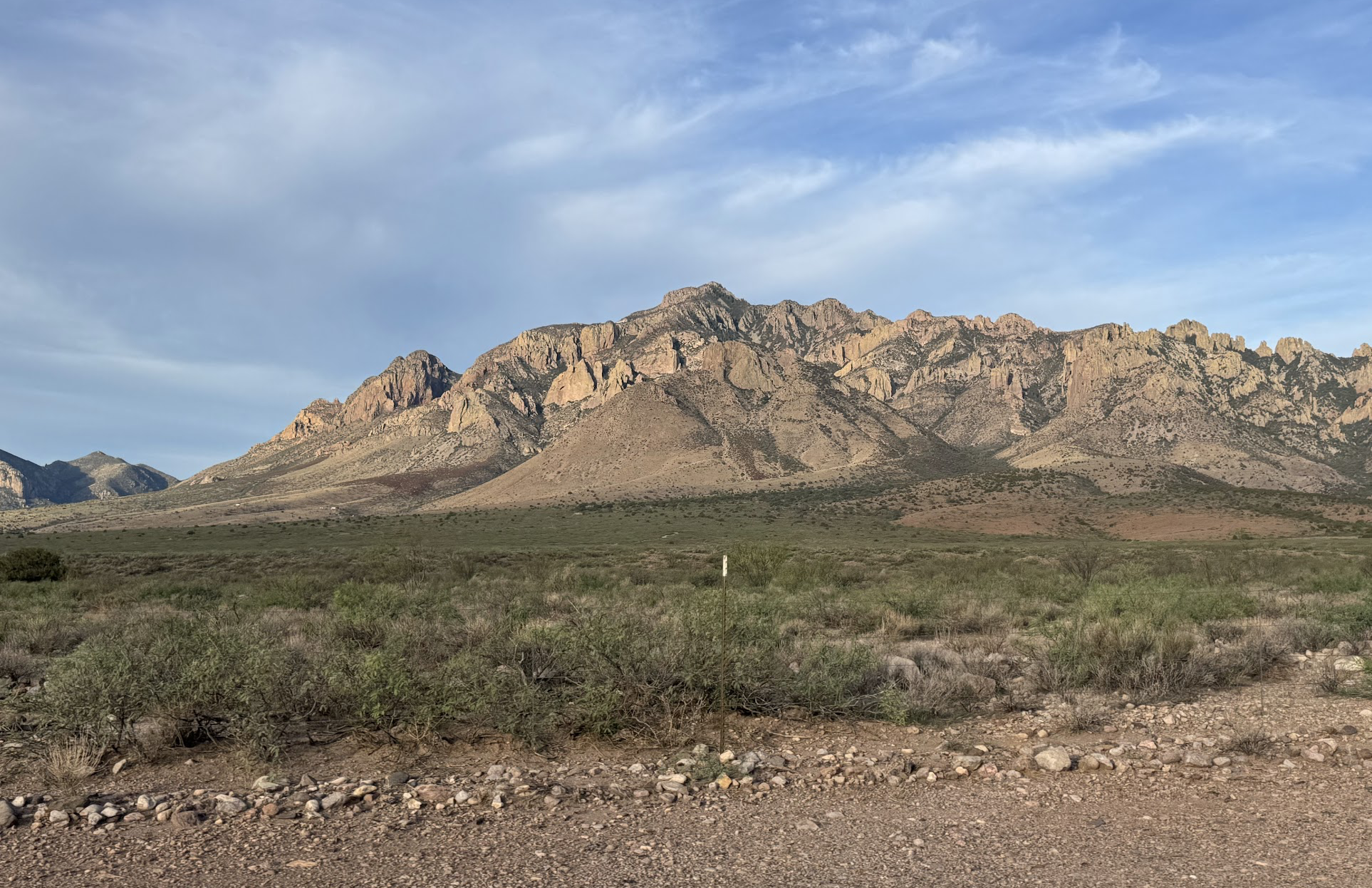
Chiricahua Mountains
It was a bit hard to part with Cave Creek, as our hearts were filled with pure bird joy. Day four in SE Arizona started with a drive to Sierra Vista in the morning. Our plan was to hit a few important stops before reaching our Airbnb rental. Had we started really early, we could've stopped at a cattle tank at the intersection of State Line Rd and Sulphur Canyon Rd. The lady at the Cave Creek ranch office hinted that the spot is good for grassland species such as Western Meadowlark, Vermilion Flycatcher, and Botteri's Sparrow. I put that tip in my "places to visit next time" jar and moved on.
As soon as we bid farewell to the town of Cave Creek and hit the NM-AZ highway, we saw a raptor perched on a dried Sotol (also known as Desert Spoon) stem. That's a typical trait of a Swainson's Hawk. A drive-by birder couple instantly identified us as crazy out-of-state birders (who else can be out on a desert swinging a camera and binoculars along a busy highway). They confirmed it was a Swainson's. The Chiricahua Mountains in the background looked taller and closer with not a single tree between us and the foothills.
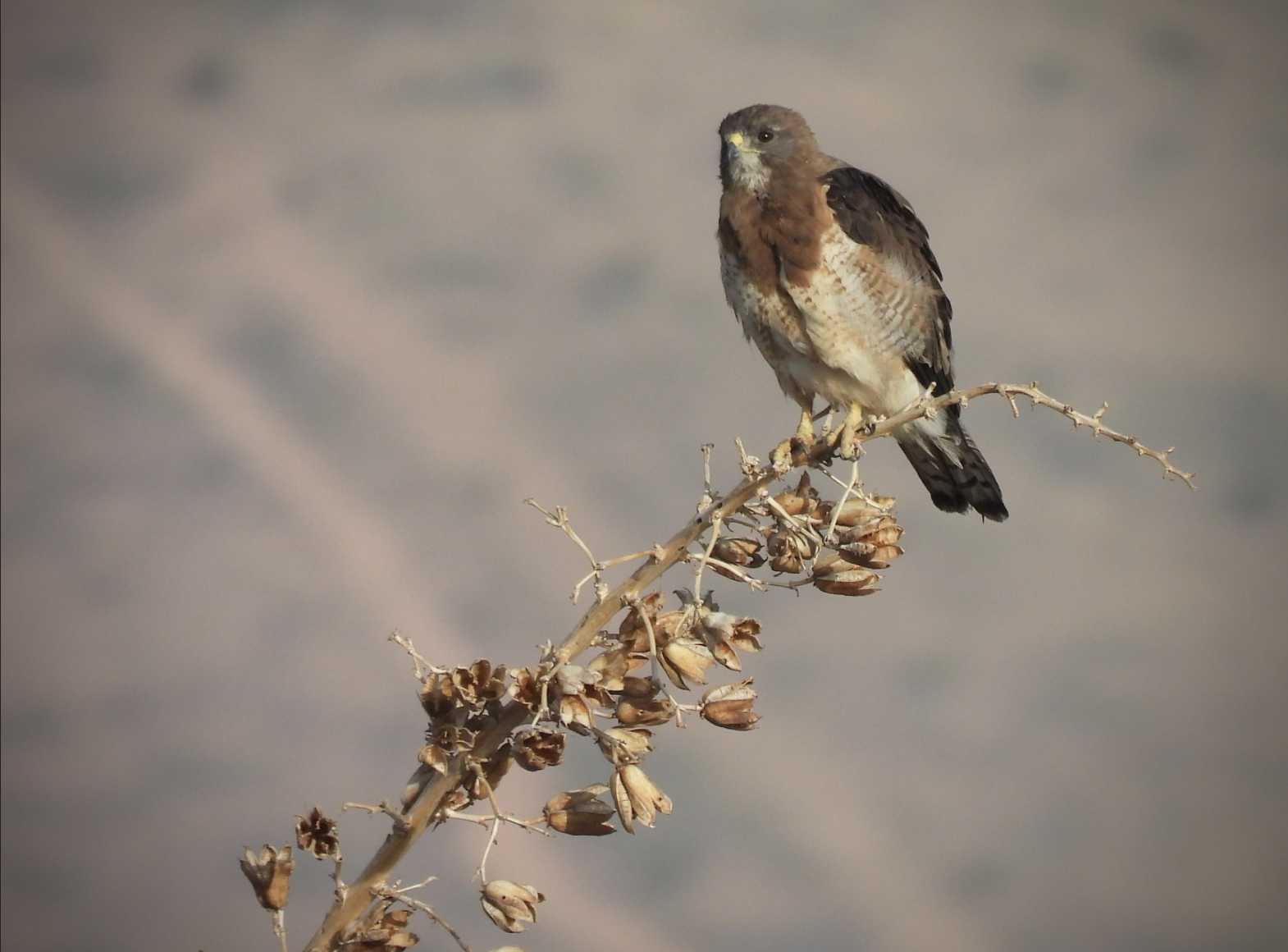
The majestic Swainson’s Hawk on Sotol
“Swainson's Hawk, a creature both guardian and wanderer, rises from the prairie like a quiet thought carried on warm wind... Its flight is a poem written in swift strokes, a declaration without sound... Soon it will follow the long road to Argentina, a path carved by generations.”
— Valleys of Dreams
Along the way, we spotted a few roadrunners and looked for Burrowing Owls in the farmlands and Zone-tailed Hawks on the wing, but in vain. We passed the border town of Douglas, where we also spotted the infamous brown thing called a border wall. All the birds and wildlife must be smirking at us — are these humans proud of this ugly thing? We picked up a few more Swainson's Hawks on the fence posts along the highway. Chris got a Zone-tailed Hawk, which I missed, again.
San Pedro River House in the Conservation Area was our first stop. By the time we arrived, it was already well past 9 a.m. The temperature was climbing past 100 degrees, and with a river nearby, the humidity was suffocating — not ideal for birding. The San Pedro River had shrunk to a small stream in summer, dressed up with a cottonwood riparian buffer forest — an oasis in the Arizona desert.
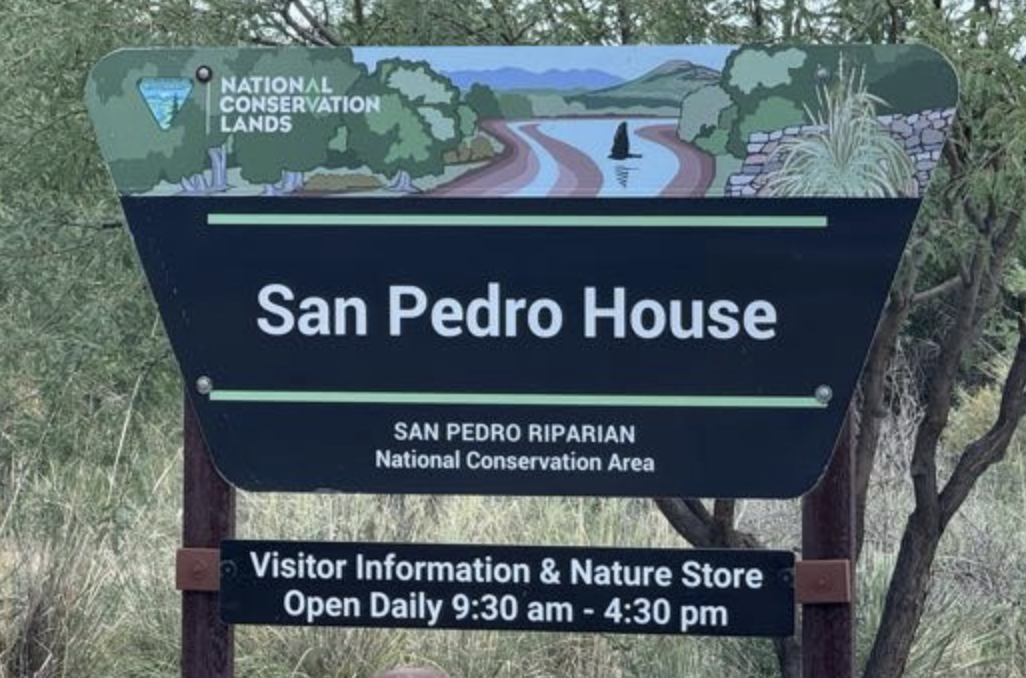
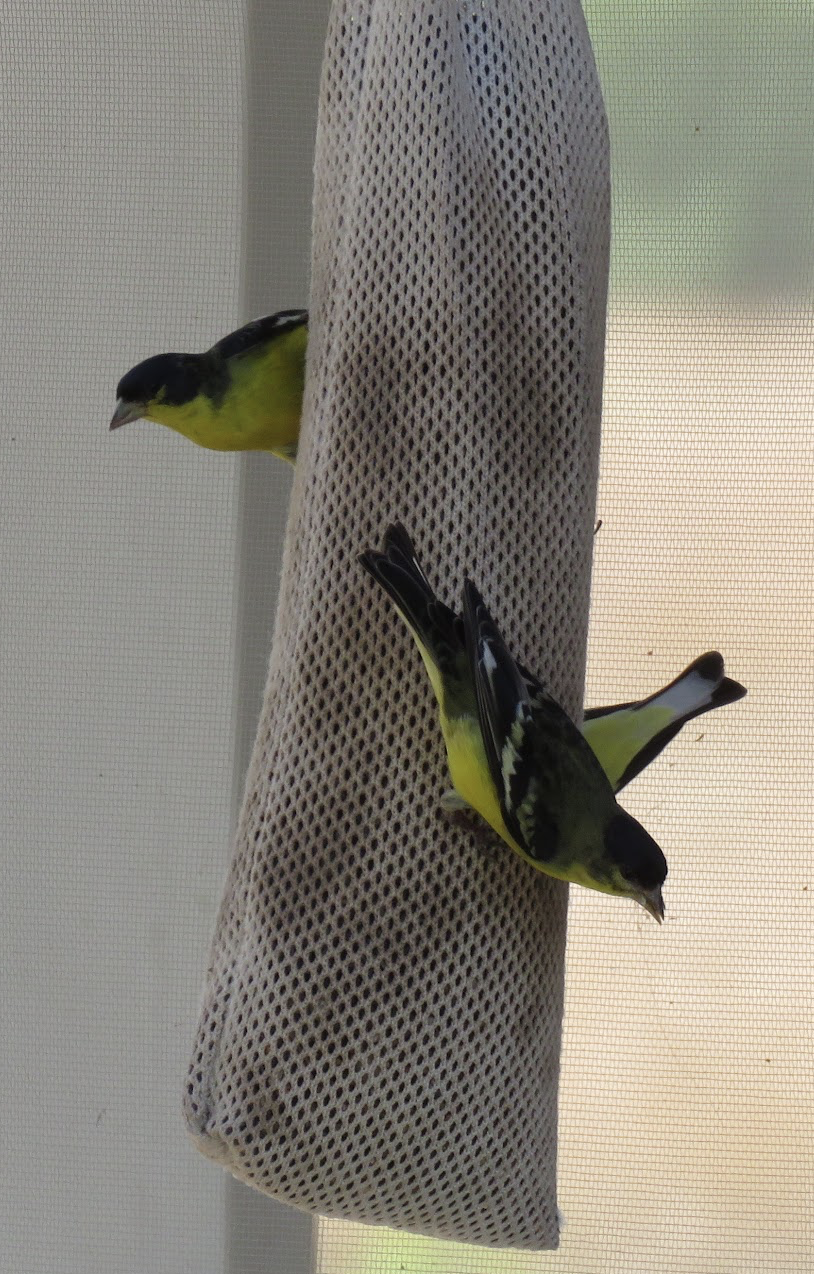
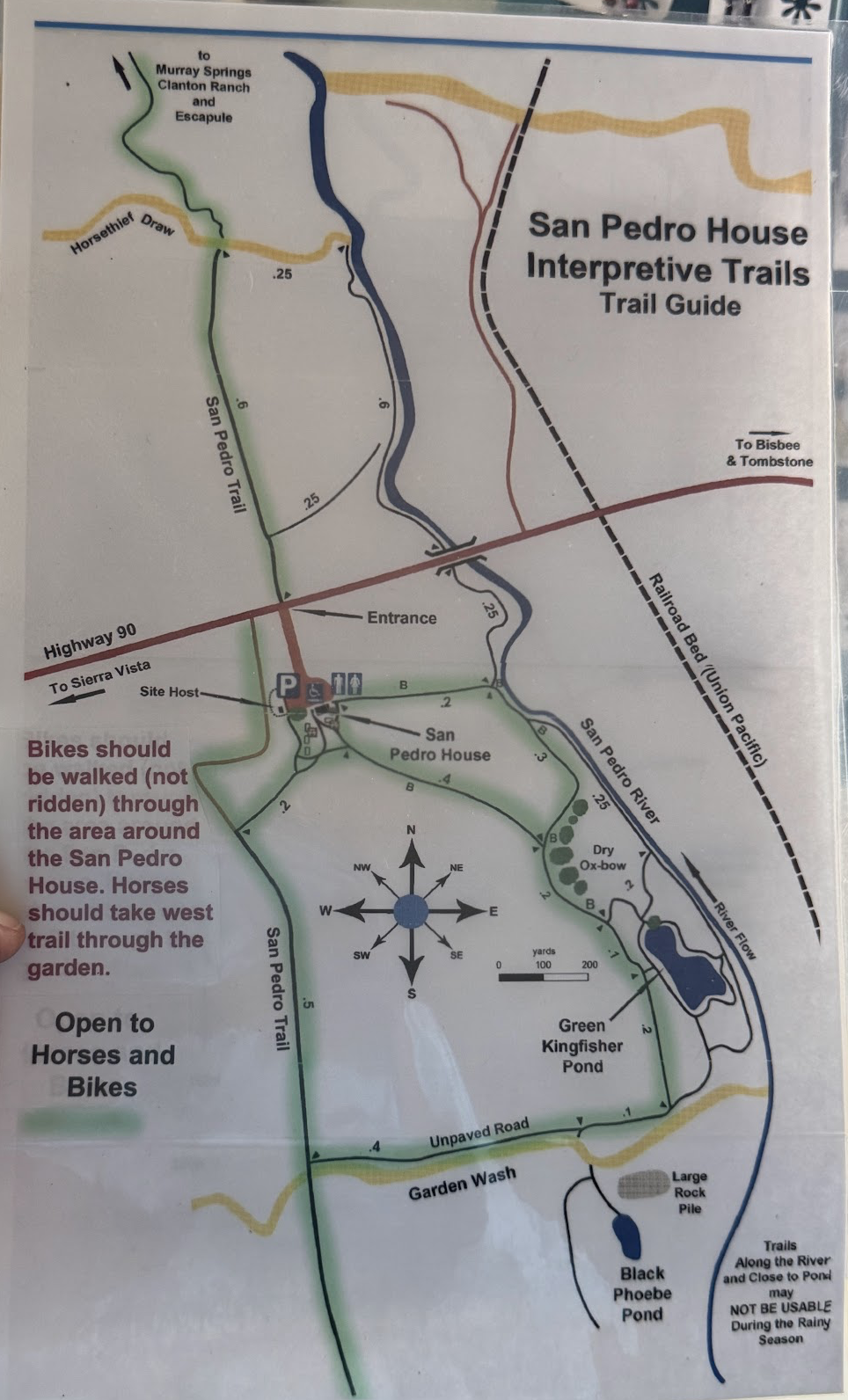
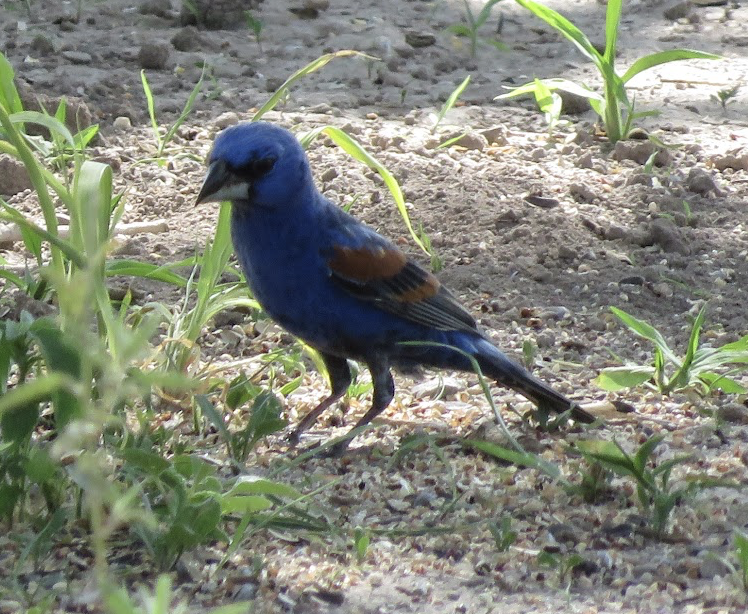
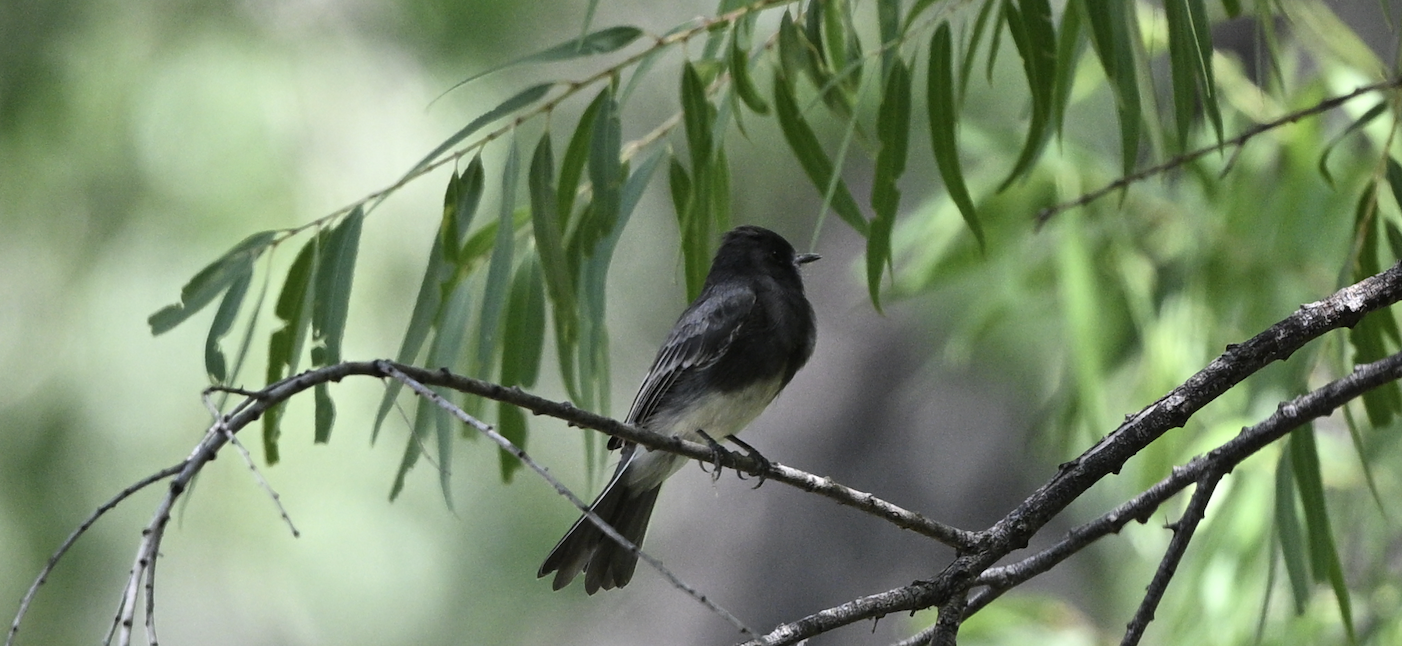
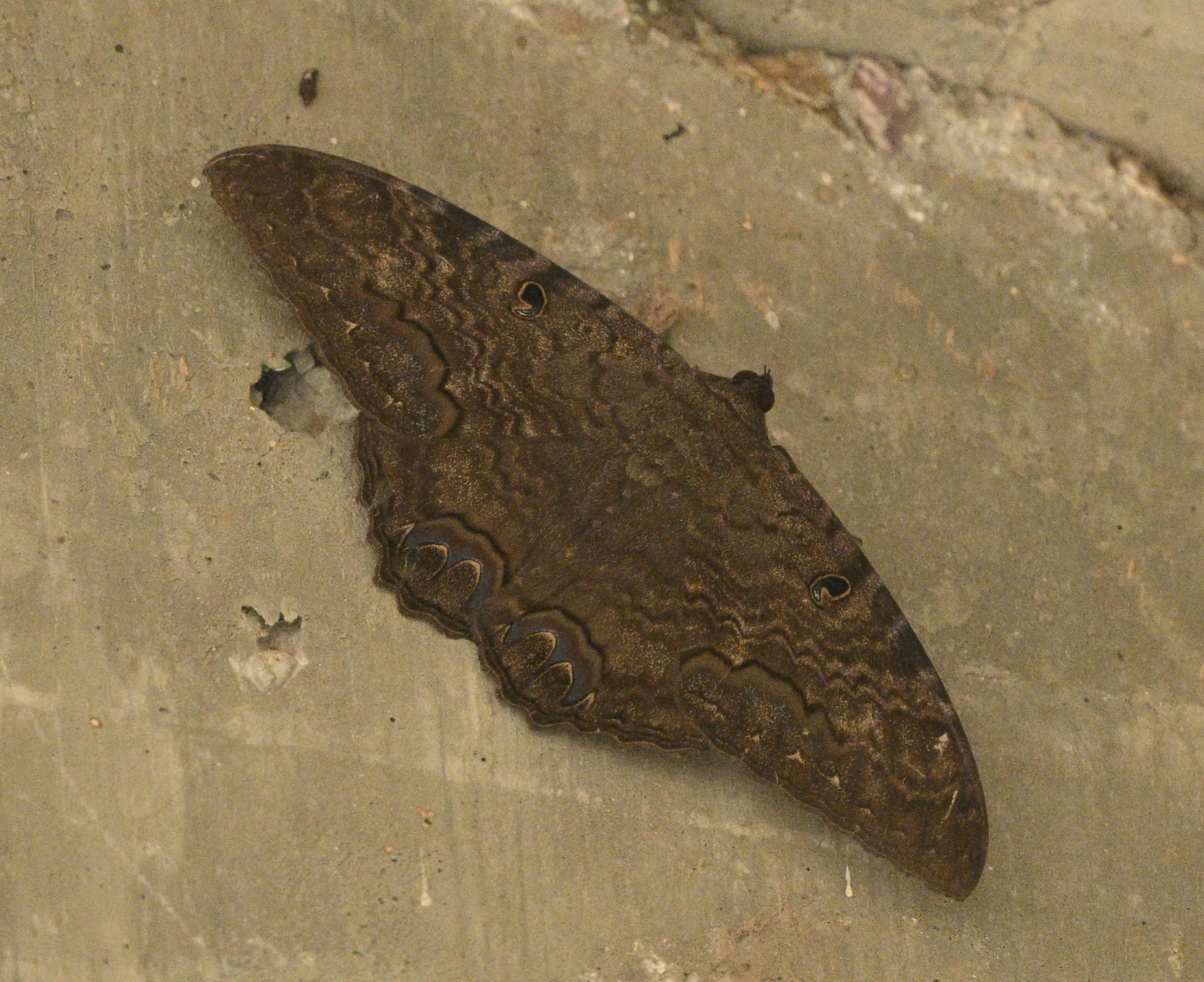
Click on any picture to see the full gallery. Park signage, Lesser Goldfinches, park map, Blue Grosbeak, Black Phoebe and a giant moth.
The walk from the visitor center to the riverbank was only half a mile long, but never underestimate that distance in the August Arizona heat. It can kill you if you aren't gulping fluids with electrolytes (or a pinch of salt) to mitigate dehydration and saline levels. Visitor center volunteers gave us a fair amount of warning. They circled birding hotspots on the trail map for Green Kingfishers and Vermilion Flycatchers. The feeders at the center got us Lesser Goldfinches, Gilded Flicker, Gila Woodpecker, Common Ground Dove, and a Blue Grosbeak. My lifer Vermilion Flycatcher was sitting on a high branch like a red light on a stick. A Gray Hawk flew past us as we approached the riverbank. Gray Hawks typically associate with mesquite and cottonwood forests near water bodies. It's a medium-sized hawk with a long, banded tail and a streamlined, striped body with short wings, giving the impression of a grayish Cooper's Hawk.
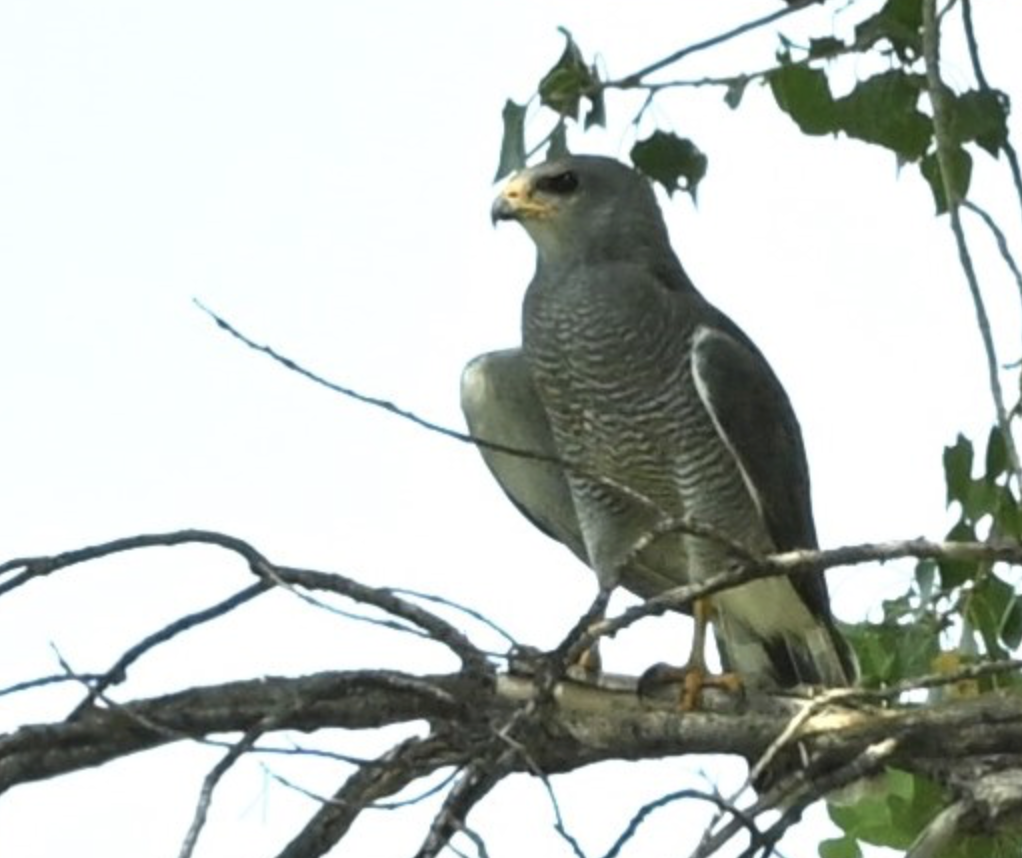
Gray Hawk perched near San Pedro House
"Fast and agile in flight, the Gray Hawk may slip rapidly through the trees, plucking fast-running lizards from the branches." [1]
We got excited over a few chat calls and the possibility of spotting our first Lazuli Bunting. We got our Lazuli, but the chat evaded view. All that excitement withered away quickly in the skull-scorching heat and unbearable humidity of the San Pedro cottonwood forest, so we abandoned our plan of visiting Miller Canyon (which, in hindsight, may have been cooler).
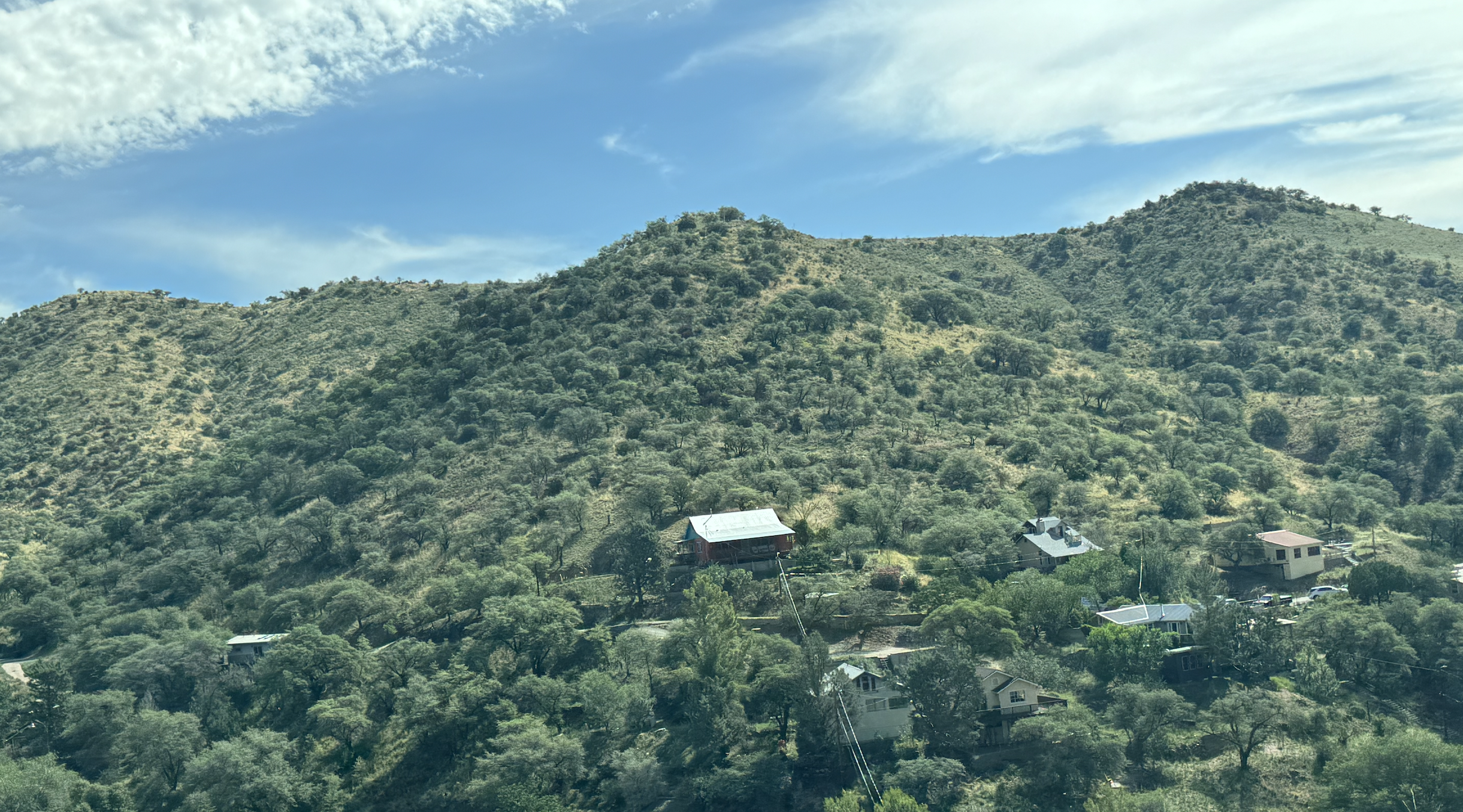
on route to Sierra Vista
The mountain plateaus in the SE Arizona area are called "Sky Islands" because they have a distinct, secluded weather pattern relative to the surrounding desert valley floors. They're usually 15–20 degrees cooler, get more rainfall, and are a bit greener, with pine and other forests. Sierra Vista has three major canyon trails, which are great for birding.
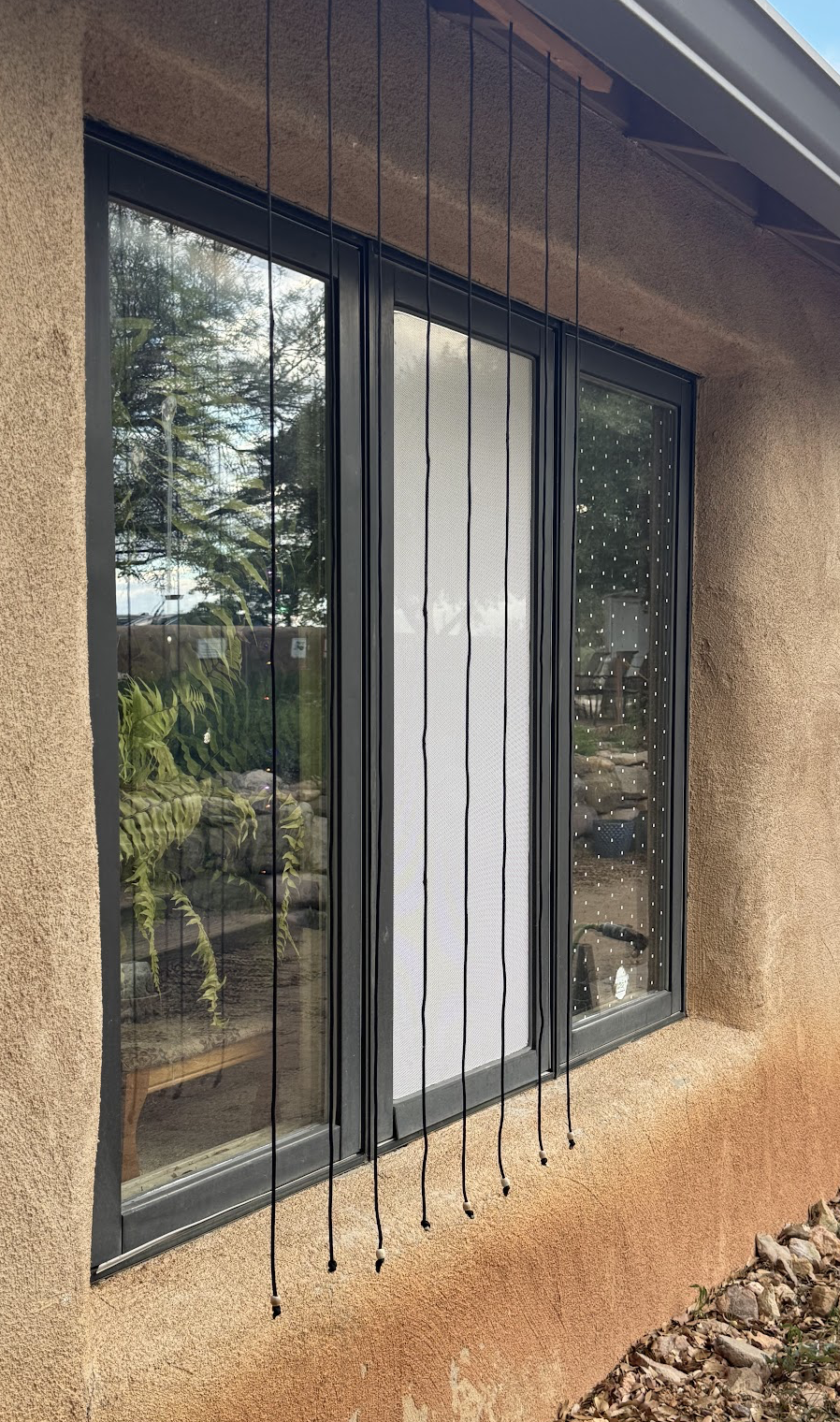
The Airbnb we rented in Sierra Vista was in an affluent neighborhood with well-kept lawns. A Gambel's Quail family was running around on the side of the road. Inside, it looked like a large Spanish farmhouse, with a gated compound wall and a serious lock — strange. It had a large open floor plan: a living room with a sprawling kitchen and dining area. The kitchen window had a massive glass wall (I was thinking dead birds… sigh), with a spectacular view of the Huachuca peaks. There were a few feeders in the yard, a side area dedicated to chickens and a domestic goose, a huge fish tank, and a jacuzzi-fitted fitness room which also doubled as a summer patio/bedroom. Very cushy for a birding trip, I thought. I showered, had lunch, and slept well for evening birding. This was our first relaxing day. When I woke up, Chris and Carol told me the owner had stopped by to say hello(?!). Again, that was a bit weird. Later, Chris described the owner's demeanor and mannerisms in vivid detail — he was thoroughly convinced the guy was a retired drug dealer. Even without meeting the owner, I was convinced too, just from the looks of the house.
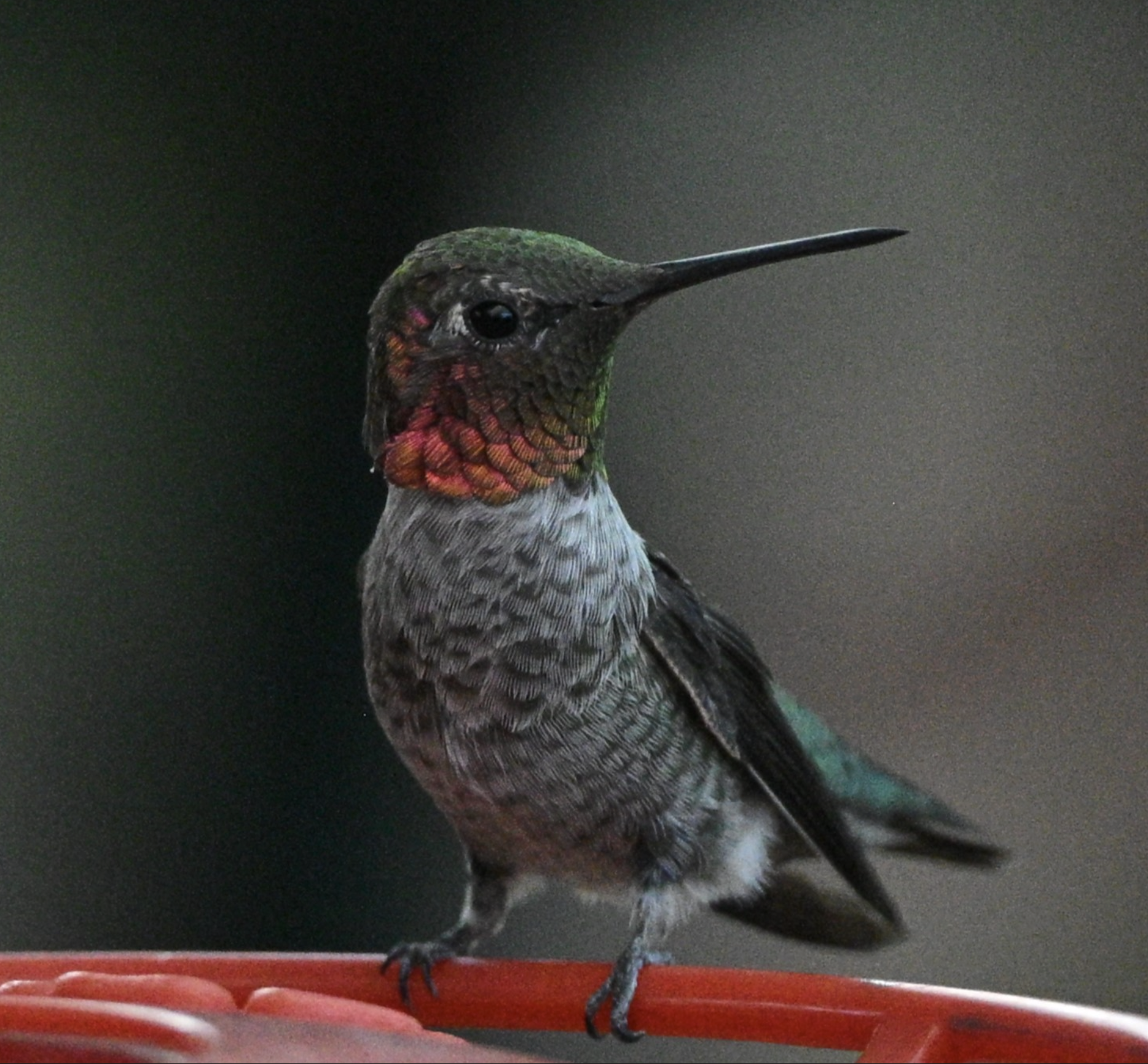
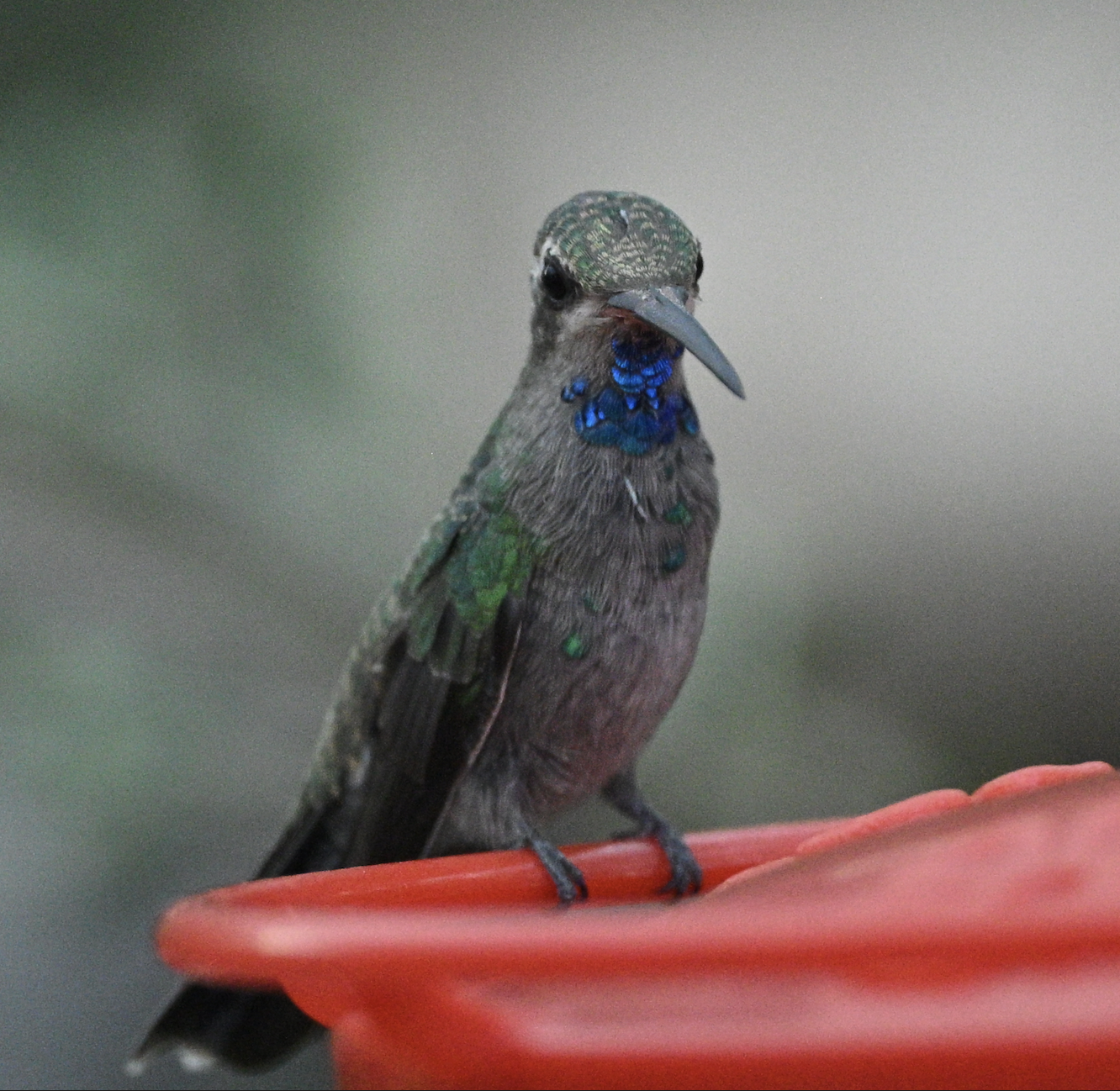
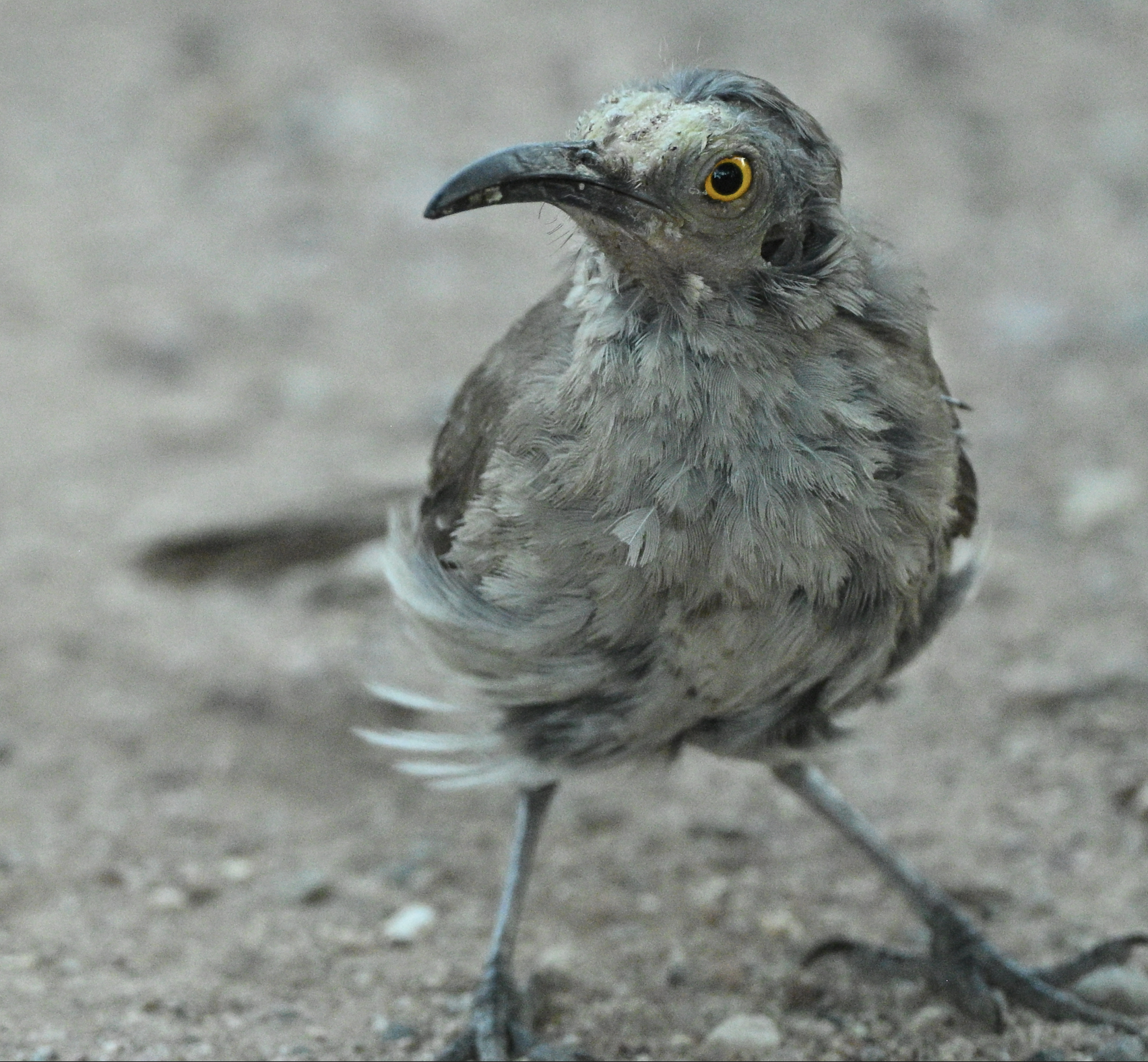
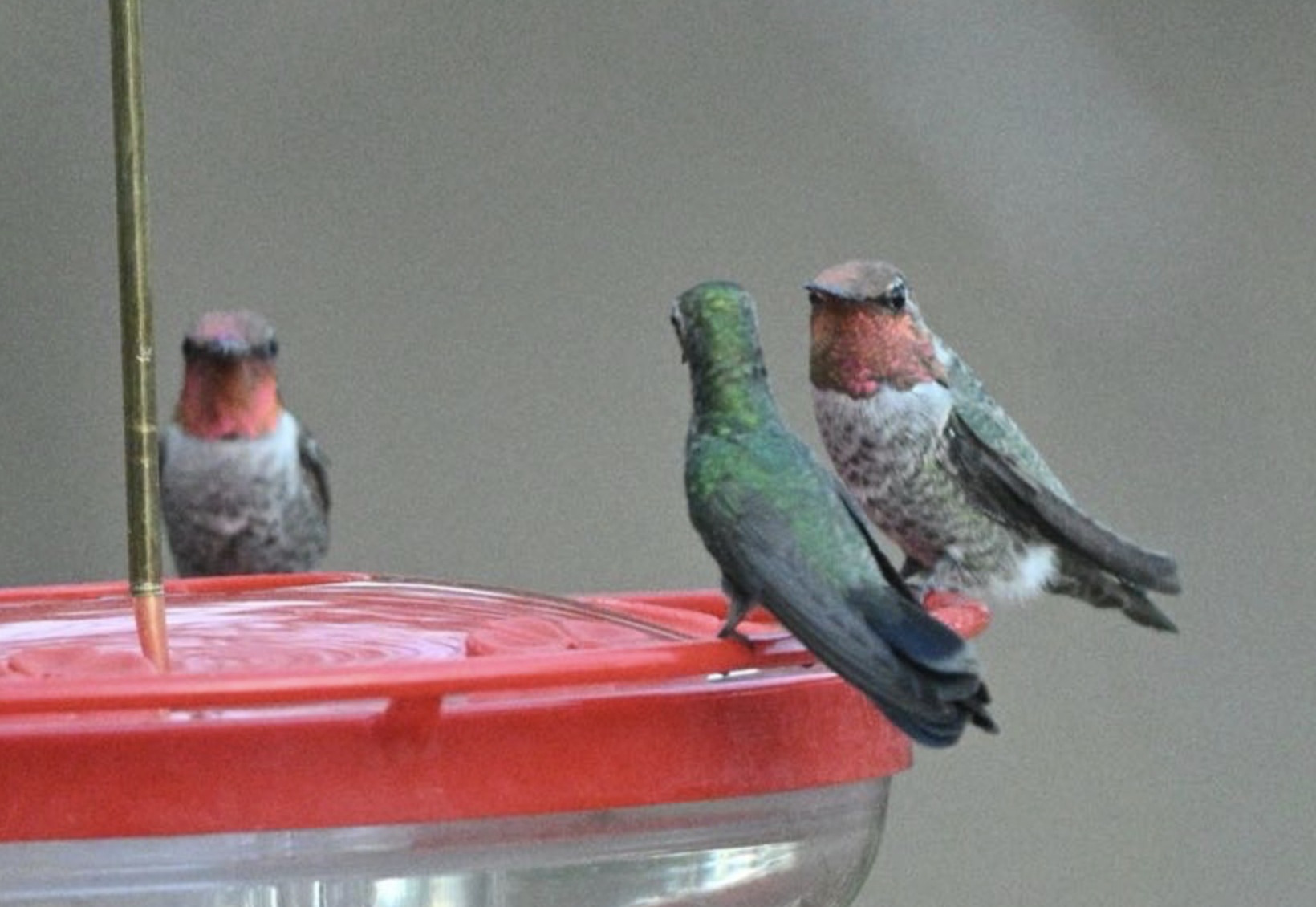
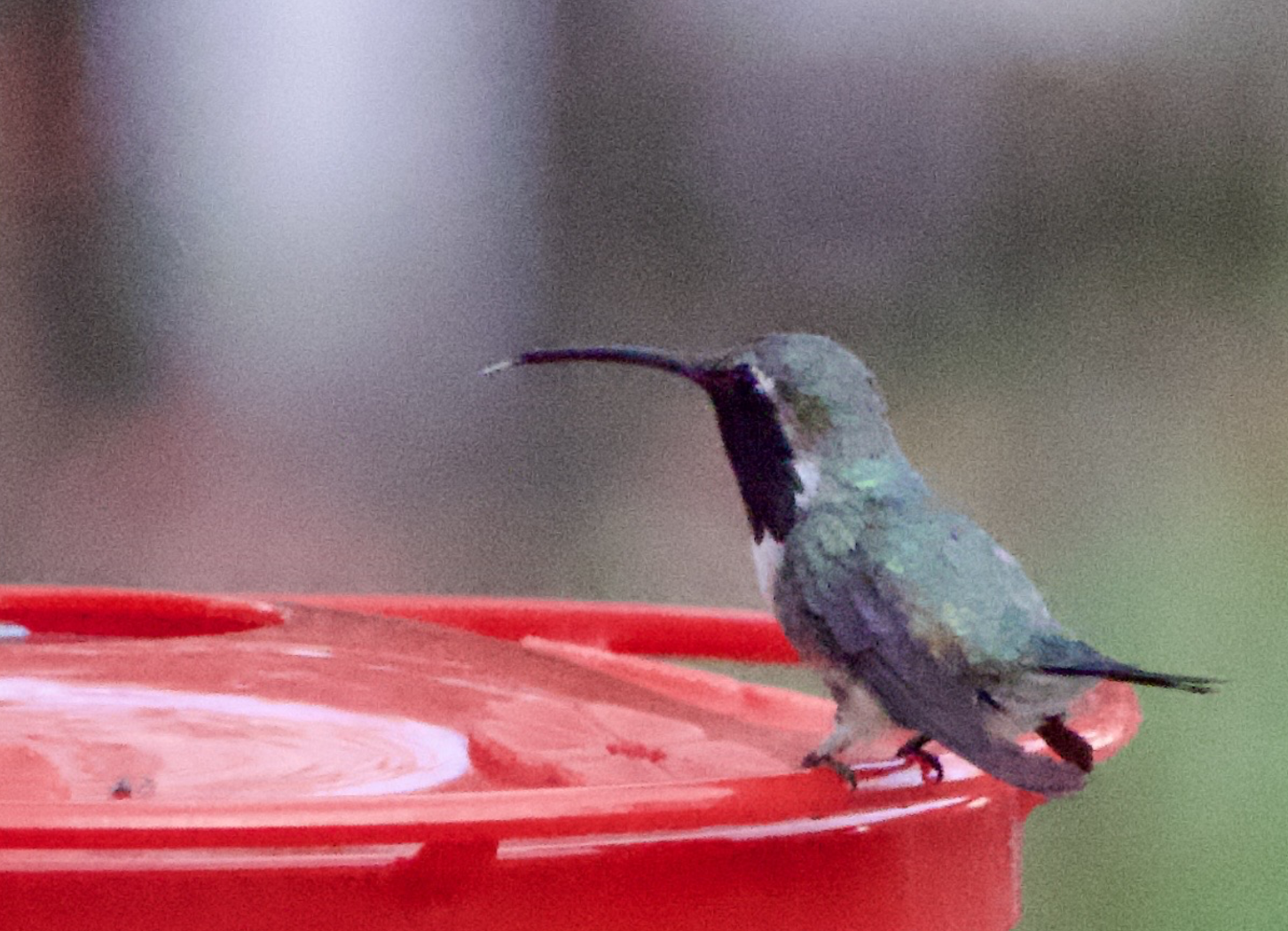
Birds in the gallery: Anna’s Hummingbird, Black-chinned Hummingbird, Curve-billed Thrasher, group of Anna’s and the bird that gives me heartburn (Lucifer’s Hummingbird)
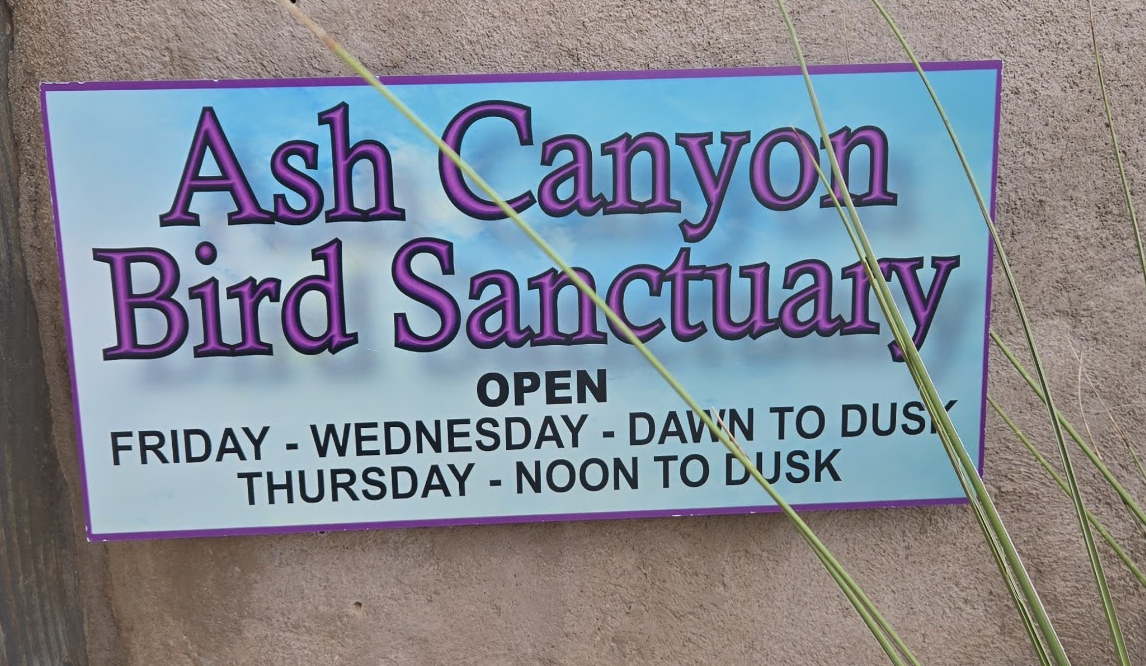
In the evening, we visited Ash Canyon Bird Sanctuary. Formerly the Ash Canyon Bed & Breakfast and home of the late Mary Jo Ballator, it was purchased by the Southeastern Arizona Bird Observatory (SABO) and is now a nonprofit bird sanctuary. It features plenty of hummingbird feeders (active March through September), and its water features attract several bird species. The fee is a $10 donation to help run the facility. Our interest in visiting was two-fold: a Lucifer Hummingbird, a near-guarantee at Ash Canyon Sanctuary, and a family of Montezuma Quail that lived nearby. We planned on a sit-and-enjoy type of birding.
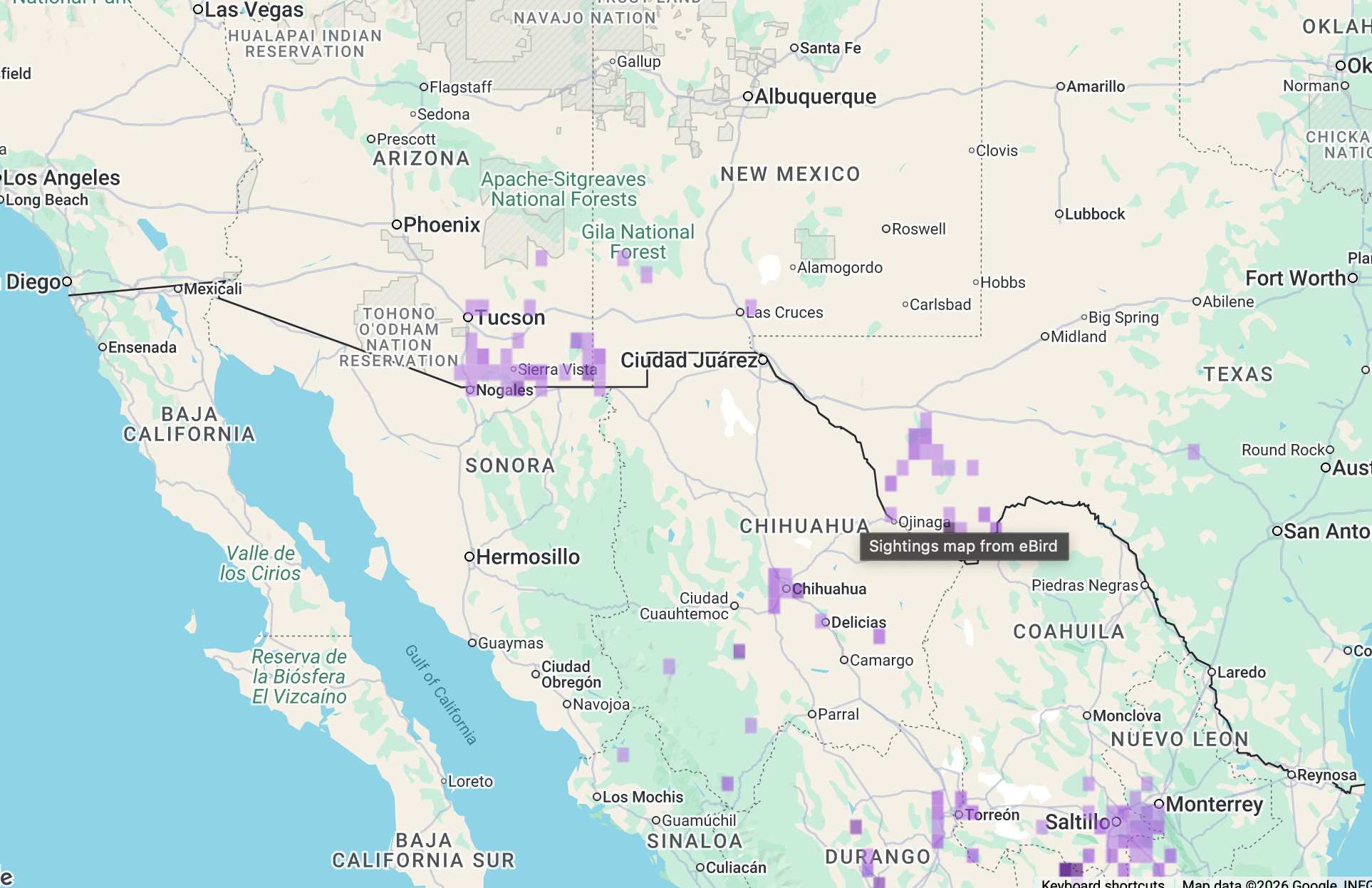
Lucifer Hummingbird Range
It is rare or uncommon hummer due to its limited range in US, Lucifer is a highly sought-after hummingbird in SE birding.
We did get several hummingbird species: Black-chinned, Anna's, Broad-billed, and Broad-tailed. Forty-five minutes passed. There was no sign of the Lucifer. As usual, my patience evaporated, and I took a walk to try my luck spotting a Montezuma Quail in the fields. Fate showed its ugly face — the Lucifer showed up for half a minute and left before Sethu and I could get back to the nectar feeders. I was visibly distraught going home that night without either of the target species. It's one of those days on a trip that inevitably goes bad, and you just need to suck it up and accept it with grace. (Thanks, inner voice; I tried to show my grace, but a year later I'm still salty about missing the Lucifer, while Chris got four or five more lifers on the trip.)
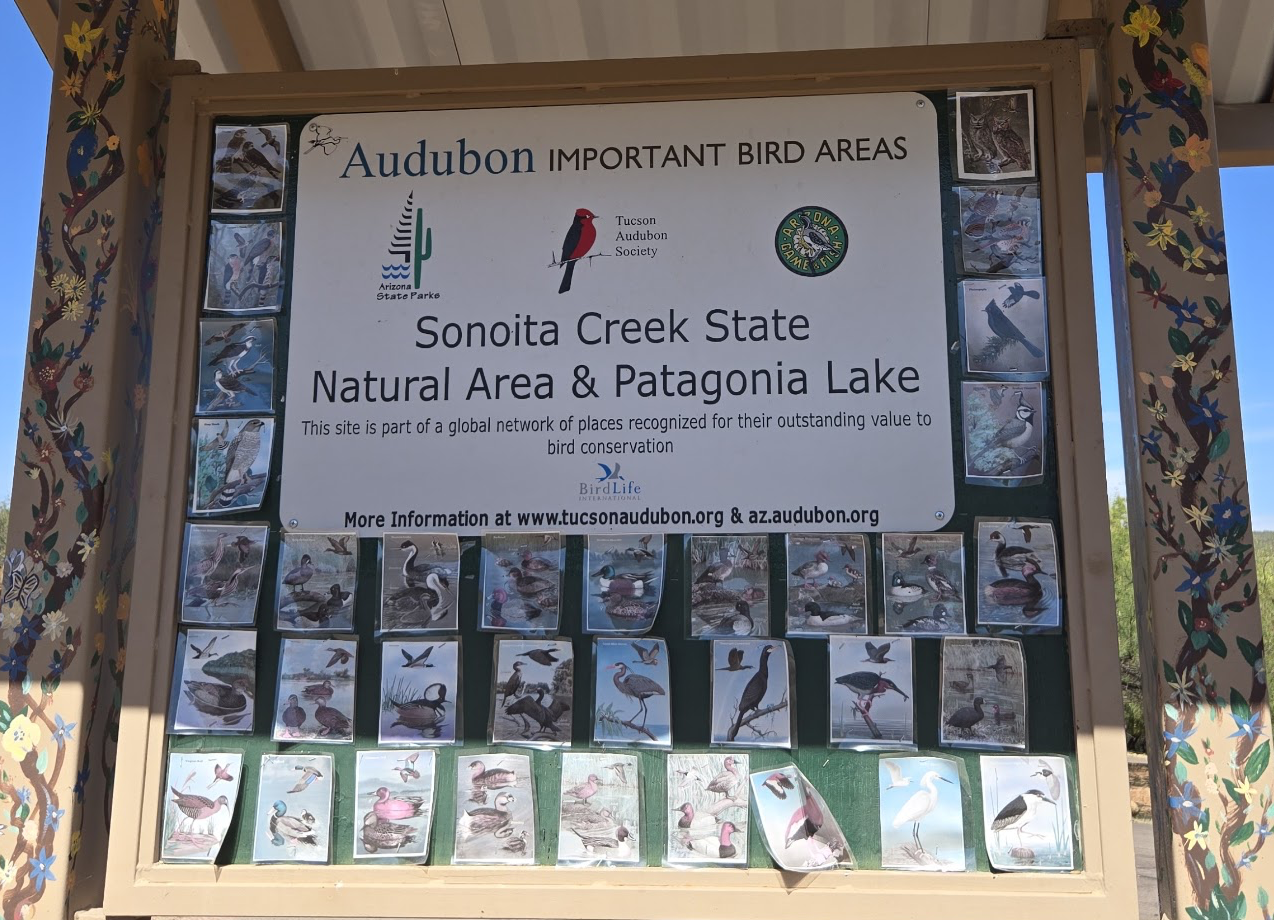
Sonita Creek State Park - Parking lot
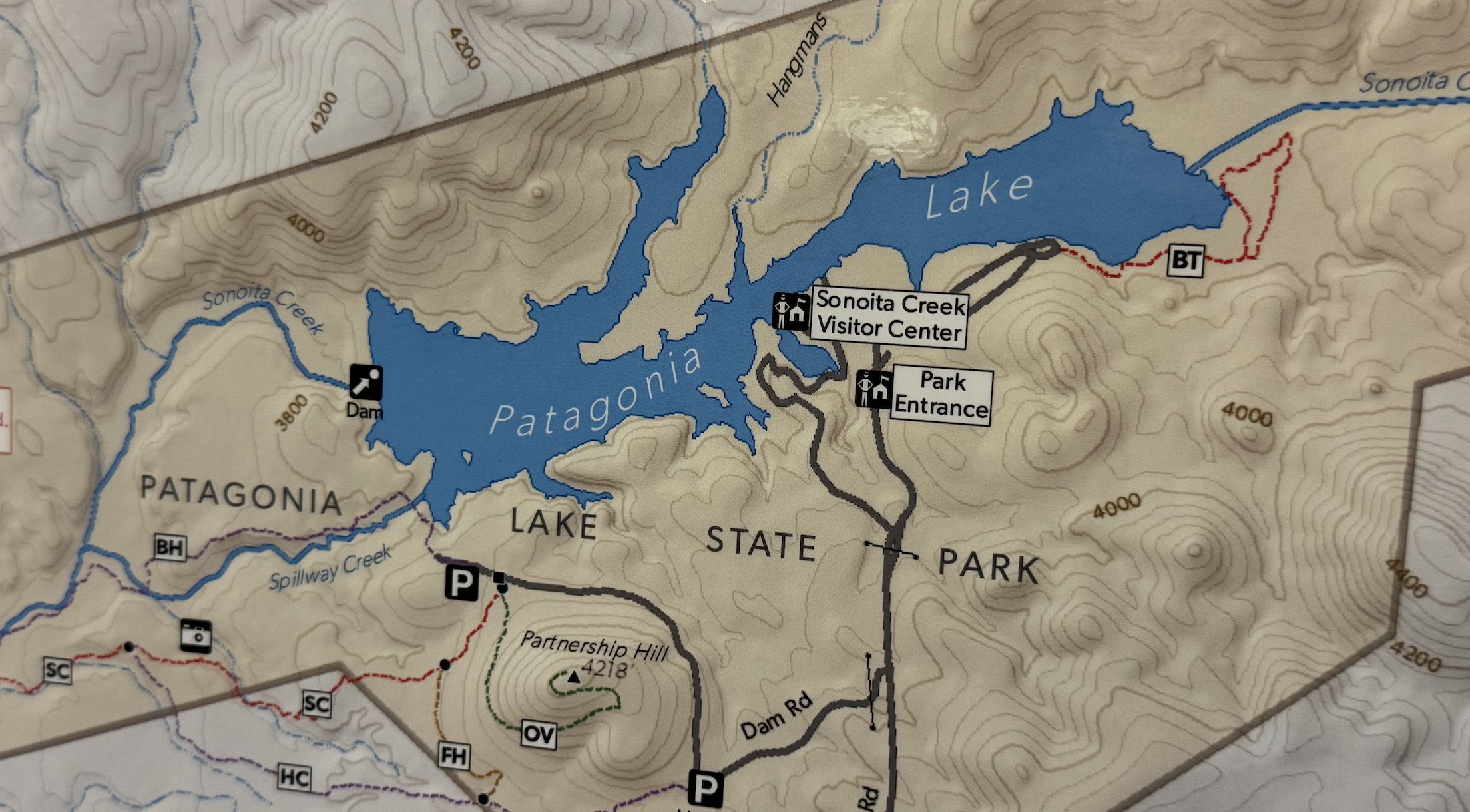
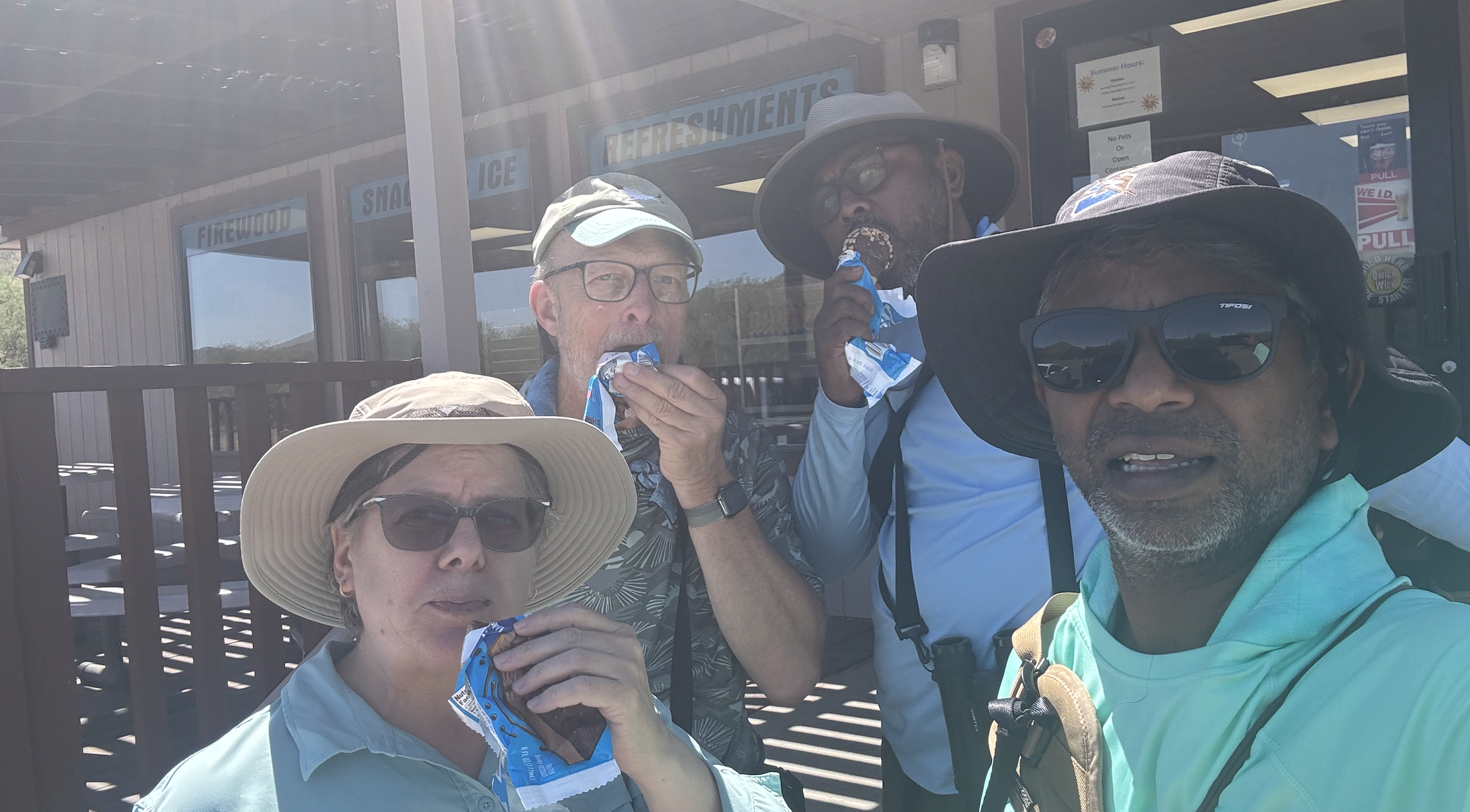
The next day we left the drug dealer's house early to do a fair amount of birding at Sonoita Creek Trail in Patagonia Lake State Park. It was a hot, humid walk, but thankfully a good portion of the trail was under tree cover. The trail signage was poor, so we had some difficulty navigating at times, but we made it through in the end. The birding was really good, though — we enjoyed seeing 45 species. In the parking lot, we had a Lesser Nighthawk, a Phainopepla, and an incessantly calling Bell's Vireo. As we descended toward the creek bed, we heard several Yellow-breasted Chats singing every few yards (we counted 12). One of the chats was in excellent view for us. A Northern Beardless-Tyrannulet, a tiny flycatcher, was an interesting lifer for us. We also had four other flycatchers: Vermilion, Dusky-capped, Ash-throated, and Brown-crested. On our final ascent back to the parking lot, we also spotted a Lucy's Warbler in the reeds — a pleasant surprise. The temperature was 105 degrees, so we treated ourselves to ice cream bars at the gift shop and picked up some souvenirs at the visitor center. The gift shop volunteer recommended "Gathering Grounds" — a sandwich shop in Patagonia — for lunch.
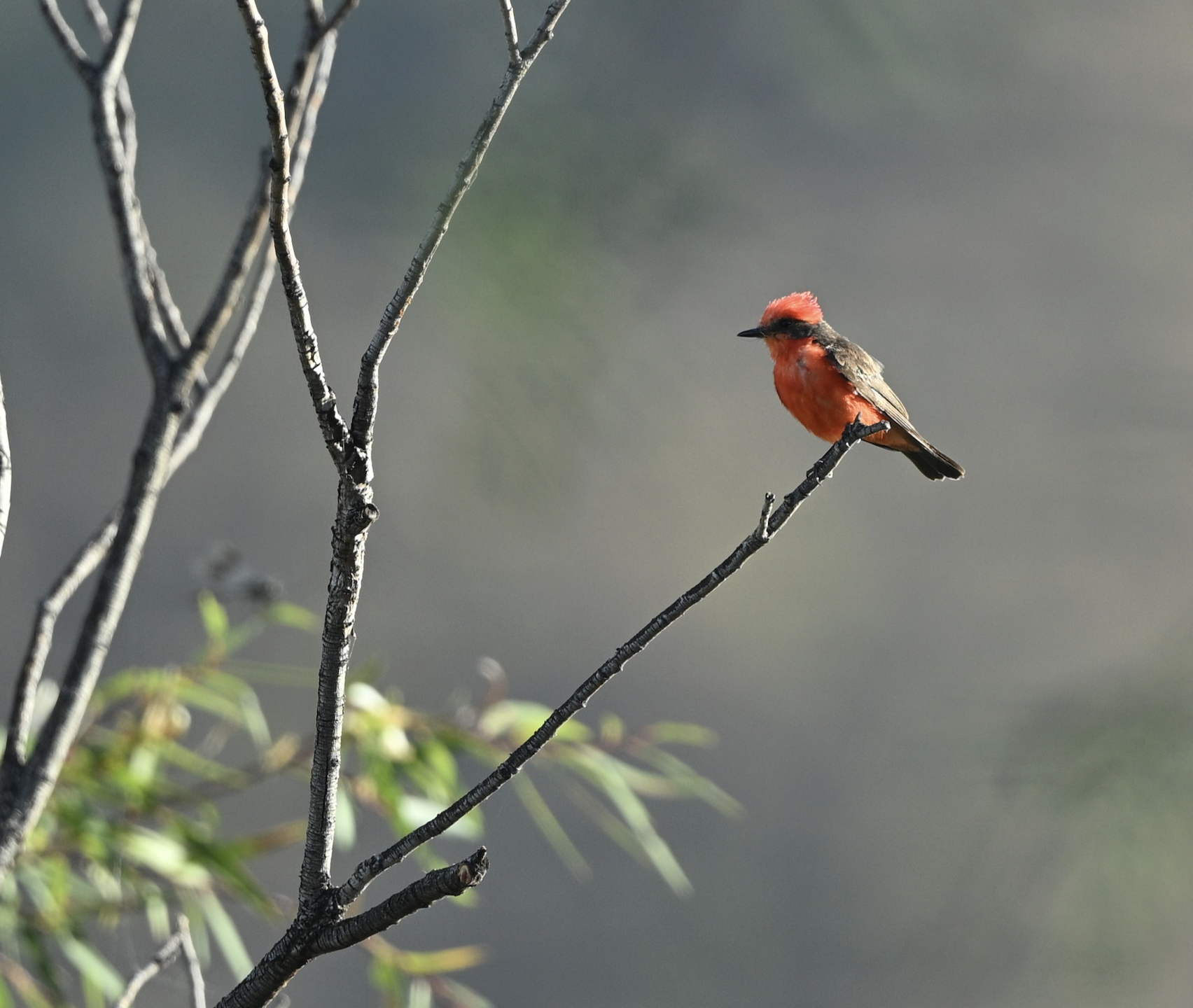
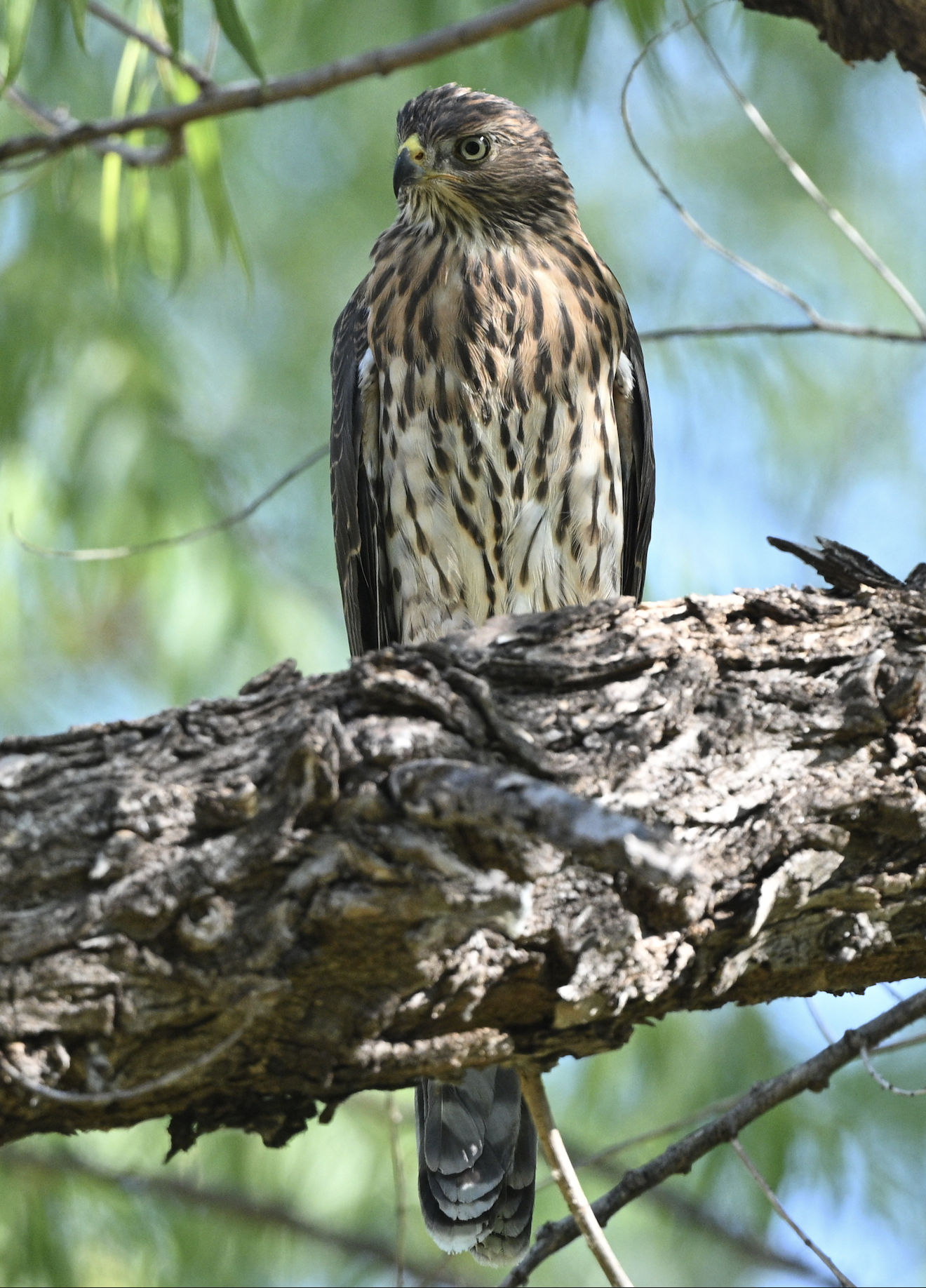
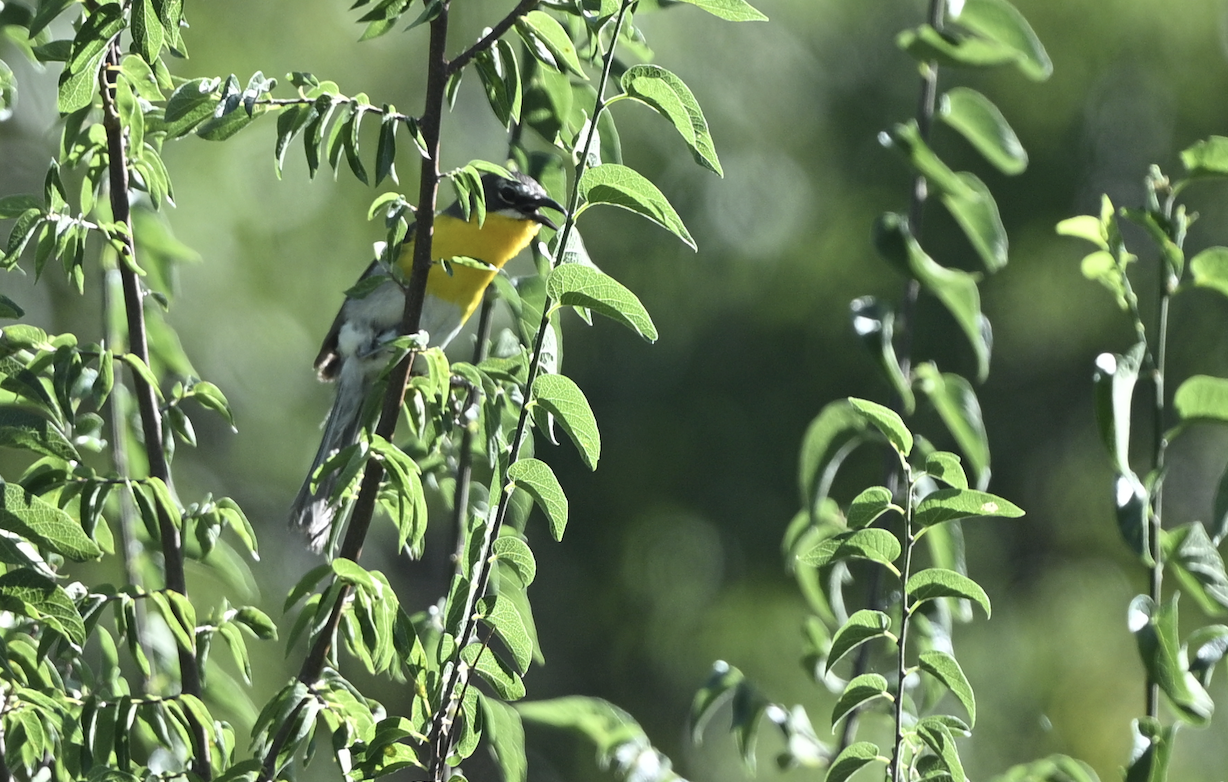
Birds on the carousel: Vermillion Flycatcher, a young Cooper’s Hawk, and the Chat.
There are two important hotspots we didn't cover during our stay in the Sierra Vista area. One is Ramsey Canyon Preserve, maintained by The Nature Conservancy, which was closed on Tuesdays and Wednesdays, so we couldn't visit. The other hotspot is Paton's Center for Hummingbirds in Patagonia, a popular spot favored by tour companies that we didn't have time to visit.
We realized one of us had left a walking stick back at the San Pedro house near Sierra Vista, so we drove back and stopped at the Environmental Operations Park (EOP) for a short pit-stop of birding. It was very productive, with a large flock of Yellow-headed Blackbirds, great views of Lazuli Buntings, several Cassin's Kingbirds perched on the shrubs, and three White-faced Ibises.
Our next three nights were in Tucson. We registered to attend the Tucson Bird Festival. We drove to Tucson in the evening to pick up our registration badges before 5 p.m. By the way, did I mention Chris saw a Javelina as we started driving to Tucson, which I missed seeing?
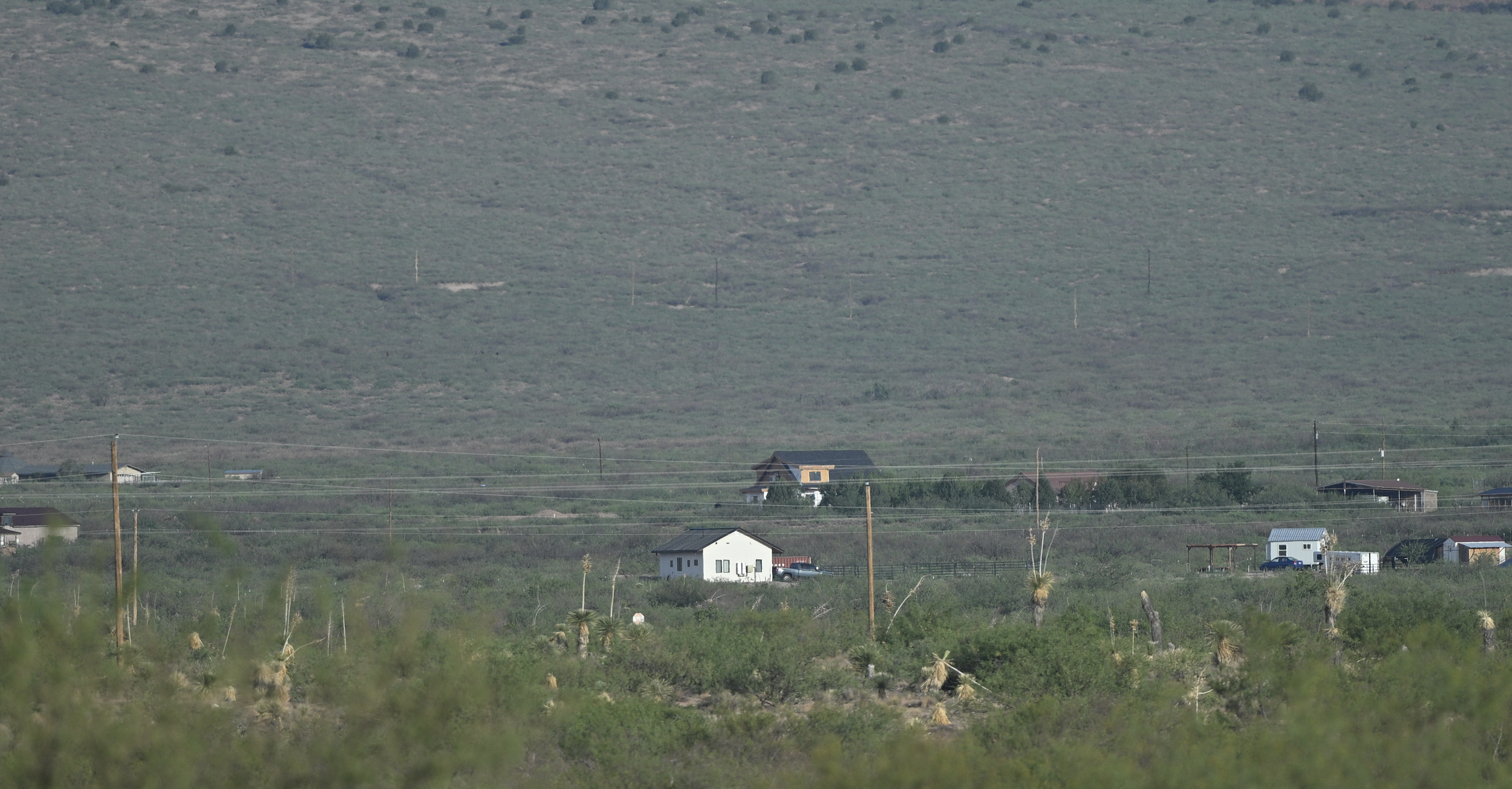
A view of Chiricahua from Rodeo, AZ
